DaveBurin

  • Under the League Interviews…Wayne Carlisle

    Under the League Interviews…Wayne Carlisle

    The last 17 years have been quite the ride for Northern Irish wing wizard Wayne Carlisle. And the genial, engaging Truro City assistant talks me through a playing career which began at the lofty heights of a packed Selhurst Park and ended with a bittersweet mixture of triumph and early retirement at picturesque Plainmoor. But Wayne’s journey has been about much more than his performances at 3pm on a Saturday.

    There have, of course, been back-to-back promotions to the Football League, with Exeter City and Torquay United. A dramatic end-of-season run which somehow preserved Bristol Rovers’ (then) unbroken run of 83 years in the league. And, of course, success as Steve Tully’s right-hand man at Truro City. But Wayne has also been coaching the next generation of players to succeed, whether in the beautiful game or in the world of business. Here is his story.

    DB: You joined your first club, Crystal Palace as a teenage trainee. How difficult was it leaving your home in Lisburn, Northern Ireland to join the Eagles? And what are your earliest memories of life at the club?

    WC: At 15-years-old, I didn’t find it tough at all. I didn’t look at it in that way, I saw it through a child’s eyes. I was just excited to have the opportunity to play professional football. Looking back on it now I have my own children, and work with children, for someone at that age, moving was a big thing.

    I went into digs with another Irish lad named Kieran Loughran, and we lived together for about three years, so having that company made it a lot easier. And I was a young lad, training every day, and it was all I had ever dreamt of doing. It was a brilliant experience.
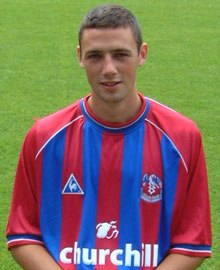
    A Portrait of the Artist as a Young Man: Wayne in his Palace days.

    A Portrait of the Artist as a Young Man: Wayne in his Palace days.

    DB: Your league debut at Palace came against Birmingham City in February 1999, and you became a regular fixture in midfield. What do you remember about your debut? And what was it like playing and training with established stars like Atillio Lombardo and Saša Ćurčić?

    WC: On my debut? I just remember the noise. Walking onto the pitch, having never played in front of so many people before, that was memorable. As soon as any game kicks off, you’re into the action and you play automatically from your habits in training.

    I think I took training with that calibre of player for granted. I was used to it from an early age and assumed that it was just normal. But in retrospect, it was a really big deal and a privilege to get to work alongside people of that quality.

    I definitely tried to learn from them, though. Atillio Lombardo was especially helpful. Obviously, he played the same role [winger] as me, and he would spend time talking me through things – via his interpreter, most of the time! We discussed topics like good positioning, different types of crosses and how to best use them, so he was particularly helpful.

    DB: Scoring a first senior goal is a special moment for any player. Yours came in October of that year, in a 4-0 drubbing of Portsmouth. What was that moment like?

    WC: That was pretty special. As I remember, the ball was on the edge of the box, and I just worked off instinct and hit it on the half-volley. Luckily enough it found its way into the net. It’s a cliché, but, you can’t describe it. It is the best feeling in the world at that age. Experiencing that was a real buzz.
    I didn’t have a celebration planned, though. I wasn’t really that type. Whatever I did to celebrate – I can’t remember exactly – I’m sure it was pretty boring! Not up to the standard you see nowadays!

    DB: Palace at that time were a club who went through managers pretty quickly. You played under the likes of Terry Venables, Steve Coppell, Alan Smith and Steve Bruce. Who got the best out of you as a player, and why?

    WC: My best time at Palace was under Steve Coppell. He was another winger like me, so he was great in giving me individual support about that role, and was not demanding of me. He understood that I was young and finding my feet, and let me develop at a rate which was right for me, without putting me under any pressure.

    Those other managers were more focused on results. Obviously, Steve [Coppell] wanted good results too, but they were more demanding. As a 19-year-old, I maybe wasn’t ready for that kind of pressure. For me personally, Steve [Coppell] was the best man-manager of the bunch.

    DB: You joined Division Two side Swindon Town on loan in the following season, and were an important part of helping the side to a respectable mid-table finish. Did you enjoy your time at the County Ground, and were you keen to head out on loan?

    WC: I loved my time there, actually. I was getting guaranteed first-team football at Swindon, and we were playing in front of decent crowds at a good standard. As a team, we were having a fairly successful spell, as well. At the end of my loan, I actually tried to extend it, but the Palace manager had changed from Steve Bruce to Trevor Francis. He decided to recall all of Palace’s loan players back, to have a look at them.

    Going out on loan was something both I and Palace were keen on. I had been used to first-team football at a young age, and wanted that feeling of training all week and playing on a Saturday. I was desperate to have that again, and the club thought it would be a good idea for me.

    DB: In March 2002, you made a permanent switch to Bristol Rovers. In your first full season, the club avoided relegation from the Football League by just 3 points, winning 3 of their last 4 games to survive. What was that nervy run-in like?

    WC: That was really tough. We had signed a lot of very good players that season, and for some reason, the team just didn’t click. We had so much quality in the squad, so in the latter part of the season, the players were just looking at each other thinking ‘we really shouldn’t be in this situation’.

    We signed Andy Rammell partway through the season, and he was a hugely important addition and scored some crucial goals [including 4 in those final three games]. I pitched in with some goals myself, and we survived. But it wasn’t enjoyable, and certainly not a situation which a club of Bristol Rovers’ stature should have been involved in.
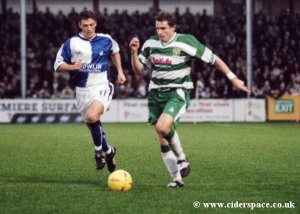
    Wayne was vital to Rovers' survival in 2002-03.

    Wayne was vital to Rovers’ survival in 2002-03.

    DB: In the following campaign, you notched an impressive 8 goals from midfield, and provided the service that helped striker Giuliano Grazioli reach double figures. Do you think that was one of your best seasons in the game?

    WC: I was certainly productive that season, and I did my job well, so it was one of my best years in a personal sense. Rovers’ manager at that time was Ray Graydon – another right winger, funnily enough! So again, he was a manager with a good understanding of what was needed from me, and I fit into his style of play. That obviously made it a lot easier for me to have a successful season.

    DB: You joined Martin Ling’s Orient revolution from Rovers, and played in the first half of the Promotion season of 2005-06, before you were sold to Conference Premier club Exeter City. Do you feel proud to have been part of Orient’s success, or were you unhappy at having missed out on that end-of-season glory?

    WC: No, I wasn’t unhappy about it. I played my part in Orient’s season, and obviously whilst I would have liked to have been there to celebrate at the end, the move to Exeter was a mutual decision. Exeter were looking for someone in my position, and I had worked with [then City manager] Alex Inglethorpe at Leyton Orient previously.

    He said he wanted to take me down there, and as I wasn’t getting guaranteed regular games at Orient at that time, I thought the move would be worthwhile. I wished them all the best, and off I went. And I was just proud of what I achieved in the early days.

    I left the O’s on good terms. I actually went back and trained with Martin after breaking my leg, before I rejoined Exeter [in October 2006]. It was actually Paul Tisdale who re-signed me there!

    DB: Your time at St. James’ Park was certainly a successful one. The Grecians reached the Playoffs twice and were promoted to the Football League in 2008, thanks largely to your crucial strikes against Torquay United in the Semi-Finals. Did that feel extra special after what happened with Orient?

    WC: Yes, to an extent. However, Orient’s promotion was not something I was especially conscious of missing out on because I had still played a part in it. The nature of football is also that players move on.

    It was nice to see the journey through with Exeter. Especially so as we had come very close in my first season with the club, losing the final at Wembley [to Morecambe].

    DB: What was Paul Tisdale like to play under?

    WC: Paul is a fantastic gaffer and an especially good man-manager. He understood the players well as individuals and took the time to get to know us. I had a very good relationship with him.

    DB: You repeated the Conference promotion feat the following season with none other than Torquay United, but retired less than a year later, in January 2010. Were injuries, or a new career path the main reason behind retiring at age 30?

    WC: It was a combination of both. I had damaged ligaments in my knee, around Christmastime [of 2009]. The medical advice I received was that the injury was going to seriously inhibit my days of playing football, in the near future. At that point, a job had become available, teaching the game in a college. I had taken on board the advice of the specialist who warned that the injury would stop me playing at Conference level, at some point.

    The game usually spits people out, and I didn’t want that to happen to me. When the opportunity of this college role came about, I decided to leave on my own terms, and in my own way.
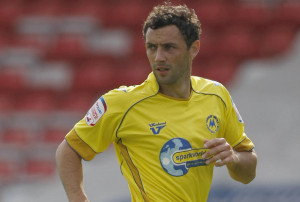
    Wayne in action for the Gulls during his promotion-winning stint.

    Wayne in action for the Gulls during his promotion-winning stint.

    DB: Outside of the game, you are still Director of Football at Ivybridge Community College in Devon, and have had the likes of Paul Scholes running a session, as part of your initiative to improve the school’s football academy. So what are the essential things that you think young players need to know about the game?

    WC: They need to understand how the game functions. So they need to realise how invasion games work. Game understanding is a key thing. It is something which the top players possess, and a lot of younger players don’t have. Work ethic is also crucial, as is a passion for actually playing football.

    Players also need to take on information and apply what they have learnt in training and matches as well. But what we try to do at the college is not just about developing footballers. We actually look to develop people. They get strong values from us, so that whether they are in football or business, or whatever route they take in the future, those individuals will have the skills to make a positive contribution.

    DB: In 2011, you returned to play a handful of games for Truro City, and you must have liked the place, as you came back to Treyew Road three years later as Assistant Manager to Steve Tully. How did the move come about? And what was it about Truro City that made this the right club for you?

    WC: When I first took the job, I wasn’t sure it was right for me to be honest! I had seen my pathway after playing as working in youth football. Working with players in that development phase is something I really enjoy.

    The Truro City position came up when Steve Tully – who I had played with at Exeter – contacted me. He said the job had come up and asked if I’d be interested. My initial response was ‘not really’!

    I didn’t think this role was part of my journey, but Steve convinced me to go along and stand with him on a Saturday. And I had to be honest with him, I enjoyed it! It’s a role I’ve been happy with ever since, and the club has had some real success, which has tied me to it.

    Being involved in senior football again has also reignited that competitiveness in me. You kind of lose that when you work in the development phase, because the aim is to develop players in the long-term, and winning a game on a Saturday is not a major focus. You don’t experience those positive short-term results.

    Having played football for 12 years professionally, that competitive spirit is always in me somewhere. It doesn’t just disappear. Joining Truro gave me the opportunity to ignite that fire again and gave me that spark that I had probably missed.

    DB: You and Steve have proved a formidable team, winning promotion from the Southern Premier Division last season, defeating St. Neots Town in the final. But how do you two differ in your approach, tactically and as man-managers?

    WC: We both have our different views on the game, but we’re also pragmatic about our approach. Steve and I both have an idea of how we would like the team to play, but we realise that sometimes our circumstances and the level we’re working at means that can’t always be translated onto the pitch.
    But we don’t let ourselves get bogged down by that because the aim is to win games of football. I think part of the reason we’ve been a successful partnership at Truro is a willingness to sacrifice a bit on our ideals of how we think football should ideally be played.
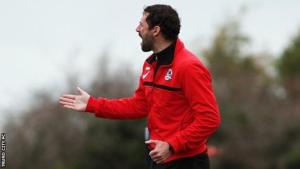
    Giving his players some vital instructions as Truro assistant.

    Giving his players some vital instructions as Truro assistant.

    DB: That’s fascinating. So how do you think the way Truro line up differs from how you would play ideally?

    WC: We line up to compete with the opposition, first and foremost. Tactically, we set about trying to disrupt their game, and as the match goes on, start to impose how we want to play on them. The pitches at this level dictate what we can do, somewhat. We’d like to ask our players to play the ball out from the back and through midfield, but that isn’t always going to be possible.

    Sometimes we have to be more direct than our ideal style would be, and on occasion, we’re required to be a more physical side as well. Those things are dictated by the opposition, the level and the pitches we’re working on.

    DB: The success Truro City have experienced with you in the dugout is bound to mean that your stock is high. Is the long-term aim to take on a manager’s job within Non-League, or do you prefer the assistant role and having the work at Ivybridge?

    WC: No, that isn’t my aim. Steve [Tully] does all the man-management work, and dealing with the agents – things in that area. I just enjoy being out on the grass with the players, coaching them. I like watching our opposition and coming up with tactical plans. Those are the aspects I’m happy doing, so I don’t think I could see myself going into management.

    Then again, I hadn’t seen being an assistant manager in adult football as part of my career path. So I could never say never, but it would take a lot to get me off the training pitch and away from spending that time teaching players. It’s what I love doing – at any age group and any level.

    DB: What do you enjoy doing outside of football? And was there ever a career you considered, aside from playing the beautiful game?

    WC: Oh dear, I don’t get any time outside of football Dave! [*laughs*]

    I enjoy being with my family. I have two young boys, and I love spending time with them. They’re my release from football.

    With regards to a career outside of football, I wouldn’t have a clue what else to do! It’s been my life since I was 15, and had been all I ever dreamt of doing as a little lad kicking around in Northern Ireland. I feel privileged and proud to have made a career in the game, but I never had any other occupation in my head, and still don’t.

    Thank you to Wayne for his superb insights into a fascinating life in football. Best of luck to Wayne and everyone at Truro City for the rest of the season.

    You can follow Wayne on Twitter, as well as Ivybridge Football Academy, whose website can also be found here.

    All images are accredited in the ‘Description’ section for the photos.

    Posted on February 20, 2016, in Dave Burin Interviews, UTL Archive, Vanarama NL South and tagged Bristol Rovers, Crystal Palace, Exeter City, Featured, Interviews, Leyton Orient, National League South, Non-League, Torquay United, Truro City, Wayne Carlisle. Bookmark the permalink. Leave a comment.

  • Under the League Interviews…Carl Piergianni

    Under the League Interviews…Carl Piergianni

    It was no surprise when Carl Piergianni was named Boston United’s Player of the Year at the end of the last campaign, and it was a given that his face yet again adorned the National League North’s ‘Team of the Year’. A tough, talented and combative force at the heart of ‘The Pilgrims’ defence, Piergianni is as articulate, measured and likeable off the pitch as he is solid and skilful on it.

    We discuss everything from Carl’s early memories as a Peterborough United fan, to learning the ropes in the Northern Premier League with Spalding United, a brief appearance for the first-team of his boyhood heroes, the experience of relegation at Corby Town…and much more. With Boston pushing for promotion again this season, there’s no better time to hear from one of the division’s hottest prospects.

    DB: You’re a Peterborough lad, and spent your youth career with the POSH. What are your memories of supporting the POSH growing up, and what do you remember about being a young player at the club?

    CP: I have really good memories of supporting the club as a youngster. One of the first games I remember going to was when Peterborough played Darlington at Wembley in the playoff final [in 2000]. They won 1-0 and Andy Clarke scored the winner and that was one of many great memories of being a Peterborough fan growing up.

    Being a youth team player at Peterborough United was great as well. To be named Captain during that time was a great honour and then to get offered a pro contract – at my hometown club – was fantastic. It was exactly what I’d always dreamt of.

    A youthful Carl during his Peterborough days.

    A youthful Carl during his Peterborough days.

    DB: Despite coming through the ranks at London Road, your first taste of senior football came 20 miles north at Lincolnshire club Spalding United. Were you keen on heading out on loan to play mens football? And was it tough to adapt to the physicality of the Northern Premier League, as a young player?

    CP: I was very keen to go out on loan, personally. The advice I’d give to any young player now is that it’s vital to go out and get experience of playing in mens football, as early as possible.

    Doing so made me the player I am today. I became a lot stronger, a lot more physical – so I definitely recommend going out and playing first-team games, rather than sitting on the bench or player under-21 matches.

    I enjoyed the toughness of the NPL. I’m quite a physical player and don’t mind getting stuck in. It was important to learn how to use my body in those kinds of games, and also to adapt to a game which actually meant something.

    When you play in reserve games, obviously you want to win, but it doesn’t really mean anything. However, when you go into a club like Spalding and it’s a proper first-team game, the 3 points are vital and the team were trying to survive relegation [from the NPL Division One South]. You quickly learnt that both performances and results really meant something.

    DB: In 2010 you had your first taste of the Football League back at Peterborough, but it was just a single game. What are your memories of that sub appearance against Rochdale? And do you feel you deserved more first-team opportunities at London Road?

    CP: At the time, I don’t think I was ready to be starting games for Peterborough. I wasn’t quite good enough at the time, and I was only a young lad – so I don’t hold a grudge against anybody at the club. There were much better players there than I was at that point. Peterborough were challenging to try and get up into the Championship, so it was difficult for me to get a game.

    With a debut, people always say ‘it’ll happen when you least expect it’. And I remember just being sat on the bench, and [then manager] Gary Johnson suddenly just told me I was going on. So I was suddenly just standing on the sideline, my knees shaking, and just waiting to go on!

    DB: You joined Altrincham on loan later that season, in early 2011. The club’s awful start to that season meant they ended up relegated from the Conference Premier, but you were a regular fixture in the side, as results improved. So was Alty an experience you enjoyed or not?

    CP: Very much so. Altrincham’s a great club. As you said, they had such a bad start to the year that it was hard for them to claw their way back up the table. There was a big gap of points between them and safety at one point, but during the time I was there Alty won a fair percentage of the games we were involved in, so it was actually a period I really enjoyed.

    Credit to Altrincham, they’re back in the National League now and as with Spalding, I felt it was a club which did a lot to help develop my career. The players there were a very close, tight-knit group. Robbie Williams at the back, Sean Densmore (who’s now Alty captain) at full-back, and Damien Reeves – they were really good players, and everyone there ensured I loved my time at Altrincham. There were no cliques in the changing room, which was great – everyone at the club just got along really well.

    DB: Aged 19, you moved to my local club – Stockport County! You played in almost every game that season, as the club stabilized themselves in the Conference Premier. But you had three different gaffers in that one season – Dietmar Hamann, Willie McStay and Jim Gannon. How did they all compare?

    CP: That was an interesting experience. Dietmar Hamann and Jim Gannon were polar opposites. Willie was the assistant under Didi Hamann, so he was familiar to us already, and his management style was similar to Didi’s.

    Didi had a more relaxed approach than Jim Gannon did. He’d change the team a lot, go with different tactical approaches and was very keen on rotating the squad. He was a lot more laid-back in training and gave the players free-reign to play as they wanted to. Jim was at the opposite end of the spectrum. He knew exactly what tactics he wanted to employ in every part of the game, and stuck to a certain way of playing. So, two deeply contrasting managers!

    Carl in action during his season at Edgeley Park.

    Carl in action during his season at Edgeley Park.

    DB: At County, you scored your first league goals in senior football, getting four in total. What do you remember about your first two, both scored in an exciting 3-3 home draw against Hayes and Yeading United.

    CP: I just had a bit of luck and managed to score two! (*Laughs*). The first one just came to my feet and I slotted it in. As for the second, I just remember being completely surprised after scoring again! Sadly I didn’t have a celebration planned, I think I just raised a finger into the air and ran off.

    DB: You moved to Corby Town in October 2012 after just over 12 months at Stockport. You helped the side to some excellent results in that early period, and scored 4 goals in your first 5 games! Why do you think you fit into that side so well? And what caused your sudden goal rush?

    CP: I always thought I was a threat from set-pieces, and having moved down a league, where the defensive marking wasn’t always as good, I found it a bit easier to get goals than I did in the Conference Prem.

    I also had the benefit of a giant centre-half next to me in Paul Malone, so their biggest player would always be marking him and it’d give me a chance to go up against someone a bit smaller! I managed to get on the end of balls quite a lot, and luckily a few of them went in.

    DB: Corby were extremely unlucky to be relegated that season, going down on Goal Difference – and just by a solitary goal – below Histon. As a player, how do you cope with that kind of a setback? And did the club’s drop to the Southern Premier League influence your decision to leave?

    CP: That was a really tough time for me personally, and for everyone at Corby Town. I’d really enjoyed being at Stockport, and I was sad to have to leave the club. I chose Corby because I’d moved back home and wanted a local club, to try and steady myself again.

    That season, I thought all along that Corby would comfortably avoid the drop. We had an okay squad, and I certainly thought we were good enough to compete in the division. We played some good football at times and looked like we were going to avoid the drop, but unluckily went down by such fine margins. All we needed was a point in any of the games that we lost, which was tough to take.

    Once the club went down, I made the decision that I wanted to play in the Conference North (or higher) in the following season. As soon as I spoke to the people at Boston United, I knew that joining them was the right move for my career.

    DB: In May 2013, you headed to York Street, home of your current club, Boston United. In that first season, the club finished 6th in the Conference North, and you were part of a formidable defensive unit, alongside the likes of Scott Garner, Conor Marshall and Netan Sansara. What were those guys like to play alongside?

    CP: It was interesting, because when I signed for Boston I was the only centre-half at the time, and then the gaffer told me he was bringing in Scott, who’d been captain at Cambridge United the year before. Playing alongside Garns* [*Scott Garner] was great, and he’s challenged me and brought my game on a hell of a lot. I’ve really enjoyed playing alongside him, and the other lads you’ve mentioned.

    DB: Going back to the beginning of that season, your competitive debut for The Pilgrims was in a 4-1 win away at Edgeley Park, home of your former employers Stockport County. Is it extra sweet to beat one of your old clubs, or is it no different to any other 3 points?

    CP: There’s always something extra there when you play an old club. You want to try and show that club what they’re missing! The main thing is always getting the win, but personally it was really special to do that at Edgeley Park.

    DB: Last season Boston improved on that 6th placed finish, ending the season in 3rd place – before the narrowest of play-off losses to Chorley. The Pilgrims have been a little inconsistent so far this season, but do you feel this squad has the quality for another play-off finish…or maybe more?

    CP: Definitely. I think we’ll achieve at least a play-off spot this year. We’ve been a bit hit and miss at times, but the quality across this group of players is good enough to be up there. It’s about getting a sustained run of form. We’d gone five games unbeaten – with four wins in there – before the North Ferriby game [a 4-3 loss on 7th November]. But when you have those frustrating results, you need to bounce back. That’s absolutely vital if we want to finish in the play-offs.

    scelt7

    Boston’s defensive dynamo in action against Stalybridge Celtic.

    DB: Absolutely. And alongside yourself, who would you say are the main danger men for Boston. Who should we all be watching out for?

    CP: In terms of goals, you can’t look past Dayle Southwell. He’s already on 12 for the season. But he’s only one of the really good strikers here. Mark Jones is so hardworking up top, and he’s something of an unsung hero for us. We’re certainly not short of options in attack.

    From set-pieces, me and Scott Garner chip in with quite a few goals, so I think as a side, we always pose a threat – whoever we’re up against!

    DB: You’ve made it into the Conference North/National League North ‘Team of the Year’ two years running, and at 23, you still have a long career ahead of you. Are you looking to stay with Boston in the long-term, or is the aim to keep performing well and hopefully interest a Football League side.

    CP: I always hope that one day a Football League side will be interested in me. But Boston have treated me so well, and I’ve always had good dealings with everyone at the club. I couldn’t ever envisage leaving for another club at this level. For me to even consider moving, the interest would have to be from a club at the top end of the National League [Premier], at the very least.

    Living here is important for me, as well. I’m close to home, I have work outside of the game and there’s football at a club I really enjoy being a part of. When it comes to Football League interest, though, I don’t think anyone [at this level] would be able to turn it down.

    DB: We’ve talked about the National League North. It’s a division with some lovely old grounds and some pretty impressive new stadiums. Is there an away trip you especially enjoy – either for the results you get there, the location or what kind of away support the Pilgrims fans bring?

    CP: Stockport’s probably the best away ground I’ve played at. When we played at Edgeley Park on the opening day of this season [a 2-1 defeat for Boston] the atmosphere was electric, and as a player, it’s great to be involved on the field when the ground is like that.

    Tamworth is another trip I always enjoy. We always get an excellent away following there, and [The Lamb Ground] is a really tight ground, the fans are right alongside the pitch, and it’s a fixture where that traveling support always makes a lot of noise!

    DB: I know from Twitter that you like a bit of Ibiza. So what else do you enjoy away from football, aside from soaking up the sun? And what job you do outside of playing the beautiful game?

    CP: I like to travel. And not just to Ibiza! I’ve been around Asia and traveling is always something I’m looking to do come the end of the season. I try and save my money so I can see as much of the world as possible. I always like pre-season but we stay here, which isn’t quite as exotic!

    Outside of football, I work for Molson-Coors, the Brewery, as a sales rep. I go into convenience stores and Co-Ops as an account manager for them. And it keeps the money in that I need, as someone playing football part time.

    Aside from all that, I like the gym – though that’s also a necessity when you’re playing football – and like everyone, I enjoy a bit of golf in the summer!

    Thanks to Carl, and best of luck to him and everyone at Boston United for the rest of the season. You can find the Pilgrims defensive rock on Twitter @CarlPidge.

    Posted on November 17, 2015, in Dave Burin Interviews, UTL Archive, Vanarama NL North and tagged Altrincham, Boston United, Carl Piergianni, Featured, Interview, National League North, Spalding United, Stockport County. Bookmark the permalink. Leave a comment.
  • Under the League Interviews…Kurtis Guthrie

    Under the League Interviews…Kurtis Guthrie

    Right now, Kurtis Guthrie is the toast of The New Lawn. With five goals already this campaign, the Jersey-born forward is skilful, powerful and regularly contributing vital goals for the current leaders of the National League. Having begun his career at Jersey club St. Clement, 22-year-old Guthrie has experienced time in the Football League with Accrington Stanley, promotion from the Conference South with Welling United, and last season helped Forest Green Rovers to the highest finish in their 126 year existence. And this time, they’re aiming to go even further…

    Friendly, candid and measured, Guthrie talks me through an action-packed career which belies his young years. From his first ever goal for Southport, (“a deflection”) to lifting a championship with Welling United (“the best group of lads”), his shameful treatment by Bath City, and much more…this is the FGR star’s story, in his own words.

    DB: Growing up in Jersey, were there many footballing opportunities for youngsters on the island? And who did you support, either locally or further afield?

    KG: There weren’t really many opportunities, no. At ages 14 and under, there are a few tournaments, but no real opportunities to push on from there. I would love there to be more for the kids. In Jersey, I think there are a lot of technically sound, very good young players – but it’s hard to get used to the physicality you can get in football. We weren’t getting to play against boys from the mainland.

    I didn’t really support a team. In Jersey, it’s all local clubs. My favourite club in Jersey is St. Clement. I played for them when I was younger, and then when I started in mens football. Over [in England], I’ve just always enjoyed watching good football – whoever the teams are.

    DB: In 2009, you broke into the first-team for St. Clement, who are in the Jersey Premiership. You scored almost a goal a game for the club, which is an amazing ratio. How did you manage to adapt so quickly to physical senior football, at just 16?

    KG: I always enjoyed playing football above my age group. I started playing u-12s when I was about 8 years old, and a couple of years later, for the u-14s. When I reached 16, I didn’t really enjoy playing with people of my own age – I was excited by the challenge [of mens football]. I was always quite tall as well, so I could handle the physical side of the game.

    I found the transition easy, really. I didn’t find mens football too difficult, and I preferred it to playing with people my age. And the better the players around you are, the better you play too. As a young player, I think the quicker you can start playing senior football at any level, the better stead it will stand you in. Playing in the park with my friends had become a bit too easy!

    Anyway, I spoke to my Dad about ‘playing up’ for the mens team, and he encouraged me to. I’d been at the club for a while, so everyone at the club knew me and what I was capable of, and they were happy to throw me in.

    DB: In 2011, you joined League Two side Accrington Stanley. How did the move come about? And what were John Coleman and Paul Cook like to play for – each were in charge for part of your year at the club?

    KG: When I was 17, I moved to Trinity – another club on the island [of Jersey]. Whilst I was there, there was a bloke called Eamonn Elliott, who had played under John Coleman some years back. He told me ‘you deserve a chance in England’. I’d had that said to me before, so I didn’t really take note of it at first. By then I was working – doing my apprenticeship as an electrician – and I’d almost given up the hope of breaking into professional football. As that season ended, I got a phonecall from Stanley, saying they wanted me to come over and I went over there. After about 10 days there, the club offered me a deal, and I took it!

    It’s hard to judge those managers, because I feel that I was stitched up a bit by the club. I was told that Stanley were bringing in another striker, for me to learn from, and I signed under that pretense. That never happened, and I played up front on my own throughout.

    John Coleman did try and help me to adapt, but when Paul Cook came in, we just didn’t get on. I’m not sure why, but I do think we’re completely different people. About four months before the season ended, Stanley told me I was going to be getting a new contract at the end of the season, and then a week before it ended, Paul [Cook] pulled me into his office and just told me ‘I don’t want to give you anything’. For me, it turned out to be a blessing in disguise. I didn’t feel I was improving at Stanley, because I didn’t have the support system I needed.

    C_71_article_1442263_image_list_image_list_item_0_image

    Kurtis in action during his season with Accrington Stanley.

    DB: You’ve almost answered my next question, but I’ll ask it anyway!

    Stanley sent you on loan to Southport for part of that season, and didn’t renew your contract at the end of the campaign. Do you feel that you were given a fair chance to prove yourself at Accrington – or not?

    KG: I do think a lot of the reason that period didn’t work out was down to myself, as well. I didn’t have that guidance, and had I known what I know now, I would have looked to go on loan somewhere else – preferably for 6 months. At Southport, I only started 3 games and came on as a sub twice. I was only there for a month, so I should have gone out on loan again, or even extended my time at Southport.

    I take responsibility off my own bat, but for financial reasons, a club like Stanley – at that time – couldn’t give me the support you need in the situation I was in.

    DB: Whilst at Southport, you got your first goal in the English game – a vital equaliser in a 2-1 win over Alfreton at Haig Avenue. What are your memories of that crucial strike?

    KG: I remember the ball coming over, I took it down and came inside, and then shot towards goal with purpose. It took a deflection, but it went in!

    It was obviously a nice feeling, but I think at that time, I only appreciated the experience for a moment. It was the same when I made my [Accrington] debut away at Northampton. I don’t think I realized the magnitude of those moments. I was just a lad who’d come over from Jersey, wide-eyed, just wanting to play football. It’s a shame, because I look back now on some of those early moments and how much they should have meant, and I think I took them all for granted – because I didn’t know any better.

    DB: Talking of goals, you scored a hat-trick on your debut for Bath City in 2012, against Maidenhead United. You had a very successful few months with the club. Did you enjoy your time at Twerton Park – and did you consider staying with the club long term, before the Welling move came about?

    KG: Obviously the hat-trick was a nice moment for me, and I was fortunate to have my sister – who was living in Bath at the time – there watching. For quite a while I was very happy at Bath. I was enjoying my football and the club was a good step for me rebuilding my game, and trying to find out what sort of player I was hoping to become.

    I wanted to stay at Bath, but because I was young, the club felt that they could string me along. I was on a monthly contract at the time, which was fine for a while because I was just happy to be playing games. Then, about a month after, I said to them that I was looking to commit to the club long term, and they said they’d give me one more month-to-month contract, and then sort out the longer-term. I said ‘OK’ to that.

    Then, after they were knocked out of the FA Cup, the Chairwoman at the time [Manda Rigby] stopped talking to me, the coaches were avoiding me. I went in to see the Chairwoman the night before one training session, and said ‘if this doesn’t get sorted by the weekend, I’ll walk away, because this is my last game [on month-to-month] anyway’.

    They promised to have a meeting with me after the training session, but as soon as the session ended, everybody left the training ground. People at the club weren’t answering my phone calls, and I just went on Twitter and said that it had been a pleasure, and I wished Bath City all the best, but that my time there was over. As soon as I’d tweeted that, I had phonecalls from the Chairwoman saying ‘We would have sorted something out, but there’s no going back now’. I explained that I’d given them ample opportunity to do that, and then I went back to Jersey, to collect my thoughts.

    That’s when [then Welling United manager] Jamie Day got in touch. He’d expressed interest in me before, and we got on well. After those two weeks, I flew back over to the mainland, and signed for Welling for the rest of that season. That’s probably the best decision I’ve made in my career, and without a shadow of a doubt, Jamie has done the most for me of anyone in football. Now he’s up at Forest Green [as Assistant Manager], I’m just over the moon that I get to work with him again!

    DB: You were instrumental in Welling’s promotion that season – the club won all of your first 11 games in the side. Why do you think you fit so well into that Welling team? And what are your memories of the day you clinched promotion to the Conference Premier?

    KG: I’d played briefly for Welling in pre-season, before going to Bath – and so I’d already met quite a few of the players. I was also living in Peterborough, when I signed properly for Welling, and ended up carpooling with the captain, Lee Clarke, so I was instantly made to feel welcome.

    The Welling boys were the best group of lads I’ve ever had the pleasure to work with. That team spirit was something I’d never experienced before. Obviously Welling isn’t a club with lots of money, so Jamie had brought together lots of players who loved playing football and wanted to work hard for each other. Jamie knew that money wasn’t what motivated us – the guys in the squad were motivated by one another. It was just like playing with 18 of your mates!

    I think that spirit is what won us promotion. In terms of individual players, we probably didn’t have the best team in the division, but we had the best collective team unit. We knew one another’s strengths and weaknesses, and how best to work together.

    We won the title away at Boreham Wood, in the penultimate game of the season. We went there needing a point, and every one of us in that changing room beforehand just knew that this was the day Welling would be promoted. We drew 1-1 and did it!

    Our last game of the season was at home. Knowing we’d already won the league, and playing in front of our own fans was a great experience. Welling may not have loads of fans, but they’re loyal supporters who sing their hearts out. They’re fans that any player would be happy to play in front of.

    DB: At Welling you picked up a fair few yellow cards, but you’ve still never been sent off in your career – as a player, do you have a strategy for being able to be quite a tough, imposing player and taking the odd foul for the team, without stepping over that line and getting sent off?

    KG: It’s difficult. I feel that I get punished a bit on the pitch by opponents. I always seem to end up in the wars, so I make sure I give out my fair share as well! That means sometimes getting booked, of course.

    I’m on four yellow cards so far this season – so just one away from a ban. However, if you’re a player who puts yourself in where it hurts, sometimes the decisions are going to go against you.

    It’s a physical game at this level, and everyone knows that in the National League, you have to do the ugly side of the game sometimes – and with that comes a few bookings or even sendings off.

    Skrill Premier

    A familiar sight: Kurtis in on goal for Welling United.

    DB: The Wings finished 16th in the club’s first season in Non-League’s top tier. One of your teammates in that side was Loui Fazakerley, who’s now manager of the club. Did he strike you as someone who was destined to end up in the dugout, or were you surprised?

    KG: That season was a funny one. Up until Christmas, we were in the top ten, and then we picked up a few injuries, whilst a few boys got moves to other clubs.

    DB: Did you have quite a small squad?

    KG: Yeah. Financially, we couldn’t hold onto those players. If the club had some more financial backing, and could have brought in a few more players to fill the void when we had exits or injuries, it would have been a completely different season.

    And ‘Faz’? First and foremost, he’s a great bloke. He’s also very into his fitness, and has always been a model pro. Within the younger players, there would always be someone that he would look to and try and help them along. He doesn’t demand respect – he just gets it.

    I wasn’t at all surprised to see Loui step into the manager’s job at Welling. It’s a great opportunity for him, and a great fit for the club as he knows the place very well, and has been at Welling for years.

    DB: You joined Forest Green Rovers last summer. How did you find the transition from part-time to full-time football, and more importantly, how did you cope with the fact there’s only vegetarian food on offer at the ground?

    KG: [*Laughs*] The transition from part-time to full-time football felt strange, but I’d already done it once – when I joined Stanley. At Welling, we trained three mornings a week, in my second year. So it was only adding an extra day. The tougher thing was trying to up my intensity levels.

    I think some players make out that the transition [between part-time and full-time training] is a bigger deal than it is. It’s been nice to be in full-time again. As soon as I joined Forest Green, I vowed that I wouldn’t take it for granted, and I don’t feel that I have.

    The veggie food there isn’t really for me. I just make sure I eat big before I go to training!

    DB: You had an excellent first season with the club, finishing with your best total yet – 8 goals – as well as more than a few assists. In which ways do you think your game has developed with FGR? And are there areas you still need to improve in?

    KG: The team did admirably last season, and we achieved Forest Green’s highest ever finish [5th place in the Conference Premier]. As for myself, I didn’t really play much in the first half of the season – it was more of a bit-part role. But once I got my foot in the door, I didn’t look back and have just kept pushing on.

    I think the training here has helped my all-round game. [FGR Manager] Aidy Pennant has been good with me, and I’ve also been patient because I’ve had to wait my time to prove what I could do for the club. I feel like when I joined, people were saying ‘who’s this? He’s just another young lad’, but I think if you asked the fans now, they’d say I’m an important part of the team.

    I feel I’ve deserved credit for keep working hard, but the coaching staff have been brilliant. Aidy, and now Jamie Day [who joined in May 2015] have helped me to continue improving this year.

    DB: Forest Green are currently top of the National League, though results have been patchy since that incredible start to the season. How confident are you of winning automatic promotion? And do you think the team can learn from some of the recent draws and losses?

    KG: I’ve always said that clubs are at this level for a reason – and that reason is inconsistency. When you step up to the Football League, I think the clubs there are a bit more consistent.

    I feel this is the weakest the Conference has been for a while. We won nine games on the bounce, but I don’t think we even played our best football in those early games. And then we got just one point from the next four games, and yet stayed top of the table.

    At the moment, we’re going through an unfortunate patch, but the performances and results will definitely pick back up again. So I think ‘why can’t it be Forest Green this season?’.

    B74A1937.jpg-pwrt3

    Celebration: Kurtis and Lee Hughes (left) celebrating a crucial goal for Forest Green.

    DB: Along with yourself, who would you say are the main threats in the team? Obviously you have the likes of Jon Parkin…

    KG: Keanu Marsh-Brown is another, since he’s come in. Keanu has so much flair and he can open up defences. Aaron O’Connor also has that deft finish, and a lot of experience. They’ve both been great additions to the squad.

    Then Darren Carter coming has given us that old head in midfield, and an ability to control games – alongside Rob Sinclair, who’s technically brilliant. So I think we’ve got a good chance [of automatic promotion].

    DB: In terms of the atmosphere, the ground and even the numbers of fans Forest Green take – where is your favourite away trip in the league? Is there an away day you always look forward to?

    KG: It’s a tough one that! [*Pauses*] I like going back to Welling. I have good memories of being at the club, and even though last year I only played a couple of minutes there, I enjoyed it. This year I’m looking forward to going back. It’s a Tuesday night game [10th November]. I always liked midweek games at the PVR* [*Park View Road].

    Tranmere should be a good one this season, too. I’m also looking forward to going to Halifax because last year it got a bit heated, so I’m hoping to go back this season and get revenge!

    DB: Though you’ve already had a lot of experience in the game, you’re still only 22 and have a long career ahead of you. Do you see yourself with Forest Green in the long-term, or is the endgame to join a big Football League club?

    KG: That’s difficult, because I feel Forest Green is the best club to be at, at this level. The club offers everything you need, and the facilities are excellent – absolutely second to none.

    Still, I’ve always dreamt of being able to play in front of big crowds, every single week – and I feel that big crowds actually bring out my best performances. It’s just unfortunate for Forest Green, that the location [Nailsworth: population 5,794] means they can’t generate those big crowds.

    I don’t think there’s any other way in which the club needs to progress, other than getting bigger crowds. There’s talk of moving to a new stadium, and maybe that could be the turning point on that front.

    DB: Finally, what do you enjoy doing outside of football? I know you have a sporty family – with your sister playing for the England netball team. And is there a career you ever considered aside from playing the beautiful game?

    KG: I’m a bit of a couch potato to be honest, mate! I like watching films and just relaxing, really. I do play a bit of golf in the summer. I’m a seasonal golfer, I don’t really fancy it in the winter!

    Because of the work I did before I played football for a living, if anything was ever to go wrong, I think I’d turn to painting and decorating because it’s just something I know. I think I’d like to work for myself – not taking orders from people. I’m quite an independent guy.

    I’d only stay in football if there were the opportunity to do youth coaching, like u-14s. When I go back to Jersey, I like watching local football, because there’s always that one player who’s better than everyone else. You can always spot them, and I’d like to help kids in Jersey get over to football clubs in England more, and expand the market of players in Jersey.

    Guernsey are doing their own thing in the league, but the standard of players in Jersey is far better. If there was the opportunity, that’s something I’d like to look at doing once I finish playing.

    *Thank you to Kurtis for this great interview. Best of luck to him and everyone at Forest Green this season. If you want to hear more from Kurtis, follow him on Twitter @kurtisguthrie11*

    Posted on October 22, 2015, in Dave Burin Interviews, Forest Green Rovers and tagged Accrington Stanley, Featured, FGR, Forest Green Rovers, Interview, Kurtis Guthrie, St. Clement F.C., Welling United. Bookmark the permalink. Leave a comment.
  • Under the League Interviews…Darren Williams

    Under the League Interviews…Darren Williams

    It’s no surprise that Darren Williams has made a splash as manager of ‘The Catch’. Now four years into his tenure as Whitby Town boss, the friendly and genuine Teessider has seen it all during more than two decades in the game. In a storied career, Williams has played in the Premier League, every division of the Football League, and earnt his stripes as a veteran defensive rock and acute manager in Non-League football.

    Discussing everything from playing in York City’s famous 3-0 triumph over Manchester United, to scoring his first goals for Sunderland, his respect for the hardworking professionals of the Northern Premier League and much more, Darren talks me through his fascinating journey, with honesty and heart.

    DB: Hi Darren. You grew up in Middlesbrough during the ’80s, which was a difficult period throughout the North East with the pit closures & unemployment. What was life like as a kid in ‘Boro at that time?

    DW: I think it was difficult for the town at that time, and that was reflected in Middlesbrough F.C.. For the club, it was more a case of survival than anything else. From a financial point of view, obviously clubs like that have academies now, but the youth policy at Boro then was very different.

    As young footballers, we were training in a gymnasium – about 30 or 40 kids at a time. It resulted in too many players with ability being overlooked.

    DB: You joined York City’s youth setup in 1993 and made your debut for the club in December 1994 after superb performances for City’s ‘intermediate’ side. What do you remember about your early time at Bootham Crescent and making your professional debut in a 4-0 win over Blackpool?

    DW: I joined as a YTS, and had to do everything from cleaning the stands to scrubbing hallways and toilets. It was a proper YTS experience, and a lot of the players who went through that came out the other end as better people. I still think young players should have those duties; I never saw a reason why it should have changed.

    Leading up to my first-team debut, I played for the youth team in the morning and then dashed back to the ground to be on the bench against Blackpool, and I came on as a sub. I played two games in one day, but thankfully we were at home, so I didn’t have to travel too far!

    DB: On 20th September 1995, you played in arguably York City’s most famous victory of all time. The Minstermen won 3-0 away at Manchester United (City eventually went through 4-3 on aggregate). Were you confident before the first-leg that you could overcome a footballing power like United? And what was the atmosphere like at Bootham Crescent for the return?

    DW: No, we weren’t confident going there that we could beat Man United. At that time, they had some fantastic players and a massive squad. We just went to enjoy the occasion. Most of the lads hadn’t played at Old Trafford before, and it was a big occasion for us. York had a great support at the time who travelled down to Manchester, and we played really well for them on the night and managed to come away with a 3-0 victory.

    Bootham Crescent was packed to the rafters for the second-leg, and Man United had included some of their top players. Fortunately, we got a goal just before half-time and it was enough to take us through.

    1409057720980_wps_1_DARREN_WILLIAMS_OF_YORK_C (credit): Daily Mail

    Williams gets to grips with the Man United attack, in their 3-0 win over the footballing giants.

    DB: Despite that famous cup win and York City narrowly avoiding the drop to Division Three, you left to join Sunderland in Summer 1996. Why did you decide to leave Bootham Crescent? And did you get other offers as well as Sunderland’s?

    DW: Yeah, there were a couple of offers. However, my Youth Team manager at York, Ricky Sbragia had gone to Sunderland, and he recommended me to Peter Reid. At the time, it was an offer to jump from Division Three to the Premiership, so from a career point of view it was a no-brainer really.

    DB: Did you find the transition of moving up to a bigger club like Sunderland quite easy, or was it a difficult one?

    DW: I think I adapted quite quickly to be fair. I didn’t expect myself to, I thought it would take quite a bit of time to settle in there and to appear in the first team. I didn’t have to wait too long to play, actually, and the whole transition was quite smooth.

    DB: In your first season at Sunderland, the club were sadly relegated from the Premier League. However, on a personal note, you scored your first professional goal in a 1-1 draw with Leicester and scored the winner away at your hometown club Middlesbrough. Tell me about those moments.

    DW: The one at Leicester came out of the blue! Martin Smith got to the byline, pulled the ball back and fortunately enough I arrived at the right time to volley it into the bottom corner. Being my first goal, in the Premiership, was special. I wasn’t a natural goalscorer, I’ve always been more of a defensive player, but at Sunderland they played me in a slightly more advanced position [than York had], so it allowed me to get forward a bit more.

    The goal against Boro was vital at the time, as we were scrapping for points – and the fact they were my hometown club made it extra special. The funny this is that I was supposed to be marking Juninho, but I ended up with a free role in the first-half because they’d left him on the bench!

    darrenwilliams1

    In full flow: Williams on the move for Sunderland, his club from 1996-2004.

    DB: In 1999, Sunderland won the old Division One to return to the Premier League. The year before you’d played in that incredible, heartbreaking play-off final where Charlton won on penalties after a 4-4 draw. Do you think the hurt of losing that final spurred yourself and the whole squad on for the following season?

    DW: I don’t think it was the hurt of losing that season. It was the experience of that [1997-98] season, where we should have gone up automatically. There was one night at the Stadium of Light where we were 2-0 up against QPR, and ended up drawing 2-2, which effectively knocked us out of second place.

    We learnt from that experience, and took that whole season on board. In the following campaign we pushed on and dominated the league from start to finish.

    DB: You left Sunderland in 2004, but after a brief stint at Cardiff City, you headed back North to Hartlepool United. In your second season, the club were promoted to League One with Danny Wilson in charge. Danny’s perceived as a tough, no-nonsense manager. How did you find playing for him?

    DW: I got on okay with Danny. We fell out on the odd occasion, but I found Danny to be a nice bloke and a decent manager, to be fair. We didn’t argue over anything personal, it was just football-related stuff, and we always got on fine any disagreement.

    That’s how it is in football, you have your run-ins and then once the matter’s done and dusted, it’s forgotten about. You’re always likely to clash at some point in your career, with somebody – and unfortunately I’ve experienced that on a couple of occasions myself!

    DB: Shortly before making the transition into playing Non-League football, you joined Dundee, pairing up with your old Sunderland teammate Alex Rae, who was then player-manager at Dens Park. Did you enjoy your experience of Scottish football? And was it tough to have a manager who you’d previously played with instead of for?

    DW: No, it wasn’t tough to have a manager that I’d previously played with, because I respected Alex and we’d got on really well when we were at Sunderland. He called me and asked me to go up and play at Dens Park, and it was a decision I wasn’t too sure about – but I went up there.

    I enjoyed the football side of things, but not life there. No disrespect, but Dundee isn’t the greatest of places and that area is quite remote. That was hard, and unfortunately Alex got the sack shortly after, and another guy I’d worked with, Jocky Scott took over. I got on okay with Jocky, but I’d moved up there to play for Alex, really.

    DB: You joined Gateshead, in the Conference Premier in 2009. I believe that deal took a while to happen, because you were still hoping for a professional club to come in. So was it tough to accept that you were playing at a lower level than you had been earlier in your career?

    DW: It wasn’t tough to accept, but I was looking around for a while, hoping that I’d get an offer from a League club. Obviously though, the longer you wait the harder it gets to find a club. Joining Gateshead was a decision I should have made a little bit earlier. I enjoyed playing for them, and being at a local club, but I just didn’t see eye-to-eye with Ian Bogie, the manager.

    I was a senior pro and I had a view of how things should be done, and I thought some of the decisions he made were just not right.

    DB: Whitby Town, where you arrived in 2011, was your first foray into management; as player manager. You’ve done a superb job, establishing a pretty small club as Northern Premier League mainstays. How would you describe your man-management style and the way you want your teams to play?

    DW: We’re an attractive footballing side and we have players with good footballing pedigree. That’s how I’ve always wanted us to play. In terms of man-management, dealing with players is something I think I do really well. I’ve had positive feedback from players I’ve previously coached, as well. Dealing with individuals is all part-and-parcel of management and I consider it one of my strengths.

    DB: At Whitby Town, you have players in your squad like Lee Bullock – who you played with at Hartlepool – and Mark Robinson – who you played with at Gateshead and Gainsborough Trinity. Why do you think it’s so important to have former teammates at the club with you?

    DW: It’s good to have people you know around you, because that mutual respect is already there. You know their character, and that they are honest lads. If they have a problem, or you make decisions that they don’t agree with, then those guys will come out and say so. What I wouldn’t like are players who didn’t agree with something I did, and then talked behind my back about it.

    whitby_town_-_tp_12-13

    Darren (far left, front row) and his Whitby Town charges, in 2012.

    DB: In Non-League, players and managers move between clubs a lot, more frequently than in the higher echelons of the game. What is it that you’ve enjoyed so much about Whitby Town to keep you at the club for 4 years (and counting)?

    DW: I’ve enjoyed working with the players that I’ve had. What I think a lot of people forget is that these lads have jobs, they’re working day-in, day-out and then the club may train on a Tuesday night or a Thursday night, and we often have a midweek game. That might be away at King’s Lynn or Colwyn Bay.

    The players will finish work, jump on a bus, get there, compete for 90 minutes and sometimes won’t get back until 1 o’clock or 2 o’clock the next morning. Then most of them have to be up again for work a few hours later. I have massive respect for the lads at this level. They don’t get paid the fortunes that the Premier League players do, but they still show such commitment to the game.

    DB: Last season Town finished 13th and you’ve had a tough start to this season. Realistically, what are The Catch aiming to achieve in this campaign?

    DW: We’re hoping to achieve a play-off place. We’ve had a difficult start, losing six defenders in the first seven games! The team has had to be shuffled around a lot, because of that. We’ve also lost our regular goalkeeper [Shane Bland] so we’ve had to get a replacement in for him, as well. Despite all this disruption at the start of the season, we still have high hopes of a play-off spot.

    DB: You’re still only 38, so a young manager. Do you have a long-term plan for where you want to be in management in 5 or 10 years, or are you just focused on the here and now with Whitby?

    DW: I’m focusing on the present with Whitby, but obviously one day I want to be coaching in the Football League. I want to move up and progress. As a player I started at the bottom and worked my way up, which is how I see my managerial career going. Working at this level [Northern Premier League] is a great grounding. You learn to deal with awkward situations like players who can’t get off work or having to shuffle about a small squad.

    I want a gradual progression as a manager, and the learning curve here at Whitby will stand me in good stead for that.

    darren_williams_0

    Darren coaches the footballing elite of the future at East Durham College.

    DB: Finally, what do you enjoy doing outside of football? And is there ever a career you considered aside from the beautiful game?

    DW: Outside of football, I enjoy time with my family. I coach quite a lot, and that’s an area I think I’ll stay in. It’s what I know. I coach with Evolution, and at East Durham College, and I’ll always enjoy the coaching side of the game!

    Posted on September 13, 2015, in Dave Burin Interviews, UTL Archive, York City and tagged Darren Williams, Dundee FC, Featured, Interviews, Northern Premier League, Sunderland, Whitby Town, York City. Bookmark the permalink. Leave a comment.
  • Under The League Interviews… Lewis Haldane

    Under The League Interviews… Lewis Haldane

    Dave Burin has been busy for us once again, this time chatting to former Bristol Rovers, Port Vale and Oxford United winger Lewis Haldane.

    Even over a slightly crackly phone reception on a windy August night, Lewis Haldane’s warmth shines through. One of Non-League football’s most likeable and resilient personalities, Haldane won promotion to League One with Bristol Rovers and moved onto Port Vale, before a series of horrific illnesses and injuries curtailed his professional career. The unbreakable wing wizard returned to football in 2013 with Southern League side Yate Town, winning Bristol Non-League player of the year in his first season, before moving onto Southern Premier League club Frome Town.

    With open, honest reflections and a personable manner, Lewis talks me through the highs and lows of a tumultuous career, from winning two promotions and playing in the Wales U-21 squad with Gareth Bale, to the physical and mental turmoil of serious illness, and his strong focus on family.

    DB: You grew up in Trowbridge in the late ’80s and the ’90s. The nearest Football League clubs were in Swindon and Bristol, over 30 miles away. So did you follow a local non-league team, or did you support a big club from afar?

    LH: I supported Leeds United. My Dad was a big fan from the Billy Bremner days onwards. I had a season ticket at Elland Road, and my Dad and I always travelled up there. As a young kid, I really liked Lee Chapman and a Lazio player called Schillaci – I’d forgotten about that, but I was apparently obsessed with him! Later on, I looked up to Leeds strikers like Mark Viduka and Jimmy Floyd Hasselbaink.

    I don’t get to see them much now, because I’m still playing, but hopefully I can get to somewhere like Bristol City or Bournemouth if and when they’re there!

    DB: As a teenager, you spent time in the youth setup at Southampton, and then at your hometown club, Trowbridge Town. Even as a youth player, was it a difficult transition moving from a club with Premier League facilities, to Non-League, where the setup is typically a lot smaller and more basic?

    LH: At that age, there’s not a big transition. I left Saints when I was 14, because I was a small lad and a lot of the kids were much bigger than me, and I didn’t really grow until my later teens. We just trained at a college in the centre of Southampton, so it wasn’t that different [to Trowbridge’s facilities]. You don’t really focus on those things when you’re young, anyway. You just want to win games and score to impress your parents!

    Trowbridge Town was nice, and just a little local club. I played for a couple of teams around the area, like Trowbridge, Shaw Youth and Whitley. All my friends were playing in local sides, and we were just learning how to play football, and learning the ropes!

    DB: You joined Bristol Rovers in 2002, but played your first senior games whilst on loan at Weston-super-Mare in the Spring of 2003. What are your memories of your brief spell with The Seagulls?

    LH: I think I scored 3 times in my first 5 games, and I would only have been sixteen at the time. It was different, because it was the first time I’d ever played mens football. It was much more physical [than youth team football], and I was a really skinny little lad back then – I probably only weighed 10 stone.Lewis Haldane Bristol Rovers

    In my final game for Weston, we got promoted at Clevedon. My Dad was there watching, and one of their players stood there, off-the-ball and just elbowed me straight in the face. He broke my nose. My Dad’s not aggressive at all, but he waited for the guy to come off the pitch and basically said ‘what are you doing, he’s a little kid’. But it was a wake-up call, to say ‘this is senior football. I’m in mens football now!’.

    That’s what sticks with me most – learning to play against men, because I was basically a kid. Players grow up at different times. Wayne Rooney, at that age, was already a big strapping bloke, but I was a little lad.

    DB: Later that year, you played your first games for Bristol Rovers. You scored your first goal in an away defeat to Doncaster, and managed an impressive 3 goals in your first 4 games. However, the club went on a run of just 1 win in 11 matches. What were your emotions at that time, and also, what was the mood like around the club?

    LH: Ray Graydon was manager and we were near the bottom of the league, which is why I got my chance. I think I was just on cloud nine, really, because all my friends were still in the youth team, and I broke into the first team. They came to watch their games, and it was just exciting that one of us had broken into the first team.

    Like I said, I was just a kid, so it was all a bit of a blur at the time. But looking back on it now, 13 years later, I can remember it all like it was yesterday. I remember coming on against Cheltenham in my first game [a 2-0 home victory] and got a penalty with my first touch! In my first start against Doncaster – I scored, and you don’t ever forget that moment.

    DB: You scored six goals in that first season, and played well throughout the year. One ever-present in that team and your early years at the club was Ghana striker Junior Agogo. What was he like to play with?

    LH: He was a quality player. He obviously moved on to Nottingham Forest, and later to Qatar – and he earned a lot of money out there. You learn a lot playing with players of that calibre, and he played for Ghana in the Africa Cup of Nations too. He was a fantastic player, and obviously moved on the season after he scored 20 goals. Luckily for him, he got that big move, something which never happened for me. But you’ve got to give him his props for managing that!

    DB: Bristol Rovers finished 12th in what became League Two in the following two seasons, and you were in and out of the team. However, in the 2006-07 campaign, you were an integral part of the Rovers team that won promotion in the Play-Offs. However, the team also suffered a heartbreaking loss in the JPT (Johnstone’s Paint Trophy) final. What are your abiding memories of that season?

    LH: It was fantastic. It was the first season I was in the side regularly, and I managed to play over 40 games that season. I played on the wing, which was a different position for me, but I was quick and I got a bit bigger – my game came together. For the first time in football really, I felt like a man.

    The more I played, the more confident I felt and the better my performances were. I had a really good season, and we got promoted. Obviously, we played at Wembley which was the most nerve-racking time of my life! But [winning promotion] was possibly the best day of my life, other than my daughter being born.

    When you’re a little boy, you dream of playing at Wembley. The thing I remember most clearly from that season though, is playing at Elland Road. It wouldn’t mean much to most lads, but for me, as a ground, it was even better than playing at Wembley or the Millennium Stadium. My Dad [also a Leeds United fan] was there, and I’m really, really proud that I played there, to be honest. One of the real highlights of my career.

    DB: As well as winning promotion, you also made your debut that season for Wales U-21s, in a European Championship qualifier against Turkey. What was it like to represent Wales at Ninian Park, and where were you when you got the call-up?

    LH: I was at home and I got the call from my manager [Paul Trollope] saying that Bryan Flynn, the Wales U-21s boss wants you to go down and join up with the squad. I was quite a shy lad, and just like ‘I can’t believe this!’. I went down there, and obviously the senior squad were there as well, so you had the likes of Ryan Giggs and Craig Bellamy there, and I was in awe of them.

    Looking back now, Gareth Bale was next to me at the dinner table before the game. He was in the U-21s team, and obviously we didn’t know that he was going to be a superstar. [*laughs*] Crikey, how our careers took different paths.

    We drew 0-0 against Turkey, and I came on in the last 20 minutes, and I had a good shot tipped around the post. We were virtually out of the race for qualifying, and I was 23 at the time, so I was too old really, but was one of the two older players allowed in the squad. Still, it’s a great memory and I really enjoyed it!

    DB: The following season you went out on loan to Oxford United. You told BBC Sport at the time that “it wasn’t an easy decision to drop down to the Conference”. In hindsight, was it a decision you’re glad you made, or do you feel you should have stayed with Rovers?

    LH: At the time, I felt I was being pushed out by Rovers. When we got promoted, they signed loads of new players and I didn’t really get a chance. Looking back, they made mistakes, as they got relegated the season after and they’d spent all their money. If they would have stuck with the boys that had got them promoted in the first place and actually cared about the club, they wouldn’t have got into that mess. The first season after coming up, Rovers finished 15th and they gradually spent a lot of money on wages and things, and got relegated.Lewis Haldane Oxford

    I went to Oxford, who were a really big club at the time, in the Conference Premier. At first we weren’t a great team and struggled a little bit, but when Chris Wilder took over we won 15 games in a row towards the end of the season, and almost got into the Play-Offs.

    My form wasn’t brilliant at Oxford. I played well some games, and others I didn’t. My confidence had been knocked by Bristol Rovers putting me to the side.

    DB: What was Chris Wilder like to play under?

    LH: He was good. He knew what he wanted, and like I said, when he took over we won a lot of games on the spin. He turned our fortunes around, and I really enjoyed playing under Chris.

    DB: You joined Port Vale in 2009, with the deal becoming permanent in January 2010. In that first year, you scored several goals, including a crucial strike in a narrow 2-1 win over Torquay United. Micky Adams also spoke highly of your pace and ability, in the media. Do you consider that season one of the best of your career?

    LH: I think the year I got promoted with Rovers was the best season of my career, but that season at Port Vale I felt like I was playing really well, after having my confidence knocked at Oxford.Lewis Haldane Port Vale

    I moved up to Stoke, where my ex-partner’s family are from. My girlfriend became pregnant about a year after we moved there, and things were good. I got my form back, and I was back in the Football League and people were talking about me again. I put in a couple of good performances live on Sky Sports and I felt that if I could keep it up, I might get a life-changing move somewhere but that didn’t happen.

    But I have those memories of playing for several different clubs, which a lot of boys would love to do.

    DB: On that note, do you feel that players are even more motivated for televised games, because you know how many people are going to be watching?

    LH: Yeah, I think so, because you get your friends back home who don’t get to the matches watching and you want to show them that you’re good!

    DB: During the following 2 years at Port Vale, you made a fair few appearances, but suffered horrendous misfortune with injuries – being out for months with an insect bite, and then the leg break which ended your professional career at the time. How did you manage to stay mentally strong during such difficult periods?

    LH: In pre-season, when I got bit by an insect, the Blandford fly, I could have died very easily. I was at home, and I collapsed. My partner called for an ambulance, and they told her to take me to the hospital, and I went downhill from there. I lost 3 1/2 stone in the space of a week. It was lucky I went to hospital, because I might have died otherwise, because the blood poisoning was so bad. It took seven months for the swelling to go down on my ankle, and I don’t think I ever recovered because I broke my leg six months after that.

    DB: Do you think the two things were related?

    LH: Do you know, I’ve got no idea to be honest. I had three operations on my ankle when I had that insect bite, to release the pressure on it. People laugh when I tell them it was an insect, but it was really tough!

    When I broke my leg, I had to be mentally strong. The moment I broke it, I remember looking down and my foot was wrapped around, so my toes were pointing the opposite way. I just panicked, and that second I thought ‘I’m never going to play football again’.

    I had a contract for another 18 months and for those 18 months I did everything I could to try and get fit. I was at the club every single day of the week, some days from 7:30am to 5pm, but I just wasn’t getting any better. I was having operation after operation. I’d keep thinking I was almost there, and then I’d go for a run and collapse to the ground with my ankle swelling up and in agony.

    That was absolute hell, but luckily enough my Daughter was born during that time so spending time with her would make my day better. Even when the training was hell, I could think about going home to see her a few hours later. I would have loved her to see me play professionally, see my games be on the TV and things, but it wasn’t to be. I tried my hardest to get fit, because I loved playing football and playing professionally was all I’d ever wanted to, but having my daughter helped me through. She was the silver lining.

    DB: Between your retirement from football in October 2012 and joining Yate Town in 2013, you were obviously out of the game. Was your hope always to play again at some level – even if it was much further down the football pyramid – or was there a time where you felt like you wanted nothing more to do with the sport?

    LH: The day I retired, I couldn’t walk without absolute agony in my ankle. Since breaking my leg in 2011, for those 2 1/2 years, I couldn’t walk without pain. For a long time, I wondered if I’d ever be able to walk or run without pain, let alone play football.

    I had a cortisone injection in my ankle a week before I started for Yate in pre-season, just to see if it would help my day-to-day life, really. It felt a lot better. Obviously I knew it wasn’t better, it was just masking it. I decided to go training with them, and thought ‘if I break down, it happens. What have I got to lose?’.

    Over the last 18 months, it’s felt a little better. I know that there’s still tissue damage and cartilage damage, but I don’t do myself any danger now in playing once or twice a week. On a Sunday it’s sometimes so sore I can hardly walk, but the thrill of getting out there and scoring a few goals and playing with a few of my friends who live around the area makes it all worthwhile.

    I got named Bristol Non-League player of the year in my first season back, so I was incredibly chuffed with that, having at one time wondered if I’d ever walk again.

    DB: You joined Yate Town in the Southern League. Did you approach them about playing at Lodge Road, or did the club contact you initially?

    Lewis in action for Yate Town

    Lewis in action for Yate Town

    LH: One of my friends, Ricky Hulbert joined Yate. I used to have a kick around with him now and again, and he asked me ‘how’s your ankle feeling, Lew? Do you want to come training with us?’. I’d just had the injection, so I said yes. The Yate manager knew my history, and asked me if I’d like to sign for them. I said yes – as long as my ankle’s okay in training, and it just went from there, really.

    DB: What was it like taking to the pitch for Yate on your debut – were you just delighted to be playing again, or was there a mixture of emotions?

    LH: It felt weird. Obviously, I was unfit because I didn’t run properly for over three years. It was really nerve racking, because I was thinking ‘what if I get injured again’ or ‘what if I’m rubbish, and everyone takes the piss out of me!’ [*Laughs*] Luckily, I still had a bit left in the locker!

    My game’s changed now. I can’t run up and down the wing like I used to, but when I was out injured I used to watch a lot of football, and I like to think that my technique and understanding of the game is a little bit better. Even though I’m not the athlete I was, I can do things on the ball now that I couldn’t have before. I just wish I had all that when I was 20!

    Lewis celebrating scoring for Yate Town

    Lewis celebrating scoring for Yate Town

    DB: Last season, you made the step up to the Southern Premier League with Frome Town, and were an important part of the team’s survival from relegation. Have you enjoyed your time with Frome, and do you still harbour ambitions of playing at Football League level again?

    LH: I’m never going to be fit enough to do that, and I’m 30 years old now. Still, when I was at Yate, we were two games away from reaching the First Round of the FA Cup, and I would love to play against a Football League side once more. It would be great to be drawn against Bristol Rovers. Leeds in the Cup would be even better!

    I still really enjoy playing my football, though it’s hard combining it with my work life. I work for a lorry components company in Bristol. It’s my first proper job, working outside of football. For the last ten years, my friends have been off getting their qualifications, going to University and building their trade – I have to start from scratch with that now, and it’ll take a few years to get where I want to be. But I’m staying positive.

    DB: Obviously your injury misfortunes mean that you’ve had more reason to think about a post-playing career than most footballers do. But do you now have a long-term plan of what you’d like to do once you hang up your boots, or do you not want to look that far ahead?

    LH: Well, I’ve been out of professional football for several years now, and not played properly for four years. I’d like to build a trade, and somewhere down the line, work on a building site. Football was my first love, but that’s gone as a career now. There’s a lot of things I like the idea of doing, but having a trade is the main goal.

    DB: Finally – what do you most enjoy doing outside of football?

    LH: I spend all my free time with my little girl. Spending time with my daughter is my main passion now – she’s my absolute world! I can’t describe to you how much I love her.

    Posted on August 10, 2015, in UTL Interviews and tagged Bristol Rovers, Featured, Forest Green Rovers, Frome Town, Lewis Haldane, Port Vale, Trowbridge Town, Yate Town. Bookmark the permalink. Leave a comment.
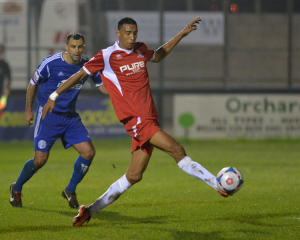
  • Under The League Interviews….Richard Sneekes

    Under The League Interviews….Richard Sneekes

    In an Under the League exclusive, Dave Burin talks to Rushall Olympic boss Richard Sneekes. Friendly, frank and thoroughly engaging, Sneekes is happy to reminisce over his fascinating career journey. It’s a footballing life which has taken him from playing under Johan Cruijff at Ajax, to reaching the League Cup final with Bolton Wanderers, and now trying to bring young fans through the turnstiles at Rushall’s Dales Lane ground, to watch his exciting Olympic team.

    Richard Sneekes (second left) is presented as Rushall's new manager

    Richard Sneekes (second left) is presented as Rushall’s new manager

    DB: You obviously grew up in Amsterdam during a period of great success for Ajax and the Netherlands national team – who reached the World Cup finals in ’74 and ’78. Who were your footballing heroes as a child, and were you a supporter of Ajax?

    RS: Yeah, I was a supporter of Ajax. But actually my footballing hero was Kevin Keegan, surprisingly enough. Because we were in Holland, we could watch German television. It was Hamburg [that Keegan played for], so I was fascinated by him, hence why Liverpool was one of my favourite teams. In Holland, we used to have a side in every country which you would follow. Liverpool definitely were my team in England.

    DB: You were on the books of Ajax during the era of managers like Aad de Mos (who led the team to three Eredivisie titles) and the great Johan Cruijff. What do you remember about your time under those managers, and the handful of first-team appearances you made at Ajax?

    RS: [I feel] privileged, to be brutally honest. I made my debut at the age of 16, against Haarlem. Cruijff was the manager – he called me into the squad a couple of weeks before, just to have a little bit of a taster. Then, my youth team manager said ‘You’re back with the first team squad tomorrow’, and I came on for the last 15 minutes [of the Haarlem game].

    Sneekes in acrobatic action for Ajax Amsterdam

    Sneekes in acrobatic action for Ajax Amsterdam

    Cruyff was very complimentary, but he knew that there was loads of talent out there, and his saying used to be ‘it’s up to you whether you make it or not’. His words were ‘I won’t eat a sandwich less if you don’t’. He wouldn’t lose an hour’s sleep over it, because he knew there was that much talent out there. He always put it in your shoes to perform, and make sure that you stood out, so that he would give you a chance.

    DB: Were you nervous then, in your first appearance, or was it more excitement?

    RS: It was with ten players, that are of top international quality, as Ajax were in those days. It’s pretty easy – they’ll give you the ball, and they’ll just encourage you to do things that you normally do in the youth team. It was a great experience. I had to go back to school the next day…if you had social media like now, that would be completely different.

    DB: You left to join Volendam in the summer of 1989, and had a successful season with the club. Was it an easy decision to move to a club which offered regular football, or was it difficult to leave Ajax and leave your home city?

    Richard Sneekes in his Fortuna Sittard days

    Richard Sneekes in his Fortuna Sittard days

    RS: No, it wasn’t, because Volendam is only 25 minutes from where I lived. I was 18 when I went there – played a full season. I was 19 when I came back [to Amsterdam]. [Ajax] offered me another contract, but by that time I’d tasted first-team football in the Dutch Premier League, playing 32 games. So I just wanted to really kick on, and decided not to take the cut deal, so they sold me to Fortuna. There was a couple of teams [interested in signing Sneekes] – Dick Advocaat was in charge of Haarlem at that stage. I had a good meeting with him. They wanted to buy me outright, but I just wanted to go out on loan, just to see if whether or not I still had a future at Ajax. So I came back, they offered me a contract, but I just couldn’t see myself playing in the reserves anymore.

    DB: You joined Bolton Wanderers in 1994, after a brief spell in Switzerland. How did you find adapting to the English lifestyle? And do you look back on it as a happy time? It’s obvious that you’ve always been very popular with the Bolton supporters.

    RS: I loved every minute of it. When I first joined, all the people in Holland thought that I would be back within three months, because I wasn’t known as a typical ferocious-tackling midfielder. But I adapted really quickly. I went on trial for a week, and the boys said ‘we’ll definitely see you back’, they sorted all the paperwork out, and I got there.

    It was a little bit different, I’m not going to deny that. Purely from a tactical perspective, because I was used to coming in in Holland at 12 o’clock, and was bombarded with where you’d have to run, whereas here it was ‘see you in the dressing room at 1:30pm’, nothing really tactical. Everybody played 4-4-2. So from that perspective, it was an eye-opener. Training once a day, whereas I was used to twice. Lots of time at home with the family. It was very good, I really enjoyed my time there.

    My first year in English football, we got through to the Coca-Cola League Cup final, and the play-off final, so it can’t get any better than that! Those two things stand out.

    Richard Sneekes enjoys a goal for Bolton Wanderers

    Richard Sneekes enjoys a goal for Bolton Wanderers

    DB: You spent the longest period of your career at West Bromwich Albion, where you were very successful, and you’ve even played for their Masters team in recent years. Why do you think you and the Albion were such a good fit?

    RS: I took my time to see what they were all about. Colin Todd made it clear that he didn’t want me to come back [to Bolton Wanderers]. I took my time, I looked at West Brom and a couple of other clubs. They were second-bottom in the old First Division, and from what I saw, they were way too good to go down. As soon as I joined, it was like being on the same wavelength as Bob Taylor and Andy Hunt, and you know, the rest is history, really.

    The people have always been friendly. It’s always a very friendly atmosphere. You don’t stay somewhere for almost six years if you don’t like it! It’s a very good club.

    DB: Before you became involved in non-league football you featured for a few clubs, including Stockport and Herfølge, but didn’t stay anywhere for more than a season. Was it a case of you not enjoying your time at those clubs, or were there other reasons?

    RS: There were other reasons. My last year at West Brom, I played 58 games. The manager [Gary Megson] then decided to not retain me. The way he tried to play, was against everything I learnt as a youngster. He destroyed my appetite for football a little bit. I went to Stockport. I’d really lost the appetite to play, to be fair, but thought I was way too young to retire. I only had a three-month contract there. That ended, and then I went to Hull. It’s where Brian Little was, who I knew from my West Brom times. He then left, and Jan Mølby took over. He wanted me to move up there, which I didn’t want to do.

    Then I went to Denmark, where one of the directors who used to be at West Brom had a club. I played there for 3 months. I look back on it now, and think that I could have probably played on for a couple more years. It wasn’t to be, but when I was released [by Albion] at 32, in my mind, I’d retired really.

    In action for West Bromwich Albion

    In action for West Bromwich Albion

    DB: You came back several years after leaving Herfølge, to feature for Hinckley United and later for Dudley Town. What was it that brought you back to playing football, and what were your first impressions of English non-league football, having played at a much higher level?

    RS: I hadn’t played for five years, when I joined Hinckley. I used to go the Hong Kong Masters every year. Dean Thomas was the Hinckley manager. He said ‘You can still play’. So I went training there, they had to wait for international clearance for about a month, and then after the first game, I thought this isn’t for me. I was 39, chasing 20 year olds! So I played about 2 and a half more games. He said he released me, but I told him I didn’t want to play anymore.

    At 42, I went to Dudley Town. My son joined them as well – he was 16. I played about 6 or 7 games with him in the first team. I usually came on for a little bit. It was just great to play with him, more than anything. I had a bit of fun. To play with your son – that was the main attraction behind it.

    DB: You moved into coaching in 2010 with Tamworth. Had you always intended to take a coaching or managerial role after you finished playing, or was the job at Tamworth just an opportunity which arose?

    RS: That was an opportunity that arose. I always said after I quit football, that I didn’t want to stay in it – because whenever it’s the kids holiday, you train, whenever it’s your holiday, the kids are still at school, so I just wanted to break that pattern. Just five years after that, it started to itch a little bit. I thought, well, I have got quite a bit of knowledge that I wanted to pass over. So that’s really when I started to get back into football, and started my own soccer school – and the Tamworth opportunity came along, to work with the academy there.

    DB: In 2011, you took the coaching job with Hereford United, and spent a season there. It’s a club which unfortunately folded a few months back due to financial issues. Were you aware of there being money troubles at the club during the time you were there?

    RS: I don’t really know. I think there were [financial problems] behind the scenes. But we always got payed on time. We always got all our money. So, I’m sure that one or two people behind the scenes had to dip in their pockets, to make sure it got payed on time, but it never affected us week-to-week. I can’t speak out of turn saying they didn’t fulfil their obligations – they always did.

    It’s a nice club. From whatever has gone on there, it’s sad to see, because it’s an historic club, and we just hope that they can rise through the divisions that I know they can be at. So I’m talking League One-League Two level.

    DB: You were appointed Rushall Olympic manager last summer, with Steve Hinks as your assistant. How did the move come about – did the club contact you, or did you apply for the vacancy? And was the decision to make Steve the assistant manager your choice, or a choice made by the club?

    RS: It almost went the other way around. I’d applied for a couple of jobs in non-league and I think as soon as they see that you’re an ex-pro, they think a.) you want too much money, and b.) that you think you know it all. The club approached somebody, who approached Steve, about whether or not he wanted to be involved with Rushall, and they asked him who he thought should take over as manager, and he basically said the only person that he wanted to work with was me.

    He knew what I was all about. He didn’t want to be the manager, so I didn’t put my CV in – it just came about that someone else recommended me, and we haven’t looked back!

    DB: Do you think those other non-league clubs were a bit wary of hiring someone who’d played at a higher level, then?

    RS: Yeah, I think so. They’d definitely look at it and say, ‘you might have the knowledge, but you’ll probably want some other ex-pros to come and play for you, it’s going to cost us money, you haven’t really got any knowledge of the non-league scene’. So, you sometimes need a little break, and I got it in this instance, and like I said, [Rushall] have had a very good season. We changed the philosophy of the club completely. We had to start from scratch, because we didn’t really have any players. It’s all come together. We’re on a great run, we’ve had a really good season, I think – so really pleased.

    DB: You’ve had a good season at Rushall, and with one game to go, you could still finish as high as 7th. Do you feel that you have a good enough squad right now to challenge for promotion next season, or do you feel that the club need to bring in some new players to have a realistic chance of going up?

    RS: We’re just going to do it step by step. We’ve progressed really well this year. Hopefully we can keep the squad together, add some quality to it, but ultimately I want to try and embed young players that maybe have lost their way, missed the boat, so for me personally, I look at other clubs and look at how much time they’ve taken, to get into a certain position to challenge for promotion, and I think maybe two years – this year and next year – might be a little bit shortish.

    We’re looking at it as a project, and if it doesn’t happen next year, then hopefully we can still make progress, and look at it the year after or the year after that. They want to move up to the next division, and then we’ll take it from there – but you need a bit of luck at times. A bit of luck, and the right players have come in that work well, then you never know. But it’s a longer-term project.

    DB: This season Rushall have scored 74 goals in the Northern Premier League, more than any other side outside of the top six. Do you see yourself as a manager who promotes attacking football? And if so, which managers that you played for you think gave you that love of attacking football?

    RS: [Laughs] You only have to look where I come from to know. That’s the only way that I know – it’s embedded in my DNA. I said to my players before the game ‘we want to be organised here, we want to be fit, but we want to entertain people too’. That’s why they come to the stadium – not to be bored! I want players to use their imagination, take risks in a certain structure. It doesn’t always work. Sometimes we’ve taken a bit of a beating, but the longer the season has gone on, we’ve known how to grind results out. It’s worked well for us.

    I want to be entertained as a manager. I don’t want to sit there and watch boring football!

    DB: You’re on a very good run at the moment – so long may it continue

    RS: Definitely. There’s only one game left, so it can’t continue for that much longer!

    DB: Obviously at any non-league club, there’s fewer staff members compared to a club like West Brom or Bolton. So, do you have other duties besides coaching and signing players? Are there other jobs at the club which you have to do, such as helping keep the pitch in shape, or sorting out transport for away games?

    RS: No. Where that’s concerned, we are blessed. The chairman [John Allen], he really looks after things, so we have a groundsman, we have a coach for the away games, we’ve got a kitman, we’ve got a goalkeeping coach, we’ve got another coach, besides an assistant manager – so we’ve got a few staff.

    They’re not getting paid huge amounts of money, but it serves us. There’s loads of volunteers, doing the turnstiles. It’s good. It works really well.

    DB: Would you say you feel a real bond with the fans at Rushall?

    We predominantly have an older crowd, but the last couple of games we’ve had a few youngsters in who’ve really livened the place up. That’s what we need. We need some younger fans that are going to come in and support us, because it’s important. It’s easy for someone to support Chelsea, but I don’t want to fill their coffers with any more money, because it’s important that it filters through to the non-league!

    DB: The team are on an excellent run right now, having won their last four NPL games – but which match do you think has been Rushall’s best performance of this season?

    RS: That’s a good question. We played Stafford at home, who are a league below us, but they were on a great run – I think they were unbeaten for 13 games. It was in the FA Trophy. They came to us and they were quite cocky. They were beaten 5-0. Beating Trafford 6-1 at home was great. We beat Stourbridge on New Year’s Day, in really poor conditions, playing really well. There have been some really good ones, and some really bad ones, but [the Stourbridge game] is one of the highlights.

    DB: In between your football commitments, you became involved with Angelo’s, an Italian Restaurant in Sutton Coldfield. Have you always been a foodie? And what’s your favourite Italian dish?

    I love Italy. We lived in Switzerland, and it was very close to Italy. My favourite? I can’t say. I like it all. But, if an Italian person makes a Spaghetti Bolognaise, you can’t beat it!

    DB: What would you say your interests are outside of football? And was there ever another career you considered, instead of being a professional footballer?

    If you count futsal as something different to football, then you could say futsal. I just haven’t got enough to do anything else, bar football! I like socialising, I like going to the pub every now and then. But other than that, all I’m doing is working!

    I enjoy going to watch games. The [Rushall] youth team are in the final, so I’m just going to watch them play.

    DB: Finally, as a Dutch coach, do you think the style of coaching you do is different to English coaches?

    I’ve always been someone to make sure that everyone gets plenty of touches. I’ve just made sure that there’s a lot of small-sided games, with end product. I don’t particularly believe in running [in training]. It’s part of the game, but you can incorporate it with a ball, so that’s what I always try and do.

    Thanks to Dave for conducting this interview, and to Richard for giving up his time. As you can probably tell, the interview took place before the final game of the season.

    Posted on April 28, 2015, in UTL Interviews and tagged Richard Sneekes, Rushall Olympic. Bookmark the permalink. Leave a comment.