Bristol Rovers

  • Under the League Interviews…Wayne Carlisle

    Under the League Interviews…Wayne Carlisle

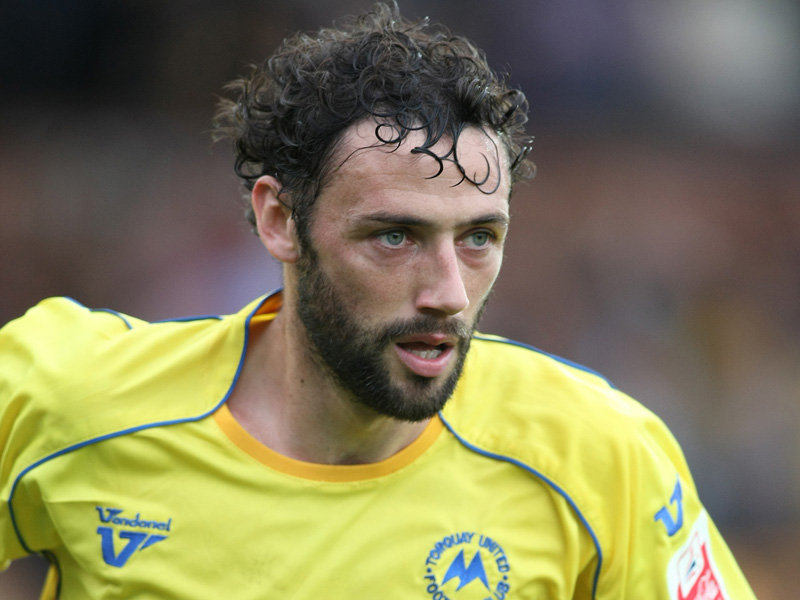
    The last 17 years have been quite the ride for Northern Irish wing wizard Wayne Carlisle. And the genial, engaging Truro City assistant talks me through a playing career which began at the lofty heights of a packed Selhurst Park and ended with a bittersweet mixture of triumph and early retirement at picturesque Plainmoor. But Wayne’s journey has been about much more than his performances at 3pm on a Saturday.

    There have, of course, been back-to-back promotions to the Football League, with Exeter City and Torquay United. A dramatic end-of-season run which somehow preserved Bristol Rovers’ (then) unbroken run of 83 years in the league. And, of course, success as Steve Tully’s right-hand man at Truro City. But Wayne has also been coaching the next generation of players to succeed, whether in the beautiful game or in the world of business. Here is his story.

    DB: You joined your first club, Crystal Palace as a teenage trainee. How difficult was it leaving your home in Lisburn, Northern Ireland to join the Eagles? And what are your earliest memories of life at the club?

    WC: At 15-years-old, I didn’t find it tough at all. I didn’t look at it in that way, I saw it through a child’s eyes. I was just excited to have the opportunity to play professional football. Looking back on it now I have my own children, and work with children, for someone at that age, moving was a big thing.

    I went into digs with another Irish lad named Kieran Loughran, and we lived together for about three years, so having that company made it a lot easier. And I was a young lad, training every day, and it was all I had ever dreamt of doing. It was a brilliant experience.
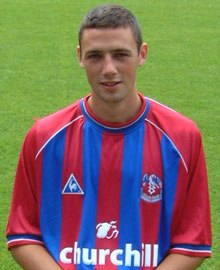
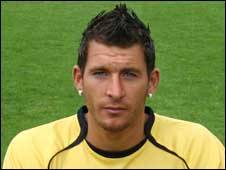
    A Portrait of the Artist as a Young Man: Wayne in his Palace days.

    A Portrait of the Artist as a Young Man: Wayne in his Palace days.

    DB: Your league debut at Palace came against Birmingham City in February 1999, and you became a regular fixture in midfield. What do you remember about your debut? And what was it like playing and training with established stars like Atillio Lombardo and Saša Ćurčić?

    WC: On my debut? I just remember the noise. Walking onto the pitch, having never played in front of so many people before, that was memorable. As soon as any game kicks off, you’re into the action and you play automatically from your habits in training.

    I think I took training with that calibre of player for granted. I was used to it from an early age and assumed that it was just normal. But in retrospect, it was a really big deal and a privilege to get to work alongside people of that quality.

    I definitely tried to learn from them, though. Atillio Lombardo was especially helpful. Obviously, he played the same role [winger] as me, and he would spend time talking me through things – via his interpreter, most of the time! We discussed topics like good positioning, different types of crosses and how to best use them, so he was particularly helpful.

    DB: Scoring a first senior goal is a special moment for any player. Yours came in October of that year, in a 4-0 drubbing of Portsmouth. What was that moment like?

    WC: That was pretty special. As I remember, the ball was on the edge of the box, and I just worked off instinct and hit it on the half-volley. Luckily enough it found its way into the net. It’s a cliché, but, you can’t describe it. It is the best feeling in the world at that age. Experiencing that was a real buzz.
    I didn’t have a celebration planned, though. I wasn’t really that type. Whatever I did to celebrate – I can’t remember exactly – I’m sure it was pretty boring! Not up to the standard you see nowadays!

    DB: Palace at that time were a club who went through managers pretty quickly. You played under the likes of Terry Venables, Steve Coppell, Alan Smith and Steve Bruce. Who got the best out of you as a player, and why?

    WC: My best time at Palace was under Steve Coppell. He was another winger like me, so he was great in giving me individual support about that role, and was not demanding of me. He understood that I was young and finding my feet, and let me develop at a rate which was right for me, without putting me under any pressure.

    Those other managers were more focused on results. Obviously, Steve [Coppell] wanted good results too, but they were more demanding. As a 19-year-old, I maybe wasn’t ready for that kind of pressure. For me personally, Steve [Coppell] was the best man-manager of the bunch.

    DB: You joined Division Two side Swindon Town on loan in the following season, and were an important part of helping the side to a respectable mid-table finish. Did you enjoy your time at the County Ground, and were you keen to head out on loan?

    WC: I loved my time there, actually. I was getting guaranteed first-team football at Swindon, and we were playing in front of decent crowds at a good standard. As a team, we were having a fairly successful spell, as well. At the end of my loan, I actually tried to extend it, but the Palace manager had changed from Steve Bruce to Trevor Francis. He decided to recall all of Palace’s loan players back, to have a look at them.

    Going out on loan was something both I and Palace were keen on. I had been used to first-team football at a young age, and wanted that feeling of training all week and playing on a Saturday. I was desperate to have that again, and the club thought it would be a good idea for me.

    DB: In March 2002, you made a permanent switch to Bristol Rovers. In your first full season, the club avoided relegation from the Football League by just 3 points, winning 3 of their last 4 games to survive. What was that nervy run-in like?

    WC: That was really tough. We had signed a lot of very good players that season, and for some reason, the team just didn’t click. We had so much quality in the squad, so in the latter part of the season, the players were just looking at each other thinking ‘we really shouldn’t be in this situation’.

    We signed Andy Rammell partway through the season, and he was a hugely important addition and scored some crucial goals [including 4 in those final three games]. I pitched in with some goals myself, and we survived. But it wasn’t enjoyable, and certainly not a situation which a club of Bristol Rovers’ stature should have been involved in.
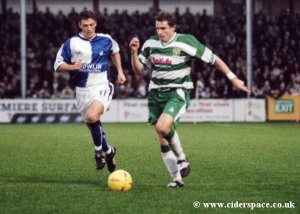
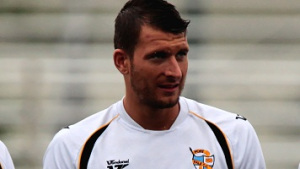
    Wayne was vital to Rovers' survival in 2002-03.

    Wayne was vital to Rovers’ survival in 2002-03.

    DB: In the following campaign, you notched an impressive 8 goals from midfield, and provided the service that helped striker Giuliano Grazioli reach double figures. Do you think that was one of your best seasons in the game?

    WC: I was certainly productive that season, and I did my job well, so it was one of my best years in a personal sense. Rovers’ manager at that time was Ray Graydon – another right winger, funnily enough! So again, he was a manager with a good understanding of what was needed from me, and I fit into his style of play. That obviously made it a lot easier for me to have a successful season.

    DB: You joined Martin Ling’s Orient revolution from Rovers, and played in the first half of the Promotion season of 2005-06, before you were sold to Conference Premier club Exeter City. Do you feel proud to have been part of Orient’s success, or were you unhappy at having missed out on that end-of-season glory?

    WC: No, I wasn’t unhappy about it. I played my part in Orient’s season, and obviously whilst I would have liked to have been there to celebrate at the end, the move to Exeter was a mutual decision. Exeter were looking for someone in my position, and I had worked with [then City manager] Alex Inglethorpe at Leyton Orient previously.

    He said he wanted to take me down there, and as I wasn’t getting guaranteed regular games at Orient at that time, I thought the move would be worthwhile. I wished them all the best, and off I went. And I was just proud of what I achieved in the early days.

    I left the O’s on good terms. I actually went back and trained with Martin after breaking my leg, before I rejoined Exeter [in October 2006]. It was actually Paul Tisdale who re-signed me there!

    DB: Your time at St. James’ Park was certainly a successful one. The Grecians reached the Playoffs twice and were promoted to the Football League in 2008, thanks largely to your crucial strikes against Torquay United in the Semi-Finals. Did that feel extra special after what happened with Orient?

    WC: Yes, to an extent. However, Orient’s promotion was not something I was especially conscious of missing out on because I had still played a part in it. The nature of football is also that players move on.

    It was nice to see the journey through with Exeter. Especially so as we had come very close in my first season with the club, losing the final at Wembley [to Morecambe].

    DB: What was Paul Tisdale like to play under?

    WC: Paul is a fantastic gaffer and an especially good man-manager. He understood the players well as individuals and took the time to get to know us. I had a very good relationship with him.

    DB: You repeated the Conference promotion feat the following season with none other than Torquay United, but retired less than a year later, in January 2010. Were injuries, or a new career path the main reason behind retiring at age 30?

    WC: It was a combination of both. I had damaged ligaments in my knee, around Christmastime [of 2009]. The medical advice I received was that the injury was going to seriously inhibit my days of playing football, in the near future. At that point, a job had become available, teaching the game in a college. I had taken on board the advice of the specialist who warned that the injury would stop me playing at Conference level, at some point.

    The game usually spits people out, and I didn’t want that to happen to me. When the opportunity of this college role came about, I decided to leave on my own terms, and in my own way.
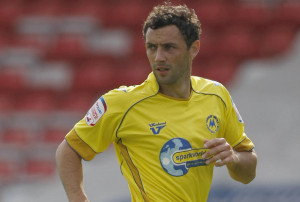
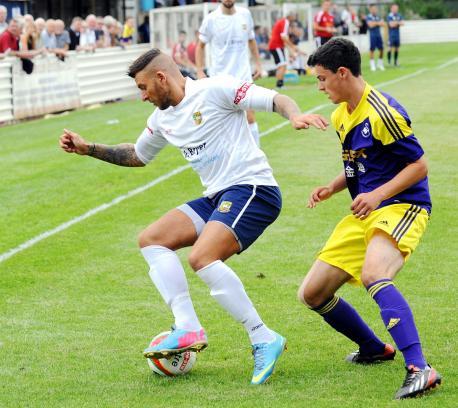
    Wayne in action for the Gulls during his promotion-winning stint.

    Wayne in action for the Gulls during his promotion-winning stint.

    DB: Outside of the game, you are still Director of Football at Ivybridge Community College in Devon, and have had the likes of Paul Scholes running a session, as part of your initiative to improve the school’s football academy. So what are the essential things that you think young players need to know about the game?

    WC: They need to understand how the game functions. So they need to realise how invasion games work. Game understanding is a key thing. It is something which the top players possess, and a lot of younger players don’t have. Work ethic is also crucial, as is a passion for actually playing football.

    Players also need to take on information and apply what they have learnt in training and matches as well. But what we try to do at the college is not just about developing footballers. We actually look to develop people. They get strong values from us, so that whether they are in football or business, or whatever route they take in the future, those individuals will have the skills to make a positive contribution.

    DB: In 2011, you returned to play a handful of games for Truro City, and you must have liked the place, as you came back to Treyew Road three years later as Assistant Manager to Steve Tully. How did the move come about? And what was it about Truro City that made this the right club for you?

    WC: When I first took the job, I wasn’t sure it was right for me to be honest! I had seen my pathway after playing as working in youth football. Working with players in that development phase is something I really enjoy.

    The Truro City position came up when Steve Tully – who I had played with at Exeter – contacted me. He said the job had come up and asked if I’d be interested. My initial response was ‘not really’!

    I didn’t think this role was part of my journey, but Steve convinced me to go along and stand with him on a Saturday. And I had to be honest with him, I enjoyed it! It’s a role I’ve been happy with ever since, and the club has had some real success, which has tied me to it.

    Being involved in senior football again has also reignited that competitiveness in me. You kind of lose that when you work in the development phase, because the aim is to develop players in the long-term, and winning a game on a Saturday is not a major focus. You don’t experience those positive short-term results.

    Having played football for 12 years professionally, that competitive spirit is always in me somewhere. It doesn’t just disappear. Joining Truro gave me the opportunity to ignite that fire again and gave me that spark that I had probably missed.

    DB: You and Steve have proved a formidable team, winning promotion from the Southern Premier Division last season, defeating St. Neots Town in the final. But how do you two differ in your approach, tactically and as man-managers?

    WC: We both have our different views on the game, but we’re also pragmatic about our approach. Steve and I both have an idea of how we would like the team to play, but we realise that sometimes our circumstances and the level we’re working at means that can’t always be translated onto the pitch.
    But we don’t let ourselves get bogged down by that because the aim is to win games of football. I think part of the reason we’ve been a successful partnership at Truro is a willingness to sacrifice a bit on our ideals of how we think football should ideally be played.
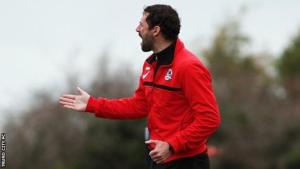
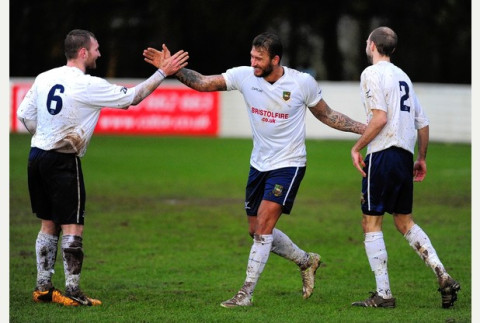
    Giving his players some vital instructions as Truro assistant.

    Giving his players some vital instructions as Truro assistant.

    DB: That’s fascinating. So how do you think the way Truro line up differs from how you would play ideally?

    WC: We line up to compete with the opposition, first and foremost. Tactically, we set about trying to disrupt their game, and as the match goes on, start to impose how we want to play on them. The pitches at this level dictate what we can do, somewhat. We’d like to ask our players to play the ball out from the back and through midfield, but that isn’t always going to be possible.

    Sometimes we have to be more direct than our ideal style would be, and on occasion, we’re required to be a more physical side as well. Those things are dictated by the opposition, the level and the pitches we’re working on.

    DB: The success Truro City have experienced with you in the dugout is bound to mean that your stock is high. Is the long-term aim to take on a manager’s job within Non-League, or do you prefer the assistant role and having the work at Ivybridge?

    WC: No, that isn’t my aim. Steve [Tully] does all the man-management work, and dealing with the agents – things in that area. I just enjoy being out on the grass with the players, coaching them. I like watching our opposition and coming up with tactical plans. Those are the aspects I’m happy doing, so I don’t think I could see myself going into management.

    Then again, I hadn’t seen being an assistant manager in adult football as part of my career path. So I could never say never, but it would take a lot to get me off the training pitch and away from spending that time teaching players. It’s what I love doing – at any age group and any level.

    DB: What do you enjoy doing outside of football? And was there ever a career you considered, aside from playing the beautiful game?

    WC: Oh dear, I don’t get any time outside of football Dave! [*laughs*]

    I enjoy being with my family. I have two young boys, and I love spending time with them. They’re my release from football.

    With regards to a career outside of football, I wouldn’t have a clue what else to do! It’s been my life since I was 15, and had been all I ever dreamt of doing as a little lad kicking around in Northern Ireland. I feel privileged and proud to have made a career in the game, but I never had any other occupation in my head, and still don’t.

    Thank you to Wayne for his superb insights into a fascinating life in football. Best of luck to Wayne and everyone at Truro City for the rest of the season.

    You can follow Wayne on Twitter, as well as Ivybridge Football Academy, whose website can also be found here.

    All images are accredited in the ‘Description’ section for the photos.

    Posted on February 20, 2016, in Dave Burin Interviews, UTL Archive, Vanarama NL South and tagged Bristol Rovers, Crystal Palace, Exeter City, Featured, Interviews, Leyton Orient, National League South, Non-League, Torquay United, Truro City, Wayne Carlisle. Bookmark the permalink. Leave a comment.

  • Under The League Interviews… Lewis Haldane

    Under The League Interviews… Lewis Haldane

    Dave Burin has been busy for us once again, this time chatting to former Bristol Rovers, Port Vale and Oxford United winger Lewis Haldane.

    Even over a slightly crackly phone reception on a windy August night, Lewis Haldane’s warmth shines through. One of Non-League football’s most likeable and resilient personalities, Haldane won promotion to League One with Bristol Rovers and moved onto Port Vale, before a series of horrific illnesses and injuries curtailed his professional career. The unbreakable wing wizard returned to football in 2013 with Southern League side Yate Town, winning Bristol Non-League player of the year in his first season, before moving onto Southern Premier League club Frome Town.

    With open, honest reflections and a personable manner, Lewis talks me through the highs and lows of a tumultuous career, from winning two promotions and playing in the Wales U-21 squad with Gareth Bale, to the physical and mental turmoil of serious illness, and his strong focus on family.

    DB: You grew up in Trowbridge in the late ’80s and the ’90s. The nearest Football League clubs were in Swindon and Bristol, over 30 miles away. So did you follow a local non-league team, or did you support a big club from afar?

    LH: I supported Leeds United. My Dad was a big fan from the Billy Bremner days onwards. I had a season ticket at Elland Road, and my Dad and I always travelled up there. As a young kid, I really liked Lee Chapman and a Lazio player called Schillaci – I’d forgotten about that, but I was apparently obsessed with him! Later on, I looked up to Leeds strikers like Mark Viduka and Jimmy Floyd Hasselbaink.

    I don’t get to see them much now, because I’m still playing, but hopefully I can get to somewhere like Bristol City or Bournemouth if and when they’re there!

    DB: As a teenager, you spent time in the youth setup at Southampton, and then at your hometown club, Trowbridge Town. Even as a youth player, was it a difficult transition moving from a club with Premier League facilities, to Non-League, where the setup is typically a lot smaller and more basic?

    LH: At that age, there’s not a big transition. I left Saints when I was 14, because I was a small lad and a lot of the kids were much bigger than me, and I didn’t really grow until my later teens. We just trained at a college in the centre of Southampton, so it wasn’t that different [to Trowbridge’s facilities]. You don’t really focus on those things when you’re young, anyway. You just want to win games and score to impress your parents!

    Trowbridge Town was nice, and just a little local club. I played for a couple of teams around the area, like Trowbridge, Shaw Youth and Whitley. All my friends were playing in local sides, and we were just learning how to play football, and learning the ropes!

    DB: You joined Bristol Rovers in 2002, but played your first senior games whilst on loan at Weston-super-Mare in the Spring of 2003. What are your memories of your brief spell with The Seagulls?

    LH: I think I scored 3 times in my first 5 games, and I would only have been sixteen at the time. It was different, because it was the first time I’d ever played mens football. It was much more physical [than youth team football], and I was a really skinny little lad back then – I probably only weighed 10 stone.Lewis Haldane Bristol Rovers

    In my final game for Weston, we got promoted at Clevedon. My Dad was there watching, and one of their players stood there, off-the-ball and just elbowed me straight in the face. He broke my nose. My Dad’s not aggressive at all, but he waited for the guy to come off the pitch and basically said ‘what are you doing, he’s a little kid’. But it was a wake-up call, to say ‘this is senior football. I’m in mens football now!’.

    That’s what sticks with me most – learning to play against men, because I was basically a kid. Players grow up at different times. Wayne Rooney, at that age, was already a big strapping bloke, but I was a little lad.

    DB: Later that year, you played your first games for Bristol Rovers. You scored your first goal in an away defeat to Doncaster, and managed an impressive 3 goals in your first 4 games. However, the club went on a run of just 1 win in 11 matches. What were your emotions at that time, and also, what was the mood like around the club?

    LH: Ray Graydon was manager and we were near the bottom of the league, which is why I got my chance. I think I was just on cloud nine, really, because all my friends were still in the youth team, and I broke into the first team. They came to watch their games, and it was just exciting that one of us had broken into the first team.

    Like I said, I was just a kid, so it was all a bit of a blur at the time. But looking back on it now, 13 years later, I can remember it all like it was yesterday. I remember coming on against Cheltenham in my first game [a 2-0 home victory] and got a penalty with my first touch! In my first start against Doncaster – I scored, and you don’t ever forget that moment.

    DB: You scored six goals in that first season, and played well throughout the year. One ever-present in that team and your early years at the club was Ghana striker Junior Agogo. What was he like to play with?

    LH: He was a quality player. He obviously moved on to Nottingham Forest, and later to Qatar – and he earned a lot of money out there. You learn a lot playing with players of that calibre, and he played for Ghana in the Africa Cup of Nations too. He was a fantastic player, and obviously moved on the season after he scored 20 goals. Luckily for him, he got that big move, something which never happened for me. But you’ve got to give him his props for managing that!

    DB: Bristol Rovers finished 12th in what became League Two in the following two seasons, and you were in and out of the team. However, in the 2006-07 campaign, you were an integral part of the Rovers team that won promotion in the Play-Offs. However, the team also suffered a heartbreaking loss in the JPT (Johnstone’s Paint Trophy) final. What are your abiding memories of that season?

    LH: It was fantastic. It was the first season I was in the side regularly, and I managed to play over 40 games that season. I played on the wing, which was a different position for me, but I was quick and I got a bit bigger – my game came together. For the first time in football really, I felt like a man.

    The more I played, the more confident I felt and the better my performances were. I had a really good season, and we got promoted. Obviously, we played at Wembley which was the most nerve-racking time of my life! But [winning promotion] was possibly the best day of my life, other than my daughter being born.

    When you’re a little boy, you dream of playing at Wembley. The thing I remember most clearly from that season though, is playing at Elland Road. It wouldn’t mean much to most lads, but for me, as a ground, it was even better than playing at Wembley or the Millennium Stadium. My Dad [also a Leeds United fan] was there, and I’m really, really proud that I played there, to be honest. One of the real highlights of my career.

    DB: As well as winning promotion, you also made your debut that season for Wales U-21s, in a European Championship qualifier against Turkey. What was it like to represent Wales at Ninian Park, and where were you when you got the call-up?

    LH: I was at home and I got the call from my manager [Paul Trollope] saying that Bryan Flynn, the Wales U-21s boss wants you to go down and join up with the squad. I was quite a shy lad, and just like ‘I can’t believe this!’. I went down there, and obviously the senior squad were there as well, so you had the likes of Ryan Giggs and Craig Bellamy there, and I was in awe of them.

    Looking back now, Gareth Bale was next to me at the dinner table before the game. He was in the U-21s team, and obviously we didn’t know that he was going to be a superstar. [*laughs*] Crikey, how our careers took different paths.

    We drew 0-0 against Turkey, and I came on in the last 20 minutes, and I had a good shot tipped around the post. We were virtually out of the race for qualifying, and I was 23 at the time, so I was too old really, but was one of the two older players allowed in the squad. Still, it’s a great memory and I really enjoyed it!

    DB: The following season you went out on loan to Oxford United. You told BBC Sport at the time that “it wasn’t an easy decision to drop down to the Conference”. In hindsight, was it a decision you’re glad you made, or do you feel you should have stayed with Rovers?

    LH: At the time, I felt I was being pushed out by Rovers. When we got promoted, they signed loads of new players and I didn’t really get a chance. Looking back, they made mistakes, as they got relegated the season after and they’d spent all their money. If they would have stuck with the boys that had got them promoted in the first place and actually cared about the club, they wouldn’t have got into that mess. The first season after coming up, Rovers finished 15th and they gradually spent a lot of money on wages and things, and got relegated.Lewis Haldane Oxford

    I went to Oxford, who were a really big club at the time, in the Conference Premier. At first we weren’t a great team and struggled a little bit, but when Chris Wilder took over we won 15 games in a row towards the end of the season, and almost got into the Play-Offs.

    My form wasn’t brilliant at Oxford. I played well some games, and others I didn’t. My confidence had been knocked by Bristol Rovers putting me to the side.

    DB: What was Chris Wilder like to play under?

    LH: He was good. He knew what he wanted, and like I said, when he took over we won a lot of games on the spin. He turned our fortunes around, and I really enjoyed playing under Chris.

    DB: You joined Port Vale in 2009, with the deal becoming permanent in January 2010. In that first year, you scored several goals, including a crucial strike in a narrow 2-1 win over Torquay United. Micky Adams also spoke highly of your pace and ability, in the media. Do you consider that season one of the best of your career?

    LH: I think the year I got promoted with Rovers was the best season of my career, but that season at Port Vale I felt like I was playing really well, after having my confidence knocked at Oxford.Lewis Haldane Port Vale

    I moved up to Stoke, where my ex-partner’s family are from. My girlfriend became pregnant about a year after we moved there, and things were good. I got my form back, and I was back in the Football League and people were talking about me again. I put in a couple of good performances live on Sky Sports and I felt that if I could keep it up, I might get a life-changing move somewhere but that didn’t happen.

    But I have those memories of playing for several different clubs, which a lot of boys would love to do.

    DB: On that note, do you feel that players are even more motivated for televised games, because you know how many people are going to be watching?

    LH: Yeah, I think so, because you get your friends back home who don’t get to the matches watching and you want to show them that you’re good!

    DB: During the following 2 years at Port Vale, you made a fair few appearances, but suffered horrendous misfortune with injuries – being out for months with an insect bite, and then the leg break which ended your professional career at the time. How did you manage to stay mentally strong during such difficult periods?

    LH: In pre-season, when I got bit by an insect, the Blandford fly, I could have died very easily. I was at home, and I collapsed. My partner called for an ambulance, and they told her to take me to the hospital, and I went downhill from there. I lost 3 1/2 stone in the space of a week. It was lucky I went to hospital, because I might have died otherwise, because the blood poisoning was so bad. It took seven months for the swelling to go down on my ankle, and I don’t think I ever recovered because I broke my leg six months after that.

    DB: Do you think the two things were related?

    LH: Do you know, I’ve got no idea to be honest. I had three operations on my ankle when I had that insect bite, to release the pressure on it. People laugh when I tell them it was an insect, but it was really tough!

    When I broke my leg, I had to be mentally strong. The moment I broke it, I remember looking down and my foot was wrapped around, so my toes were pointing the opposite way. I just panicked, and that second I thought ‘I’m never going to play football again’.

    I had a contract for another 18 months and for those 18 months I did everything I could to try and get fit. I was at the club every single day of the week, some days from 7:30am to 5pm, but I just wasn’t getting any better. I was having operation after operation. I’d keep thinking I was almost there, and then I’d go for a run and collapse to the ground with my ankle swelling up and in agony.

    That was absolute hell, but luckily enough my Daughter was born during that time so spending time with her would make my day better. Even when the training was hell, I could think about going home to see her a few hours later. I would have loved her to see me play professionally, see my games be on the TV and things, but it wasn’t to be. I tried my hardest to get fit, because I loved playing football and playing professionally was all I’d ever wanted to, but having my daughter helped me through. She was the silver lining.

    DB: Between your retirement from football in October 2012 and joining Yate Town in 2013, you were obviously out of the game. Was your hope always to play again at some level – even if it was much further down the football pyramid – or was there a time where you felt like you wanted nothing more to do with the sport?

    LH: The day I retired, I couldn’t walk without absolute agony in my ankle. Since breaking my leg in 2011, for those 2 1/2 years, I couldn’t walk without pain. For a long time, I wondered if I’d ever be able to walk or run without pain, let alone play football.

    I had a cortisone injection in my ankle a week before I started for Yate in pre-season, just to see if it would help my day-to-day life, really. It felt a lot better. Obviously I knew it wasn’t better, it was just masking it. I decided to go training with them, and thought ‘if I break down, it happens. What have I got to lose?’.

    Over the last 18 months, it’s felt a little better. I know that there’s still tissue damage and cartilage damage, but I don’t do myself any danger now in playing once or twice a week. On a Sunday it’s sometimes so sore I can hardly walk, but the thrill of getting out there and scoring a few goals and playing with a few of my friends who live around the area makes it all worthwhile.

    I got named Bristol Non-League player of the year in my first season back, so I was incredibly chuffed with that, having at one time wondered if I’d ever walk again.

    DB: You joined Yate Town in the Southern League. Did you approach them about playing at Lodge Road, or did the club contact you initially?

    Lewis in action for Yate Town

    Lewis in action for Yate Town

    LH: One of my friends, Ricky Hulbert joined Yate. I used to have a kick around with him now and again, and he asked me ‘how’s your ankle feeling, Lew? Do you want to come training with us?’. I’d just had the injection, so I said yes. The Yate manager knew my history, and asked me if I’d like to sign for them. I said yes – as long as my ankle’s okay in training, and it just went from there, really.

    DB: What was it like taking to the pitch for Yate on your debut – were you just delighted to be playing again, or was there a mixture of emotions?

    LH: It felt weird. Obviously, I was unfit because I didn’t run properly for over three years. It was really nerve racking, because I was thinking ‘what if I get injured again’ or ‘what if I’m rubbish, and everyone takes the piss out of me!’ [*Laughs*] Luckily, I still had a bit left in the locker!

    My game’s changed now. I can’t run up and down the wing like I used to, but when I was out injured I used to watch a lot of football, and I like to think that my technique and understanding of the game is a little bit better. Even though I’m not the athlete I was, I can do things on the ball now that I couldn’t have before. I just wish I had all that when I was 20!

    Lewis celebrating scoring for Yate Town

    Lewis celebrating scoring for Yate Town

    DB: Last season, you made the step up to the Southern Premier League with Frome Town, and were an important part of the team’s survival from relegation. Have you enjoyed your time with Frome, and do you still harbour ambitions of playing at Football League level again?

    LH: I’m never going to be fit enough to do that, and I’m 30 years old now. Still, when I was at Yate, we were two games away from reaching the First Round of the FA Cup, and I would love to play against a Football League side once more. It would be great to be drawn against Bristol Rovers. Leeds in the Cup would be even better!

    I still really enjoy playing my football, though it’s hard combining it with my work life. I work for a lorry components company in Bristol. It’s my first proper job, working outside of football. For the last ten years, my friends have been off getting their qualifications, going to University and building their trade – I have to start from scratch with that now, and it’ll take a few years to get where I want to be. But I’m staying positive.

    DB: Obviously your injury misfortunes mean that you’ve had more reason to think about a post-playing career than most footballers do. But do you now have a long-term plan of what you’d like to do once you hang up your boots, or do you not want to look that far ahead?

    LH: Well, I’ve been out of professional football for several years now, and not played properly for four years. I’d like to build a trade, and somewhere down the line, work on a building site. Football was my first love, but that’s gone as a career now. There’s a lot of things I like the idea of doing, but having a trade is the main goal.

    DB: Finally – what do you most enjoy doing outside of football?

    LH: I spend all my free time with my little girl. Spending time with my daughter is my main passion now – she’s my absolute world! I can’t describe to you how much I love her.

    Posted on August 10, 2015, in UTL Interviews and tagged Bristol Rovers, Featured, Forest Green Rovers, Frome Town, Lewis Haldane, Port Vale, Trowbridge Town, Yate Town. Bookmark the permalink. Leave a comment.