UTL Interviews

  • Under The League Interviews… Lewis Haldane

    Under The League Interviews… Lewis Haldane

    Dave Burin has been busy for us once again, this time chatting to former Bristol Rovers, Port Vale and Oxford United winger Lewis Haldane.

    Even over a slightly crackly phone reception on a windy August night, Lewis Haldane’s warmth shines through. One of Non-League football’s most likeable and resilient personalities, Haldane won promotion to League One with Bristol Rovers and moved onto Port Vale, before a series of horrific illnesses and injuries curtailed his professional career. The unbreakable wing wizard returned to football in 2013 with Southern League side Yate Town, winning Bristol Non-League player of the year in his first season, before moving onto Southern Premier League club Frome Town.

    With open, honest reflections and a personable manner, Lewis talks me through the highs and lows of a tumultuous career, from winning two promotions and playing in the Wales U-21 squad with Gareth Bale, to the physical and mental turmoil of serious illness, and his strong focus on family.

    DB: You grew up in Trowbridge in the late ’80s and the ’90s. The nearest Football League clubs were in Swindon and Bristol, over 30 miles away. So did you follow a local non-league team, or did you support a big club from afar?

    LH: I supported Leeds United. My Dad was a big fan from the Billy Bremner days onwards. I had a season ticket at Elland Road, and my Dad and I always travelled up there. As a young kid, I really liked Lee Chapman and a Lazio player called Schillaci – I’d forgotten about that, but I was apparently obsessed with him! Later on, I looked up to Leeds strikers like Mark Viduka and Jimmy Floyd Hasselbaink.

    I don’t get to see them much now, because I’m still playing, but hopefully I can get to somewhere like Bristol City or Bournemouth if and when they’re there!

    DB: As a teenager, you spent time in the youth setup at Southampton, and then at your hometown club, Trowbridge Town. Even as a youth player, was it a difficult transition moving from a club with Premier League facilities, to Non-League, where the setup is typically a lot smaller and more basic?

    LH: At that age, there’s not a big transition. I left Saints when I was 14, because I was a small lad and a lot of the kids were much bigger than me, and I didn’t really grow until my later teens. We just trained at a college in the centre of Southampton, so it wasn’t that different [to Trowbridge’s facilities]. You don’t really focus on those things when you’re young, anyway. You just want to win games and score to impress your parents!

    Trowbridge Town was nice, and just a little local club. I played for a couple of teams around the area, like Trowbridge, Shaw Youth and Whitley. All my friends were playing in local sides, and we were just learning how to play football, and learning the ropes!

    DB: You joined Bristol Rovers in 2002, but played your first senior games whilst on loan at Weston-super-Mare in the Spring of 2003. What are your memories of your brief spell with The Seagulls?

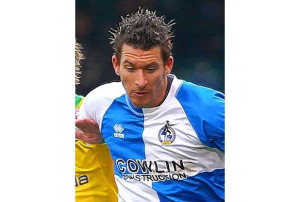
    LH: I think I scored 3 times in my first 5 games, and I would only have been sixteen at the time. It was different, because it was the first time I’d ever played mens football. It was much more physical [than youth team football], and I was a really skinny little lad back then – I probably only weighed 10 stone.Lewis Haldane Bristol Rovers
    In my final game for Weston, we got promoted at Clevedon. My Dad was there watching, and one of their players stood there, off-the-ball and just elbowed me straight in the face. He broke my nose. My Dad’s not aggressive at all, but he waited for the guy to come off the pitch and basically said ‘what are you doing, he’s a little kid’. But it was a wake-up call, to say ‘this is senior football. I’m in mens football now!’.

    That’s what sticks with me most – learning to play against men, because I was basically a kid. Players grow up at different times. Wayne Rooney, at that age, was already a big strapping bloke, but I was a little lad.

    DB: Later that year, you played your first games for Bristol Rovers. You scored your first goal in an away defeat to Doncaster, and managed an impressive 3 goals in your first 4 games. However, the club went on a run of just 1 win in 11 matches. What were your emotions at that time, and also, what was the mood like around the club?

    LH: Ray Graydon was manager and we were near the bottom of the league, which is why I got my chance. I think I was just on cloud nine, really, because all my friends were still in the youth team, and I broke into the first team. They came to watch their games, and it was just exciting that one of us had broken into the first team.

    Like I said, I was just a kid, so it was all a bit of a blur at the time. But looking back on it now, 13 years later, I can remember it all like it was yesterday. I remember coming on against Cheltenham in my first game [a 2-0 home victory] and got a penalty with my first touch! In my first start against Doncaster – I scored, and you don’t ever forget that moment.

    DB: You scored six goals in that first season, and played well throughout the year. One ever-present in that team and your early years at the club was Ghana striker Junior Agogo. What was he like to play with?

    LH: He was a quality player. He obviously moved on to Nottingham Forest, and later to Qatar – and he earned a lot of money out there. You learn a lot playing with players of that calibre, and he played for Ghana in the Africa Cup of Nations too. He was a fantastic player, and obviously moved on the season after he scored 20 goals. Luckily for him, he got that big move, something which never happened for me. But you’ve got to give him his props for managing that!

    DB: Bristol Rovers finished 12th in what became League Two in the following two seasons, and you were in and out of the team. However, in the 2006-07 campaign, you were an integral part of the Rovers team that won promotion in the Play-Offs. However, the team also suffered a heartbreaking loss in the JPT (Johnstone’s Paint Trophy) final. What are your abiding memories of that season?

    LH: It was fantastic. It was the first season I was in the side regularly, and I managed to play over 40 games that season. I played on the wing, which was a different position for me, but I was quick and I got a bit bigger – my game came together. For the first time in football really, I felt like a man.

    The more I played, the more confident I felt and the better my performances were. I had a really good season, and we got promoted. Obviously, we played at Wembley which was the most nerve-racking time of my life! But [winning promotion] was possibly the best day of my life, other than my daughter being born.

    When you’re a little boy, you dream of playing at Wembley. The thing I remember most clearly from that season though, is playing at Elland Road. It wouldn’t mean much to most lads, but for me, as a ground, it was even better than playing at Wembley or the Millennium Stadium. My Dad [also a Leeds United fan] was there, and I’m really, really proud that I played there, to be honest. One of the real highlights of my career.

    DB: As well as winning promotion, you also made your debut that season for Wales U-21s, in a European Championship qualifier against Turkey. What was it like to represent Wales at Ninian Park, and where were you when you got the call-up?

    LH: I was at home and I got the call from my manager [Paul Trollope] saying that Bryan Flynn, the Wales U-21s boss wants you to go down and join up with the squad. I was quite a shy lad, and just like ‘I can’t believe this!’. I went down there, and obviously the senior squad were there as well, so you had the likes of Ryan Giggs and Craig Bellamy there, and I was in awe of them.

    Looking back now, Gareth Bale was next to me at the dinner table before the game. He was in the U-21s team, and obviously we didn’t know that he was going to be a superstar. [*laughs*] Crikey, how our careers took different paths.

    We drew 0-0 against Turkey, and I came on in the last 20 minutes, and I had a good shot tipped around the post. We were virtually out of the race for qualifying, and I was 23 at the time, so I was too old really, but was one of the two older players allowed in the squad. Still, it’s a great memory and I really enjoyed it!

    DB: The following season you went out on loan to Oxford United. You told BBC Sport at the time that “it wasn’t an easy decision to drop down to the Conference”. In hindsight, was it a decision you’re glad you made, or do you feel you should have stayed with Rovers?

    LH: At the time, I felt I was being pushed out by Rovers. When we got promoted, they signed loads of new players and I didn’t really get a chance. Looking back, they made mistakes, as they got relegated the season after and they’d spent all their money. If they would have stuck with the boys that had got them promoted in the first place and actually cared about the club, they wouldn’t have got into that mess. The first season after coming up, Rovers finished 15th and they gradually spent a lot of money on wages and things, and got relegated.Lewis Haldane Oxford
    I went to Oxford, who were a really big club at the time, in the Conference Premier. At first we weren’t a great team and struggled a little bit, but when Chris Wilder took over we won 15 games in a row towards the end of the season, and almost got into the Play-Offs.

    My form wasn’t brilliant at Oxford. I played well some games, and others I didn’t. My confidence had been knocked by Bristol Rovers putting me to the side.

    DB: What was Chris Wilder like to play under?

    LH: He was good. He knew what he wanted, and like I said, when he took over we won a lot of games on the spin. He turned our fortunes around, and I really enjoyed playing under Chris.

    DB: You joined Port Vale in 2009, with the deal becoming permanent in January 2010. In that first year, you scored several goals, including a crucial strike in a narrow 2-1 win over Torquay United. Micky Adams also spoke highly of your pace and ability, in the media. Do you consider that season one of the best of your career?

    LH: I think the year I got promoted with Rovers was the best season of my career, but that season at Port Vale I felt like I was playing really well, after having my confidence knocked at Oxford.Lewis Haldane Port Vale

    I moved up to Stoke, where my ex-partner’s family are from. My girlfriend became pregnant about a year after we moved there, and things were good. I got my form back, and I was back in the Football League and people were talking about me again. I put in a couple of good performances live on Sky Sports and I felt that if I could keep it up, I might get a life-changing move somewhere but that didn’t happen.

    But I have those memories of playing for several different clubs, which a lot of boys would love to do.

    DB: On that note, do you feel that players are even more motivated for televised games, because you know how many people are going to be watching?

    LH: Yeah, I think so, because you get your friends back home who don’t get to the matches watching and you want to show them that you’re good!

    DB: During the following 2 years at Port Vale, you made a fair few appearances, but suffered horrendous misfortune with injuries – being out for months with an insect bite, and then the leg break which ended your professional career at the time. How did you manage to stay mentally strong during such difficult periods?

    LH: In pre-season, when I got bit by an insect, the Blandford fly, I could have died very easily. I was at home, and I collapsed. My partner called for an ambulance, and they told her to take me to the hospital, and I went downhill from there. I lost 3 1/2 stone in the space of a week. It was lucky I went to hospital, because I might have died otherwise, because the blood poisoning was so bad. It took seven months for the swelling to go down on my ankle, and I don’t think I ever recovered because I broke my leg six months after that.

    DB: Do you think the two things were related?

    LH: Do you know, I’ve got no idea to be honest. I had three operations on my ankle when I had that insect bite, to release the pressure on it. People laugh when I tell them it was an insect, but it was really tough!

    When I broke my leg, I had to be mentally strong. The moment I broke it, I remember looking down and my foot was wrapped around, so my toes were pointing the opposite way. I just panicked, and that second I thought ‘I’m never going to play football again’.

    I had a contract for another 18 months and for those 18 months I did everything I could to try and get fit. I was at the club every single day of the week, some days from 7:30am to 5pm, but I just wasn’t getting any better. I was having operation after operation. I’d keep thinking I was almost there, and then I’d go for a run and collapse to the ground with my ankle swelling up and in agony.

    That was absolute hell, but luckily enough my Daughter was born during that time so spending time with her would make my day better. Even when the training was hell, I could think about going home to see her a few hours later. I would have loved her to see me play professionally, see my games be on the TV and things, but it wasn’t to be. I tried my hardest to get fit, because I loved playing football and playing professionally was all I’d ever wanted to, but having my daughter helped me through. She was the silver lining.

    DB: Between your retirement from football in October 2012 and joining Yate Town in 2013, you were obviously out of the game. Was your hope always to play again at some level – even if it was much further down the football pyramid – or was there a time where you felt like you wanted nothing more to do with the sport?

    LH: The day I retired, I couldn’t walk without absolute agony in my ankle. Since breaking my leg in 2011, for those 2 1/2 years, I couldn’t walk without pain. For a long time, I wondered if I’d ever be able to walk or run without pain, let alone play football.

    I had a cortisone injection in my ankle a week before I started for Yate in pre-season, just to see if it would help my day-to-day life, really. It felt a lot better. Obviously I knew it wasn’t better, it was just masking it. I decided to go training with them, and thought ‘if I break down, it happens. What have I got to lose?’.

    Over the last 18 months, it’s felt a little better. I know that there’s still tissue damage and cartilage damage, but I don’t do myself any danger now in playing once or twice a week. On a Sunday it’s sometimes so sore I can hardly walk, but the thrill of getting out there and scoring a few goals and playing with a few of my friends who live around the area makes it all worthwhile.

    I got named Bristol Non-League player of the year in my first season back, so I was incredibly chuffed with that, having at one time wondered if I’d ever walk again.

    DB: You joined Yate Town in the Southern League. Did you approach them about playing at Lodge Road, or did the club contact you initially?
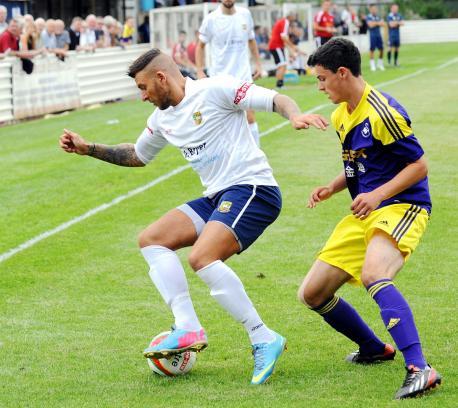
    Lewis in action for Yate Town

    Lewis in action for Yate Town

    LH: One of my friends, Ricky Hulbert joined Yate. I used to have a kick around with him now and again, and he asked me ‘how’s your ankle feeling, Lew? Do you want to come training with us?’. I’d just had the injection, so I said yes. The Yate manager knew my history, and asked me if I’d like to sign for them. I said yes – as long as my ankle’s okay in training, and it just went from there, really.

    DB: What was it like taking to the pitch for Yate on your debut – were you just delighted to be playing again, or was there a mixture of emotions?

    LH: It felt weird. Obviously, I was unfit because I didn’t run properly for over three years. It was really nerve racking, because I was thinking ‘what if I get injured again’ or ‘what if I’m rubbish, and everyone takes the piss out of me!’ [*Laughs*] Luckily, I still had a bit left in the locker!

    My game’s changed now. I can’t run up and down the wing like I used to, but when I was out injured I used to watch a lot of football, and I like to think that my technique and understanding of the game is a little bit better. Even though I’m not the athlete I was, I can do things on the ball now that I couldn’t have before. I just wish I had all that when I was 20!
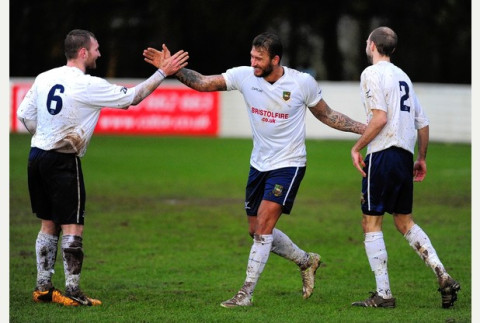
    Lewis celebrating scoring for Yate Town

    Lewis celebrating scoring for Yate Town

    DB: Last season, you made the step up to the Southern Premier League with Frome Town, and were an important part of the team’s survival from relegation. Have you enjoyed your time with Frome, and do you still harbour ambitions of playing at Football League level again?

    LH: I’m never going to be fit enough to do that, and I’m 30 years old now. Still, when I was at Yate, we were two games away from reaching the First Round of the FA Cup, and I would love to play against a Football League side once more. It would be great to be drawn against Bristol Rovers. Leeds in the Cup would be even better!

    I still really enjoy playing my football, though it’s hard combining it with my work life. I work for a lorry components company in Bristol. It’s my first proper job, working outside of football. For the last ten years, my friends have been off getting their qualifications, going to University and building their trade – I have to start from scratch with that now, and it’ll take a few years to get where I want to be. But I’m staying positive.

    DB: Obviously your injury misfortunes mean that you’ve had more reason to think about a post-playing career than most footballers do. But do you now have a long-term plan of what you’d like to do once you hang up your boots, or do you not want to look that far ahead?

    LH: Well, I’ve been out of professional football for several years now, and not played properly for four years. I’d like to build a trade, and somewhere down the line, work on a building site. Football was my first love, but that’s gone as a career now. There’s a lot of things I like the idea of doing, but having a trade is the main goal.

    DB: Finally – what do you most enjoy doing outside of football?

    LH: I spend all my free time with my little girl. Spending time with my daughter is my main passion now – she’s my absolute world! I can’t describe to you how much I love her.

    Posted on August 10, 2015, in UTL Interviews and tagged Bristol Rovers, Featured, Forest Green Rovers, Frome Town, Lewis Haldane, Port Vale, Trowbridge Town, Yate Town. Bookmark the permalink. Leave a comment.

  • Under The League Interviews…Kevin Wilson

    Under The League Interviews…Kevin Wilson

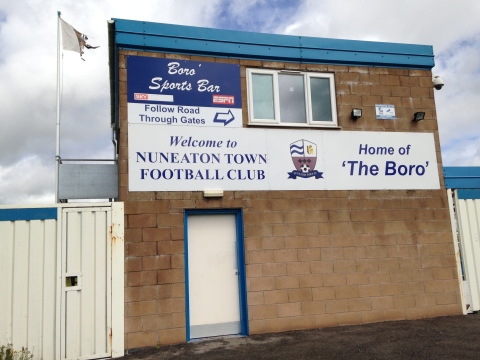
    In another Under the League exclusive, Dave Burin heads to a windswept Liberty Way to chat with Nuneaton Town’s new boss, Kevin Wilson. Honest, warm and with a wonderful eye for detail, Kevin recollects his fascinating career on the field and in the dugout, which has taken him from Stamford Bridge to Bedford Town.

    DB: You grew up in Banbury in the 1960s and ’70s, and came through the youth setup at Banbury United. What are your memories of playing, and of watching football, in your early years?photo

    KW: [Living in] Banbury, Oxford United was quite close, and also Birmingham City. I always remember going to my first game – Birmingham City, and Bob Hatton and Trevor Francis played up front, and they beat Liverpool 2-1, at St. Andrews. I can always remember the goal that Trevor Francis scored to win it – a really good, left-footed shot right into the top corner from about 25 yards. It’s funny, that’s one of the things that really sticks in my memory. But football is a bug, isn’t it? You go anywhere to watch it! They’re my first memories of the game, going to Birmingham, and going to Oxford on certain other days.

    I played initially for a club called Ruscote Sports. They played a couple of levels down (from Banbury), but I played in their first team and also played in their under-16s and 17s at the time, and then Banbury United picked me up from there. I’d already played first-team football at Oxfordshire County Level, so, going to Banbury, it was quite a quick transition, really – played in the youth team, and within 8 months I was playing in the first team.

    I had the chance of playing with people at the time like [former Scotland international] Hugh Curran, he came as a player-manager. But the manager at Banbury who gave me my debut was Brian Stone. Players who I was friends with at the time there – Phil Lines [later Banbury United manager] and Wally Hastie who I’m still friends with now, were people who took me under their wing, and I’ve got a lot to thank people like that for when I look back on my career and see how well it’s shaped and developed.

    DB: You joined Derby County in 1979, and made 3 appearances in the ’79-’80 season. It was your first taste of football in the old First Division (present-day Premier League), but unfortunately the club were relegated. What are your memories of that first year at the Baseball Ground?

    KW: It was different, it was strange living away from home. I’d never been away from home, other than holidays. Training every day, doing something that you enjoy. It had been the first time I was full-time. Made my Central League debut away at Blackburn, where we lost 4-1 and I scored. Then I made my league debut at Liverpool.

    It’s a dream [playing at Anfield]. You talk this week about Steven Gerrard being able to play in front of those fans. [The Liverpool support] are fantastic fans.

    I came on as a sub, and it was something that just went very, very quickly. I was on for 20 minutes, but it was gone in a flash.

    DB: You really established yourself in the following 5 years at Derby, and during that time, shared a dressing room with some of the game’s real characters, like Charlie George, Roy McFarland and Archie Gemmill. It must have been a very entertaining dressing room to be in. Was there a real camaraderie at the club?

    KW: Yeah. I think that’s one of the things that you do get in a lot of clubs – a real camaraderie.

    Kenny Burns was there for a short time. What a character! I’ve shared a dressing room with Roy and Archie, they’re people that have done amazing things in the game. When I first went to Derby, there were also the likes of Bruce Rioch, David Webb, Roger Davis and Kevin Hector.

    Kevin is a player that helped me develop when he came back to Derby. You look back over your career, and remember people giving you little things to say ‘this is a job that you’ve got to work hard at’. Hopefully I’ve done that over the years, and given some people some enjoyment.

    As we know, footballers are passing ships in the night, because people move on so quickly and you don’t make many friends, but the friends that you do make are good friends.

    DB: You made the move to Ipswich Town in 1985. You had an impressive scoring rate in your two seasons there, but the team were going through a difficult period on the pitch. Did you enjoy your two seasons there, playing under Bobby Ferguson?

    KW: I think it was the time I learnt. They worked really hard on me on the training ground – [helping develop the skill of] holding up. One of my strengths in my early days was my pace in behind, but they worked really hard on my hold-up play, bringing people into the game, from there, it really helped me.

    I’ve got a lot of people at Ipswich to thank. When you’re talking about characters in the dressing room, I went into a dressing room that had the likes of George Burley, Paul Cooper, Eric Gates and Terry Butcher – a captain that led by example – so there were some real professionals.

    Charlie Woods and Peter Trevivian, who was the youth-team coach spent time with you, and they helped you develop. We had a gymnasium upstairs, it was the first one that had an artificial surface. We used to go there in the afternoons and sometimes it would be all about me holding it up, laying it off – a repetition, and football is repetition. It was a place that I felt as a person and as a player, I developed.

    DB: Whilst at Ipswich, you made your Northern Ireland debut, in a 1-1 away draw against Israel, in Tel Aviv. What do you remember about the match itself, and about the experience of travelling to somewhere vastly different, like Israel?

    KW: It was good. Billy Bingham was away with UEFA, so he actually didn’t take the game, [Northern Ireland goalkeeper] Jim Platt took the game. At the time, as well, Danny Wilson made his debut, and I think Lawrie Sanchez made his debut in the same game. When you get a call-up, it is fantastic. It’s another adventure really.

    I remember having a real good game, but missing a couple of chances. You’re most probably disappointed that you’ve not taken the chances, and on the day I felt we were the better side, but [making the international debut] was another step in the right direction, and maybe a step when it all started at Banbury United, I never thought would happen – it was just a dream, so it’s something that you look back on, and they’re real good memories.

    DB: You joined Chelsea in the summer of 1987, and you’re still regarded as a legend by Blues fans of that area. Why do you think that you and Chelsea were such a good fit?

    KW: I left Ipswich with a really heavy heart, because Bobby Ferguson didn’t have his contract renewed. So, it was leaving there, and thinking ‘I want to give myself an opportunity’. John Duncan came and took the job, and I’d played with John at Derby. But it was just too late, I’d made a decision to go, and it was a chance to play at a big London club, with a reputation.

    I always remember, I had a really good pre-season, and got about 8 or 9 goals and was really playing quite well and felt really sharp. But, at the time there were the likes of Gordon Durie and Kerry Dixon there, and I never started the season, which I was disappointed with. When I was coming on, I was actually getting a little bit of negativity from the fans.

    It didn’t really drop into place straight away, but I always remember scoring against West Ham, and I think it completely changed. After the first two months bedding in, Chelsea fans started to realise what I brought to them. I scored goals, I could lay goals on, but I made a living from working hard, and I think that’s what people have got to take out of it. If you can work hard and show people that you really care, I think they will stick through the good and the bad with you.

    DB: In the 1988-89 season, you were an integral part of Chelsea’s promotion from the Second Division, scoring 13 goals and being a real mainstay of a side who won the league at a canter. After having the misfortune of playing in a few relegated sides, was it extra sweet to be part of a promotion-winning squad?

    KW: Yeah. It’s always nice. I think I actually played in all the games, and when I look back on it, I played in all different positions. I even played right-back when Steve Clarke came off! So, when you get relegated, you take it personally. I know it’s a team game, but you always think ‘could you have done more’, ‘could you have scored more goals’ or ‘could you have worked harder’.

    When you win something, it’s a great feeling. I’m fortunate to have done it now as a manager and a player. It’s two different feelings – when you’re a manager, you can sit back and watch everybody and see the enjoyment on the faces, because you’re mostly the one at the front of the bus who’s driving it! When you’re a player, you’re part of the team, and you just want to celebrate and enjoy the occasion.

    DB: In 1992, you left the Bridge to join Notts County. You were signed by, and played under, Neil Warnock. He’s regarded as one of the game’s most outspoken characters. What was he like to play for?

    KW: I’ve got a lot of respect for Neil as a manager, because he’s one of the most successful managers with promotions, but he wasn’t really my cup of tea. I’ll be honest with you – I’d had managers before who most probably got the best out of me, but I didn’t really see eye-to-eye with Neil.

    I was a bit more experienced at the time, and it didn’t start off on the right footing. We played Crystal Palace at home. I scored the first, to go one-nil up, and then we went two up when (I think) Mark Draper scored the other one. I got the ball to go and put it on the spot. Mark Draper says ‘Oh, I take the penalties’. He took the penalty, missed it. Nigel Martyn kicked it down the other end of the field, and Bright scored at the other end. And we lost 3-2, in the end.

    And, [Warnock] blamed me because he said I was the experienced one on the field. That was my first game [for Notts County]. I have got a lot of respect for him, because I think he’s done really well, but when I look back and look at the likes of John Hollins, Bobby Ferguson, Arthur Cox and Billy Bingham, there was better man managers out there [than Warnock]. He’s done great jobs, but he didn’t tick the box for me.

    DB: After two seasons with Notts County, you joined Walsall. Again, you were involved in a promotion-winning side, as the Saddlers pipped Chesterfield to automatic promotion from the Third Division in 1994-95, winning 8 of the last 11 games. What do you remember about that season?

    KW: Going into Walsall, it was going into a different venture really, because I went in as player-coach. Kenny Hibbitt was the manager when I first went in there, and he was relieved of his duties; as us managers are when things don’t go well. Chris Nicholl came in as manager, I was first-team coach. The day Chris came through the door, there was a real winning ethos. I think everywhere he’d been, he got promoted in his first season.

    He sat down with me and talked about the way he wanted to play, and explained to me that I was a very important part of it. We played a counter-attacking style [under Nicholl].

    We had to go to Scarborough on the Tuesday night [for the penultimate game]. That night, Carlisle played [promotion rivals] Chesterfield. Carlisle beat Chesterfield 2-1went on to win the title, and we jumped above Chesterfield, because we won 2-1. I scored, and [former Scarborough striker] Kyle Lightbourne scored. We went two points above Chesterfield on and we had a real good goal difference, about +17 [over the Spireites]

    We had to play Bury on Thursday evening that same week, because it was rearranged. We drew 0-0. It must’ve been James Walker in goal that night, and he made an absolute fantastic save in about the 92nd minute, flying into the top corner, and he’s got his hand there. Real big celebrations on the night!

    As a player-coach, you still celebrate the same way as a player. I played 135 consecutive games for Walsall, including that season, at 34-35 [years old].

    DB: You took over the reins at Sixfields in 1999, becoming Northampton Town’s player manager. It was a successful season, as you led the club up to Division Two. How did you find the dynamic of being a manager to players who had formerly been teammates?

    I initially went there as an assistant manager to Ian Atkins. We played at Ipswich together. In 1997-98, we got to the play-off final and lost to Grimsby 1-0. We didn’t get the best of starts the following year, and we got relegated. Then Ian went about 12 games into the next season and I took the reins over, in October [1999].

    [As Manager] I just treated people how I wanted to be treated as a player. I wanted to be honest, and I wanted to be straightforward. The style and way we played was a little bit different, because I wanted them more to get down and play, and play through the thirds. I had the likes of Steve Howard, Jamie Forrester etc., and John Frain who scored the goal at Wembley when Cobblers got promoted. I had some very good players there. They played with a freedom, and it went forward from there.

    We got promoted at Torquay, on the last game of the season. In all the games I’ve played [and managed], I can always remember the things when it went our way. We played Mansfield at home, and Chris Greenacre missed a chance yards from goal, right in the last minute [the game finished 0-0]. It’s the inches.

    Torquay was the most relaxed I’ve felt, even during the game. I just felt confidence in the players, and that they were capable of doing the job. We went 2-0 up. It was a long journey back, but it was a really enjoyable journey. [As Manager] you’re the one that can sit back and watch everybody – the fans, the players celebrating, and it’s great to be able to watch.

    DB: You were sacked by Northampton in November 2001, despite having brought the club up to Division Two and ensured they avoided relegation in their first season in the third tier. Were you shocked by the decision? And what reasons did the Chairman give for relieving you of your duties?

    KW: Not really shocked, no. I don’t think anything shocks you in football nowadays. They felt that the run of form wasn’t good enough. They gave me a vote of confidence. We beat Port Vale away 1-0, but sometimes people have to make decisions and you have to accept that.

    Unfortunately I got relieved of my duties at Ilkeston this year, not having my contract renewed. After producing 30 players, and selling nine or ten players during that period, I think you feel a bit hard done by. But, you have to accept things in football and sometimes when things don’t go your way or results are they way they are, you have to accept that. That’s the business you’re in.

    DB: Do you still look back on your time at Northampton fondly then?

    KW: Yeah. It was a first step into management on my own, and I look back on the people that played there with me. Chris Carruthers, we gave him the opportunity to play with England u-21’s at the time, and he was our first young player that came through. And Steve Howard went on to have £1m+ moves, to Derby and Leicester. We had players like Dave Savage, who played for the Republic of Ireland, a player we most probably shouldn’t have released, but financially we couldn’t afford it. These things happen, and you look back and think ‘you make decisions, and you have to stick with them’.

    DB: Between 2002 and 2008, you managed several Non-League sides including Bedford Town, Aylesbury United and Kettering Town (twice). In what ways did you feel Non-League had changed on and off the pitch since your days as a youth player at Banbury United?

    KW: When you read the teams there, most probably those teams didn’t match my ambition. At the end of the day, it isn’t about finances. Everybody thinks it’s all about finances – certainly as a player, you want to get the best deal for yourself.

    I think [ambition] is where a lot of Non-League clubs fall down now – they don’t have a long-term vision. You have to have a short, medium and a long-term vision. Sometimes you have to be patient, and one of the things I found when going into those clubs – they didn’t have that. They weren’t looking to go ahead or change their philosophy. When you have a new manager come in, the philosophy of the football club changes straight away, because he wants to do it the way he knows he’s done it in the past.

    I’ve been involved in the Gazza affair when Paul [Gascoigne] came in [as Kettering Town manager in 2005]. I have nothing against Paul, or Paul Davies. It was the decision that [Kettering Town Owner] Imraan Ladak made, and you have to accept it. I went back in [as manager], and I shouldn’t have gone back in.

    DB: What was it like being part of the Paul Gascoigne saga? Was it quite surreal?

    KW: It was. I’d played against Paul, but I didn’t really know him. He’s an England icon. It was a bit of a merry-go-round really. It might be a bit unfair to call it a ‘circus’, but it’s not easy sometimes when you come into a Non-League club, with the professional background you’ve been in.

    You want everything to be done properly. Also, to make sure the players get what they are promised, and that is something that the Kettering boys got in abundance when Paul was there. There were new boots, pizza after training and things like that. It’s brilliant if you can bring that to the party, but you need a proper vision. Unfortunately, I was the one who payed, who was the fall guy really.

    [During Wilson’s time at Kettering] the team had just gone seven undefeated, scoring 22 goals and conceding 1, and I always remember sitting there on the final saturday when we were beating Droylsden 1-0, and felt ‘I don’t really want to be sitting in the stand, or going watching games’, and I think that’s what they wanted me to do.

    DB: Surely that wasn’t the job you’d signed up for?

    KW: No, unfortunately. And going back [later in 2005] was a mistake, because the club had changed. These things happen and they come to test you, but we carry on.

    DB: You had six successful seasons at Ilkeston. One real highlight was the club winning promotion to the NPL Premier Division in 2012, after a 2-0 playoff triumph over Leek Town at New Manor Ground. What are your memories of that day?

    KW: Great day. We actually played Sheffield in the semi-final on the Monday. We won 7-0 and played some excellent football.

    We’d been to play Grantham on the last day [of the regular season], who had already won the title, so we could have finished second. I changed 9 players on that Saturday, and we conceded in the last minute to concede second place. I made the players stay and watch Grantham get presented with the trophy, made them see what it could be like if we actually went up ourselves. I felt – give Grantham respect because of what they’ve achieved, but also, give the players a ‘this could be us next week’.

    Leek had a real backlog of fixtures, because of their pitch. They ended up having a lot of games on Tuesdays, Thursdays, Saturdays. They played Carlton [in the play-off semi final] on the Wednesday, and Carlton were 2-0 up. I actually went there with the Chairman and some people from our club., and when they said ‘that’s it’, I said ‘well, I don’t think the game’s over’. Anyway, Leek got back in it, drew 2-2, went to extra-time and Leek won on penalties.

    Leek came to us, and within about 60 minutes, you could see they were dying and we went on to win 2-0. As a manager it’s always nice to win things, but the players played a great part, as did Darren Caskey who was my assistant at the time. It’s always nice, the promotions are a lot better than relegations!

    DB: Ilkeston obviously came very close to achieving promotion to the Conference North this season, and were only denied by a play-off final defeat to Curzon Ashton. What do you think made this Ilkeston side such strong challengers, and conversely, why do you think they couldn’t quite achieve that promotion?

    KW: Maybe losing the players that we did during the season. I do believe that we would have won promotion with the likes of Che Adams, Akil Wright, Ashley Hunter etc.. When you look back, you’ve had nine players that have left the football club to go onto bigger things. You can’t stop and keep them, that’s unfair.

    The players always surprised me. They kept going and they kept turning things round. The way we played, and we had a great spirit. Because they were young, they were all hungry. Sometimes a little bit naïve, but we had a great season – maybe better than I expected.

    DB: Were there any particular performances that stick with you, in terms of how good the side were?

    KW: We beat F.C. United 3-1 at home, and we drew 1-1 away there, and the referee gave a penalty [to United] for handball, which was about two feet away from his hand! We had some real good performances. The Workington display, where we won in the play-off semi final, maybe nobody expected us to get that.

    We came up short at Curzon. It wasn’t for the lack of trying. I felt that first-half we never really came to terms with the game and we failed to put our passing game onto them, but second half we really showed what we were about. It was a really strange day because when we lost, I didn’t know what emotions I did feel. I was disappointed and sorry that I was leaving Ilkeston, but my fate was already decided three months before. The players had given me everything they’d got, even knowing that I’d be leaving. That showed a real character. I always said it was going to be hard to get into the play-offs, and we had a bit of a stutter right at the end, but we got over the line.

    Well done to F.C. United who deserved to win it, and well done to Curzon Ashton. My philosophy at Ilkeston, as it will be at Nuneaton, is, if the opportunity comes for players to get sold and go on higher they they will – but we will also try to keep building and get ourselves in and around the play-offs, or trying to win automatic promotion.

    DB: You joined Nuneaton Town earlier this month. What are your first impressions of the club? And what are your aims and plans for the coming season at Liberty Way?

    KW: It’s a big club. It’s a club that hasn’t had any stability for a while, having four managers in 13 months. A lot of players coming and going. Now it’s the time to get the building blocks in place. We are getting an academy going, an u-21 side and we’re looking to build a big future. That means a lot of work to be done between now and the start of the season, and trying to get as high up the league as we can this year.

    DB: What do you enjoy doing outside of football, and was there ever an occupation you considered aside from being involved with the beautiful game?

    KW: I do enjoy a game of golf. But, with football, you don’t get much time. Spending time with the family, walking the dog, and at this time of year, getting away and having a break and trying to relax.

    DB: So was it always football? Did you always know what you wanted to do as a career?

    KW: I was a good sportsman. I liked cricket as well, and athletics, but football was always the one that I excelled at and worked hard at. I got the rewards by working hard, and I think to any young player, I’d say ‘hard work doesn’t cost anything’. Whatever job you are in, you have to work hard. Certainly for me, it’s – make sure you work hard, and don’t follow the money. The money will come and the rewards will come if you go and put everything into place.

    Follow Dave on Twitter here.

    photo 4

    Posted on June 12, 2015, in UTL Interviews and tagged Featured, Kevin Wilson, Nuneaton Town. Bookmark the permalink. Leave a comment.
  • Under The League Interviews….Richard Sneekes

    Under The League Interviews….Richard Sneekes

    In an Under the League exclusive, Dave Burin talks to Rushall Olympic boss Richard Sneekes. Friendly, frank and thoroughly engaging, Sneekes is happy to reminisce over his fascinating career journey. It’s a footballing life which has taken him from playing under Johan Cruijff at Ajax, to reaching the League Cup final with Bolton Wanderers, and now trying to bring young fans through the turnstiles at Rushall’s Dales Lane ground, to watch his exciting Olympic team.

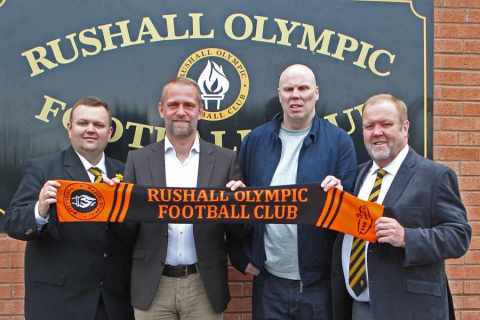
    Richard Sneekes (second left) is presented as Rushall's new manager

    Richard Sneekes (second left) is presented as Rushall’s new manager

    DB: You obviously grew up in Amsterdam during a period of great success for Ajax and the Netherlands national team – who reached the World Cup finals in ’74 and ’78. Who were your footballing heroes as a child, and were you a supporter of Ajax?

    RS: Yeah, I was a supporter of Ajax. But actually my footballing hero was Kevin Keegan, surprisingly enough. Because we were in Holland, we could watch German television. It was Hamburg [that Keegan played for], so I was fascinated by him, hence why Liverpool was one of my favourite teams. In Holland, we used to have a side in every country which you would follow. Liverpool definitely were my team in England.

    DB: You were on the books of Ajax during the era of managers like Aad de Mos (who led the team to three Eredivisie titles) and the great Johan Cruijff. What do you remember about your time under those managers, and the handful of first-team appearances you made at Ajax?

    RS: [I feel] privileged, to be brutally honest. I made my debut at the age of 16, against Haarlem. Cruijff was the manager – he called me into the squad a couple of weeks before, just to have a little bit of a taster. Then, my youth team manager said ‘You’re back with the first team squad tomorrow’, and I came on for the last 15 minutes [of the Haarlem game].

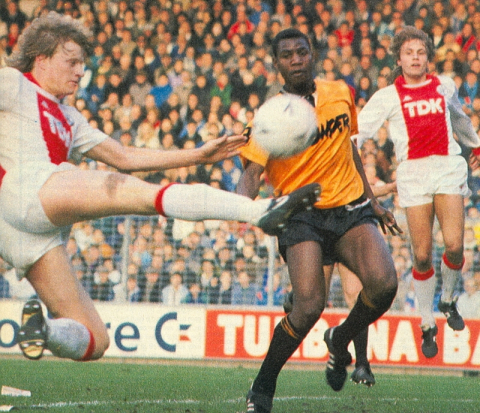
    Sneekes in acrobatic action for Ajax Amsterdam

    Sneekes in acrobatic action for Ajax Amsterdam

    Cruyff was very complimentary, but he knew that there was loads of talent out there, and his saying used to be ‘it’s up to you whether you make it or not’. His words were ‘I won’t eat a sandwich less if you don’t’. He wouldn’t lose an hour’s sleep over it, because he knew there was that much talent out there. He always put it in your shoes to perform, and make sure that you stood out, so that he would give you a chance.

    DB: Were you nervous then, in your first appearance, or was it more excitement?

    RS: It was with ten players, that are of top international quality, as Ajax were in those days. It’s pretty easy – they’ll give you the ball, and they’ll just encourage you to do things that you normally do in the youth team. It was a great experience. I had to go back to school the next day…if you had social media like now, that would be completely different.

    DB: You left to join Volendam in the summer of 1989, and had a successful season with the club. Was it an easy decision to move to a club which offered regular football, or was it difficult to leave Ajax and leave your home city?

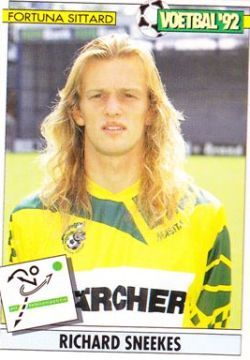
    Richard Sneekes in his Fortuna Sittard days

    Richard Sneekes in his Fortuna Sittard days

    RS: No, it wasn’t, because Volendam is only 25 minutes from where I lived. I was 18 when I went there – played a full season. I was 19 when I came back [to Amsterdam]. [Ajax] offered me another contract, but by that time I’d tasted first-team football in the Dutch Premier League, playing 32 games. So I just wanted to really kick on, and decided not to take the cut deal, so they sold me to Fortuna. There was a couple of teams [interested in signing Sneekes] – Dick Advocaat was in charge of Haarlem at that stage. I had a good meeting with him. They wanted to buy me outright, but I just wanted to go out on loan, just to see if whether or not I still had a future at Ajax. So I came back, they offered me a contract, but I just couldn’t see myself playing in the reserves anymore.

    DB: You joined Bolton Wanderers in 1994, after a brief spell in Switzerland. How did you find adapting to the English lifestyle? And do you look back on it as a happy time? It’s obvious that you’ve always been very popular with the Bolton supporters.

    RS: I loved every minute of it. When I first joined, all the people in Holland thought that I would be back within three months, because I wasn’t known as a typical ferocious-tackling midfielder. But I adapted really quickly. I went on trial for a week, and the boys said ‘we’ll definitely see you back’, they sorted all the paperwork out, and I got there.

    It was a little bit different, I’m not going to deny that. Purely from a tactical perspective, because I was used to coming in in Holland at 12 o’clock, and was bombarded with where you’d have to run, whereas here it was ‘see you in the dressing room at 1:30pm’, nothing really tactical. Everybody played 4-4-2. So from that perspective, it was an eye-opener. Training once a day, whereas I was used to twice. Lots of time at home with the family. It was very good, I really enjoyed my time there.

    My first year in English football, we got through to the Coca-Cola League Cup final, and the play-off final, so it can’t get any better than that! Those two things stand out.

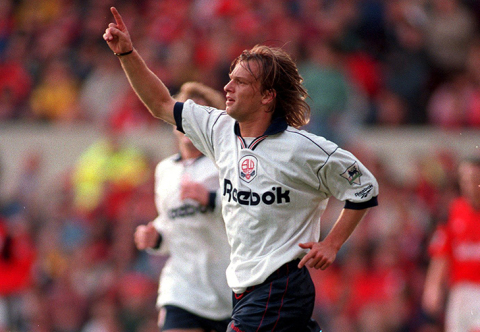
    Richard Sneekes enjoys a goal for Bolton Wanderers

    Richard Sneekes enjoys a goal for Bolton Wanderers

    DB: You spent the longest period of your career at West Bromwich Albion, where you were very successful, and you’ve even played for their Masters team in recent years. Why do you think you and the Albion were such a good fit?

    RS: I took my time to see what they were all about. Colin Todd made it clear that he didn’t want me to come back [to Bolton Wanderers]. I took my time, I looked at West Brom and a couple of other clubs. They were second-bottom in the old First Division, and from what I saw, they were way too good to go down. As soon as I joined, it was like being on the same wavelength as Bob Taylor and Andy Hunt, and you know, the rest is history, really.

    The people have always been friendly. It’s always a very friendly atmosphere. You don’t stay somewhere for almost six years if you don’t like it! It’s a very good club.

    DB: Before you became involved in non-league football you featured for a few clubs, including Stockport and Herfølge, but didn’t stay anywhere for more than a season. Was it a case of you not enjoying your time at those clubs, or were there other reasons?

    RS: There were other reasons. My last year at West Brom, I played 58 games. The manager [Gary Megson] then decided to not retain me. The way he tried to play, was against everything I learnt as a youngster. He destroyed my appetite for football a little bit. I went to Stockport. I’d really lost the appetite to play, to be fair, but thought I was way too young to retire. I only had a three-month contract there. That ended, and then I went to Hull. It’s where Brian Little was, who I knew from my West Brom times. He then left, and Jan Mølby took over. He wanted me to move up there, which I didn’t want to do.

    Then I went to Denmark, where one of the directors who used to be at West Brom had a club. I played there for 3 months. I look back on it now, and think that I could have probably played on for a couple more years. It wasn’t to be, but when I was released [by Albion] at 32, in my mind, I’d retired really.

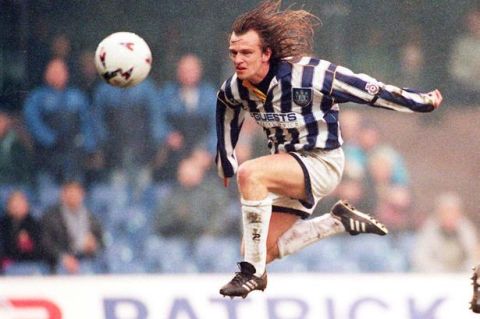
    In action for West Bromwich Albion

    In action for West Bromwich Albion

    DB: You came back several years after leaving Herfølge, to feature for Hinckley United and later for Dudley Town. What was it that brought you back to playing football, and what were your first impressions of English non-league football, having played at a much higher level?

    RS: I hadn’t played for five years, when I joined Hinckley. I used to go the Hong Kong Masters every year. Dean Thomas was the Hinckley manager. He said ‘You can still play’. So I went training there, they had to wait for international clearance for about a month, and then after the first game, I thought this isn’t for me. I was 39, chasing 20 year olds! So I played about 2 and a half more games. He said he released me, but I told him I didn’t want to play anymore.

    At 42, I went to Dudley Town. My son joined them as well – he was 16. I played about 6 or 7 games with him in the first team. I usually came on for a little bit. It was just great to play with him, more than anything. I had a bit of fun. To play with your son – that was the main attraction behind it.

    DB: You moved into coaching in 2010 with Tamworth. Had you always intended to take a coaching or managerial role after you finished playing, or was the job at Tamworth just an opportunity which arose?

    RS: That was an opportunity that arose. I always said after I quit football, that I didn’t want to stay in it – because whenever it’s the kids holiday, you train, whenever it’s your holiday, the kids are still at school, so I just wanted to break that pattern. Just five years after that, it started to itch a little bit. I thought, well, I have got quite a bit of knowledge that I wanted to pass over. So that’s really when I started to get back into football, and started my own soccer school – and the Tamworth opportunity came along, to work with the academy there.

    DB: In 2011, you took the coaching job with Hereford United, and spent a season there. It’s a club which unfortunately folded a few months back due to financial issues. Were you aware of there being money troubles at the club during the time you were there?

    RS: I don’t really know. I think there were [financial problems] behind the scenes. But we always got payed on time. We always got all our money. So, I’m sure that one or two people behind the scenes had to dip in their pockets, to make sure it got payed on time, but it never affected us week-to-week. I can’t speak out of turn saying they didn’t fulfil their obligations – they always did.

    It’s a nice club. From whatever has gone on there, it’s sad to see, because it’s an historic club, and we just hope that they can rise through the divisions that I know they can be at. So I’m talking League One-League Two level.

    DB: You were appointed Rushall Olympic manager last summer, with Steve Hinks as your assistant. How did the move come about – did the club contact you, or did you apply for the vacancy? And was the decision to make Steve the assistant manager your choice, or a choice made by the club?

    RS: It almost went the other way around. I’d applied for a couple of jobs in non-league and I think as soon as they see that you’re an ex-pro, they think a.) you want too much money, and b.) that you think you know it all. The club approached somebody, who approached Steve, about whether or not he wanted to be involved with Rushall, and they asked him who he thought should take over as manager, and he basically said the only person that he wanted to work with was me.

    He knew what I was all about. He didn’t want to be the manager, so I didn’t put my CV in – it just came about that someone else recommended me, and we haven’t looked back!

    DB: Do you think those other non-league clubs were a bit wary of hiring someone who’d played at a higher level, then?

    RS: Yeah, I think so. They’d definitely look at it and say, ‘you might have the knowledge, but you’ll probably want some other ex-pros to come and play for you, it’s going to cost us money, you haven’t really got any knowledge of the non-league scene’. So, you sometimes need a little break, and I got it in this instance, and like I said, [Rushall] have had a very good season. We changed the philosophy of the club completely. We had to start from scratch, because we didn’t really have any players. It’s all come together. We’re on a great run, we’ve had a really good season, I think – so really pleased.

    DB: You’ve had a good season at Rushall, and with one game to go, you could still finish as high as 7th. Do you feel that you have a good enough squad right now to challenge for promotion next season, or do you feel that the club need to bring in some new players to have a realistic chance of going up?

    RS: We’re just going to do it step by step. We’ve progressed really well this year. Hopefully we can keep the squad together, add some quality to it, but ultimately I want to try and embed young players that maybe have lost their way, missed the boat, so for me personally, I look at other clubs and look at how much time they’ve taken, to get into a certain position to challenge for promotion, and I think maybe two years – this year and next year – might be a little bit shortish.

    We’re looking at it as a project, and if it doesn’t happen next year, then hopefully we can still make progress, and look at it the year after or the year after that. They want to move up to the next division, and then we’ll take it from there – but you need a bit of luck at times. A bit of luck, and the right players have come in that work well, then you never know. But it’s a longer-term project.

    DB: This season Rushall have scored 74 goals in the Northern Premier League, more than any other side outside of the top six. Do you see yourself as a manager who promotes attacking football? And if so, which managers that you played for you think gave you that love of attacking football?

    RS: [Laughs] You only have to look where I come from to know. That’s the only way that I know – it’s embedded in my DNA. I said to my players before the game ‘we want to be organised here, we want to be fit, but we want to entertain people too’. That’s why they come to the stadium – not to be bored! I want players to use their imagination, take risks in a certain structure. It doesn’t always work. Sometimes we’ve taken a bit of a beating, but the longer the season has gone on, we’ve known how to grind results out. It’s worked well for us.

    I want to be entertained as a manager. I don’t want to sit there and watch boring football!

    DB: You’re on a very good run at the moment – so long may it continue

    RS: Definitely. There’s only one game left, so it can’t continue for that much longer!

    DB: Obviously at any non-league club, there’s fewer staff members compared to a club like West Brom or Bolton. So, do you have other duties besides coaching and signing players? Are there other jobs at the club which you have to do, such as helping keep the pitch in shape, or sorting out transport for away games?

    RS: No. Where that’s concerned, we are blessed. The chairman [John Allen], he really looks after things, so we have a groundsman, we have a coach for the away games, we’ve got a kitman, we’ve got a goalkeeping coach, we’ve got another coach, besides an assistant manager – so we’ve got a few staff.

    They’re not getting paid huge amounts of money, but it serves us. There’s loads of volunteers, doing the turnstiles. It’s good. It works really well.

    DB: Would you say you feel a real bond with the fans at Rushall?

    We predominantly have an older crowd, but the last couple of games we’ve had a few youngsters in who’ve really livened the place up. That’s what we need. We need some younger fans that are going to come in and support us, because it’s important. It’s easy for someone to support Chelsea, but I don’t want to fill their coffers with any more money, because it’s important that it filters through to the non-league!

    DB: The team are on an excellent run right now, having won their last four NPL games – but which match do you think has been Rushall’s best performance of this season?

    RS: That’s a good question. We played Stafford at home, who are a league below us, but they were on a great run – I think they were unbeaten for 13 games. It was in the FA Trophy. They came to us and they were quite cocky. They were beaten 5-0. Beating Trafford 6-1 at home was great. We beat Stourbridge on New Year’s Day, in really poor conditions, playing really well. There have been some really good ones, and some really bad ones, but [the Stourbridge game] is one of the highlights.

    DB: In between your football commitments, you became involved with Angelo’s, an Italian Restaurant in Sutton Coldfield. Have you always been a foodie? And what’s your favourite Italian dish?

    I love Italy. We lived in Switzerland, and it was very close to Italy. My favourite? I can’t say. I like it all. But, if an Italian person makes a Spaghetti Bolognaise, you can’t beat it!

    DB: What would you say your interests are outside of football? And was there ever another career you considered, instead of being a professional footballer?

    If you count futsal as something different to football, then you could say futsal. I just haven’t got enough to do anything else, bar football! I like socialising, I like going to the pub every now and then. But other than that, all I’m doing is working!

    I enjoy going to watch games. The [Rushall] youth team are in the final, so I’m just going to watch them play.

    DB: Finally, as a Dutch coach, do you think the style of coaching you do is different to English coaches?

    I’ve always been someone to make sure that everyone gets plenty of touches. I’ve just made sure that there’s a lot of small-sided games, with end product. I don’t particularly believe in running [in training]. It’s part of the game, but you can incorporate it with a ball, so that’s what I always try and do.

    Thanks to Dave for conducting this interview, and to Richard for giving up his time. As you can probably tell, the interview took place before the final game of the season.

    Posted on April 28, 2015, in UTL Interviews and tagged Richard Sneekes, Rushall Olympic. Bookmark the permalink. Leave a comment.