James Bartaby

  • Why Does Ground Grading Always Come as a Surprise?

    Why Does Ground Grading Always Come as a Surprise?

    It’s that time of year again. No, not when I write my now seemingly annual article (sorry, I’ll try and get back to it!), but rather the time when clubs anxiously await their fate as to which division they’ll be competing in the following season. Why, though, does it always come to this?

    A wise man once said:

    There are two certainties in life; death and taxes.

    Well, in nonleague football there are three: postponements, reprieves and ground grading.

    And it’s the last item on that list that is the talk of the moment right now. In the National League South and North, three playoff contenders are in danger of falling foul of the Football Association’s strict guidelines regarding the standard of facilities.

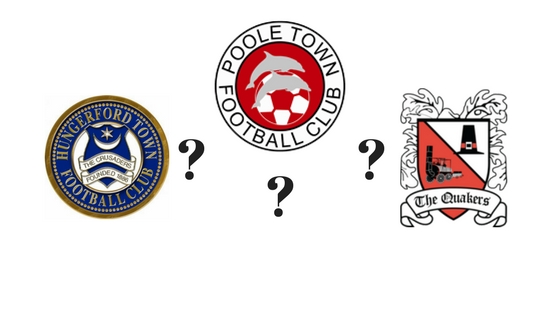
    Poole Town and Hungerford Town – fifth and sixth respectively in the South – along with Darlington, fifth in the North, have all been told they cannot compete in the playoffs as they do not meet the requirements for covered seating in the National League. The standard says the following:

    The minimum covered seated accommodation must be 500. These may be located in two stands of which at least 250 shall be seats located in one stand, with no stand having less than 100 seats. These seats may be inclusive of Directors/Committee and press seating.

    All three clubs have appealed their punishments.

    Darlington’s appeal centers around the fact that the ground grading guidelines were amended in May 2016. Prior to then, it was accepted that a club could enter the playoffs with temporary seating, as long as they had planning permission and a detailed plan for the installation of permanent seats. The statement goes on to say:

    This change in the requirement for permanent covered seating was only brought to the Board’s attention in the past couple of months. By the time the Board was fully aware of the requirement, it was not able to act because of the timescales involved and the lack of funds available.

    I’m sorry, what? The board were not aware of the requirements until a couple of months ago? Surely if your club is on such a phenomenal trajectory (they have achieved three promotions since coming into existence in 2012) you would be used to reading these grading documents, and would be aware of any changes to them? Even if you thought you were fully across it, you would read and re-read them just to make sure you passed muster, no?

    Don’t get me wrong. I do feel sorry for The Quakers, as theirs is the latest incredible ‘phoenix club’ story, and hopefully this oversight on their part will serve only as a temporary roadblock on their path back to the Football League.

    In the cases of Poole Town and Hungerford Town, it seems both clubs have been so busy concentrating on meeting the requirements to remain at Step Two that they have failed to prepare for the eventuality of promotion. Both clubs faced the prospect of demotion at the end of the season if they didn’t achieve the B grade required to play at Step Two. Happily, the two clubs did meet the March 31st deadline, but now find themselves being held back in the South.

    In the case of Hungerford, they are some 133 seats short of the requirement (I haven’t been able to find out about Poole), and according to their official statement:

    Our focus has always been on making the ground grading requirements for this league and that alone has been monumental but we assumed that adding extra seats would be arguable.

    Again, what? You assumed the extra seats required would be arguable? Please!

    While all three clubs have appealed the decisions, it’s hard to see how they can hope to win them. The rules are quite clear after all. The ground grading documents can be downloaded from the FA website, and state clearly what is required.

    Apologies to the three clubs mentioned, this article isn’t necessarily aimed at them, but they are the three highest profile clubs currently affected. It happens every year it seems; a club realises it doesn’t meet ground grading and we see frantic appeals and fundraising as they desperately scrabble around to upgrade their ground so they can either take a promotion or remain at their current level.

    Currently, if a club gets promoted, they have until March 31st the following season to ensure their ground is up to scratch for the level they’re competing at. In the case of the National League, you need a Grade B to play in the National North or South, and a Grade A to play in the National League. However, there is something of an anomaly here. For instance, as we have seen in the three cases here, you can compete at Step Two temporarily with a Grade C, as long as you achieve Grade B by the March deadline. Failure to do so will result in your club being demoted back down to Step Three, regardless of your finishing position (one of many reasons we see reprieves for other teams).

    What that means, of course, is that you effectively need to have a Grade A at Step Two if you have any ambitions of reaching nonleague’s top flight. This is a massively expensive undertaking, especially for clubs achieving back to back promotions, or multiple promotions in a short space of time. It has been reported that it will cost upwards of £150,000 just to install the extra seats required, on top of what these clubs have already spent just to meet the requirements for Step Two. As I say, expensive.

    In addition, to play in the top flight you also need a minimum capacity of four thousand, and the ability to increase that to five thousand. I have been unable to ascertain how long clubs get to carry out the necessary work. Currently there are two clubs plying their trade at Step One with capacities less than four thousand – Solihull Moors with 3050, and North Ferriby United with just 2700. Moors have plans in place to increase their capacity, and I know NFU were looking at a potential new home when promotion started looking likely, although they have been relegated after just one season, and there is still a small chance that Moors could join them.

    What needs to be done to avoid this in future?

    The obvious solution to the problem is communication. The FA should make it abundantly clear what is required on a division by division basis, i.e. a circular should be sent at the start of every season to each club stating their current grading, and what – if anything – needs to be done should the club wish to go for promotion. Let’s not forget, promotion isn’t every club’s ambition every season, but for those who do have aspirations of moving up a level, they should be acutely aware of what is required so we can avoid these embarrassing situations in future.

    One other possibility is that the rules are tweaked at the top of the nonleague game, and clubs are allowed to start the season with a Grade B, but must attain Grade A by March 31st. With the extra income from gates and TV, that shouldn’t be a problem. However, this scenario is unlikely due to the very fact that the National League is now broadcast by BT Sport.

    The flipside of that would be to do away with the leeway currently afforded to clubs lower down the ladder, i.e. you have to have the grade before you can get promoted. However, that is totally unworkable in my opinion, and would lump massive and unnecessary expense on clubs, as they would need the grading for the division above even if they have no immediate plans for promotion.

    My final solution would be to have clubs apply for promotion from Steps Two, Three and Four, in the same way they have to from Step Five down. That way, we would all know where we stand from an early stage. However, that immediately encounters a problem: the playoffs. From Step Five downward, only one team gets promoted. There are no playoffs at all. For a club to be promoted, they have to have applied (meaning that they already have the necessary grading), and they must also finish in the top two in their division. That is a recent change, as my local team Bracknell Town finished fifth in the Hellenic Division One East in 2012-13, but were promoted as the highest placed club to have applied. Enough of that tangent though!

    As things stand in the National South, seventh placed Hampton & Richmond Borough (long term readers will know my affection for the mighty Beavers!) will enter the playoffs should Hungerford and Poole fail in their respective appeals, although that has yet to be officially confirmed by the league.

    All in all, it’s a flawed system, but one which is doing the best it can from the FA’s point of view. The whole reason the March 31st deadline exists is to give clubs that leeway in light of a rapid – and often unexpected – rise through the divisions. Clubs shouldn’t be held back because of a few seats, or because the running track is the wrong width (that has happened in the past!), they should be encouraged to achieve and, in some cases, over achieve.

    The ultimate responsibility, though, lies with the clubs themselves. They need to familiarise themselves with what is required of them, not only for the division they are currently competing in, but also for the one above if their short term ambitions include getting promoted. Let’s not have this circus at the end of the season anymore!

    Posted on April 17, 2017, in Opinion, UTL Archive and tagged Darlington 1883, Darlington FC, Featured, Ground Grading, Hungerford Town FC, National League, National League North, National League South, Poole Town FC, Promotion, Relegation, Vanarama National League. Bookmark the permalink. 1 Comment.

  • Non League Legends: Edgar Kail

    Non League Legends: Edgar Kail

    Meet the one club legend who is still adored more than eighty years after he stopped playing.

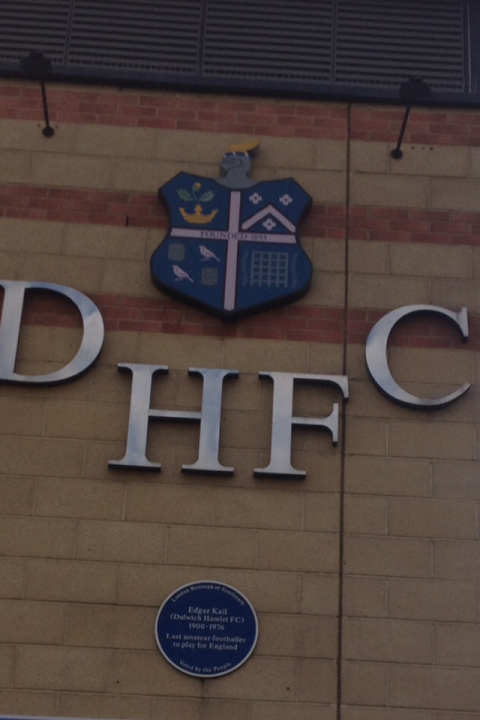
    Edgar Isaac Lewis Kail was born in London on November 26th, 1900. He spent his entire fourteen year senior career at Dulwich Hamlet FC, and is rightly held in the highest regard at Champion Hill. He is so respected at the club that the approach to the ground is named after him, and Southwark council unveiled a blue plaque in his honour in 2003 after a huge campaign amongst fans saw him top a poll of the borough’s famous sons and daughters.

    In fact, fans still sing songs about Kail at games, and the Dulwich anthem is about their greatest ever player:

    “Edgar Kail in my heart, keep me Dulwich. Edgar Kail in my heart I pray. Edgar Kail in my heart, keep me Dulwich. Keep me Dulwich till my dying day.”

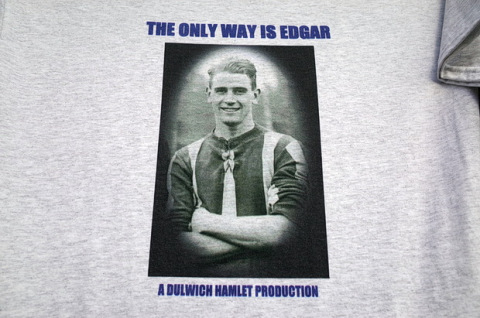
    A trip to Hamlet’s ground will just enforce the affection for Kail. There is a stall dedicated to the man, with history for visiting fans to read, and merchandise to buy.

    One of the t-shirt designs on offer at Champion Hill

    One of the t-shirt designs on offer at Champion Hill

    It’s unclear how many games Kail played, but records indicate he scored a massive 427 goals for the Pink ‘n’ Blues, which is a phenomenal total, and a club record to this day. He also holds the club’s record for most goals in a season, when he netted fifty three times during the 1925-26 season.

    He played three times for the Senior England team, scoring two goals. All three caps came in the space of a week, during a continental tour in 1929. Both goals were scored on his debut against France, a 4-1 win in Paris, while he also played against Spain (a 4-3 loss in Madrid) and Belgium (a 5-1 win in Brussels).

    He is the last player to play for the full England side whilst playing for a non league club, a fact which will almost certainly remain intact forevermore.

    What makes Kail so special, and such a big hero among Hamlet fans, is that he repeatedly turned down lucrative offers from top flight clubs – and with it the chance to turn professional – instead opting to play for his beloved Hamlet for the whole of his career. He won plenty of honours too; two FA Amateur Cups, three Isthmian League titles, and four Surrey Senior Cups. A decent haul, I’m sure you’ll agree.

    It wasn’t just football that Edgar Kail excelled at; he was also an accomplished runner in his school days, competing between 1910-1914. He was even an excellent cricketer, setting record partnerships in his first matches, and also being a competent bowler.

    But it was football that won out in the end, and his sparkling career started in the school team, where he made a big impact at an early age. At the age of nine, he successfully trialled for his school side, which is made all the more impressive when you consider that the other players were aged 13-15. After a year, Kail became captain of the team. He also played football at County level, and represented England Schools on a number of occasions.

    An outstanding competitor in multiple sports, Hamlet fans can count themselves lucky that football was always Kail’s first love. He lives long in their memories and hearts, and so he should.

    The blue plaque at the entrance to Hamlet's ground

    The blue plaque at the entrance to Hamlet’s ground

    Posted on July 31, 2015, in Non-League Legends and tagged Champion Hill, Dulwich Hamlet FC, Edgar Kail, Featured. Bookmark the permalink. Leave a comment.

  • Under The League Interviews…Kevin Wilson

    Under The League Interviews…Kevin Wilson

    In another Under the League exclusive, Dave Burin heads to a windswept Liberty Way to chat with Nuneaton Town’s new boss, Kevin Wilson. Honest, warm and with a wonderful eye for detail, Kevin recollects his fascinating career on the field and in the dugout, which has taken him from Stamford Bridge to Bedford Town.

    DB: You grew up in Banbury in the 1960s and ’70s, and came through the youth setup at Banbury United. What are your memories of playing, and of watching football, in your early years?photo
    KW: [Living in] Banbury, Oxford United was quite close, and also Birmingham City. I always remember going to my first game – Birmingham City, and Bob Hatton and Trevor Francis played up front, and they beat Liverpool 2-1, at St. Andrews. I can always remember the goal that Trevor Francis scored to win it – a really good, left-footed shot right into the top corner from about 25 yards. It’s funny, that’s one of the things that really sticks in my memory. But football is a bug, isn’t it? You go anywhere to watch it! They’re my first memories of the game, going to Birmingham, and going to Oxford on certain other days.

    I played initially for a club called Ruscote Sports. They played a couple of levels down (from Banbury), but I played in their first team and also played in their under-16s and 17s at the time, and then Banbury United picked me up from there. I’d already played first-team football at Oxfordshire County Level, so, going to Banbury, it was quite a quick transition, really – played in the youth team, and within 8 months I was playing in the first team.

    I had the chance of playing with people at the time like [former Scotland international] Hugh Curran, he came as a player-manager. But the manager at Banbury who gave me my debut was Brian Stone. Players who I was friends with at the time there – Phil Lines [later Banbury United manager] and Wally Hastie who I’m still friends with now, were people who took me under their wing, and I’ve got a lot to thank people like that for when I look back on my career and see how well it’s shaped and developed.

    DB: You joined Derby County in 1979, and made 3 appearances in the ’79-’80 season. It was your first taste of football in the old First Division (present-day Premier League), but unfortunately the club were relegated. What are your memories of that first year at the Baseball Ground?

    KW: It was different, it was strange living away from home. I’d never been away from home, other than holidays. Training every day, doing something that you enjoy. It had been the first time I was full-time. Made my Central League debut away at Blackburn, where we lost 4-1 and I scored. Then I made my league debut at Liverpool.

    It’s a dream [playing at Anfield]. You talk this week about Steven Gerrard being able to play in front of those fans. [The Liverpool support] are fantastic fans.

    I came on as a sub, and it was something that just went very, very quickly. I was on for 20 minutes, but it was gone in a flash.

    DB: You really established yourself in the following 5 years at Derby, and during that time, shared a dressing room with some of the game’s real characters, like Charlie George, Roy McFarland and Archie Gemmill. It must have been a very entertaining dressing room to be in. Was there a real camaraderie at the club?

    KW: Yeah. I think that’s one of the things that you do get in a lot of clubs – a real camaraderie.

    Kenny Burns was there for a short time. What a character! I’ve shared a dressing room with Roy and Archie, they’re people that have done amazing things in the game. When I first went to Derby, there were also the likes of Bruce Rioch, David Webb, Roger Davis and Kevin Hector.

    Kevin is a player that helped me develop when he came back to Derby. You look back over your career, and remember people giving you little things to say ‘this is a job that you’ve got to work hard at’. Hopefully I’ve done that over the years, and given some people some enjoyment.

    As we know, footballers are passing ships in the night, because people move on so quickly and you don’t make many friends, but the friends that you do make are good friends.

    DB: You made the move to Ipswich Town in 1985. You had an impressive scoring rate in your two seasons there, but the team were going through a difficult period on the pitch. Did you enjoy your two seasons there, playing under Bobby Ferguson?

    KW: I think it was the time I learnt. They worked really hard on me on the training ground – [helping develop the skill of] holding up. One of my strengths in my early days was my pace in behind, but they worked really hard on my hold-up play, bringing people into the game, from there, it really helped me.

    I’ve got a lot of people at Ipswich to thank. When you’re talking about characters in the dressing room, I went into a dressing room that had the likes of George Burley, Paul Cooper, Eric Gates and Terry Butcher – a captain that led by example – so there were some real professionals.

    Charlie Woods and Peter Trevivian, who was the youth-team coach spent time with you, and they helped you develop. We had a gymnasium upstairs, it was the first one that had an artificial surface. We used to go there in the afternoons and sometimes it would be all about me holding it up, laying it off – a repetition, and football is repetition. It was a place that I felt as a person and as a player, I developed.

    DB: Whilst at Ipswich, you made your Northern Ireland debut, in a 1-1 away draw against Israel, in Tel Aviv. What do you remember about the match itself, and about the experience of travelling to somewhere vastly different, like Israel?

    KW: It was good. Billy Bingham was away with UEFA, so he actually didn’t take the game, [Northern Ireland goalkeeper] Jim Platt took the game. At the time, as well, Danny Wilson made his debut, and I think Lawrie Sanchez made his debut in the same game. When you get a call-up, it is fantastic. It’s another adventure really.

    I remember having a real good game, but missing a couple of chances. You’re most probably disappointed that you’ve not taken the chances, and on the day I felt we were the better side, but [making the international debut] was another step in the right direction, and maybe a step when it all started at Banbury United, I never thought would happen – it was just a dream, so it’s something that you look back on, and they’re real good memories.

    DB: You joined Chelsea in the summer of 1987, and you’re still regarded as a legend by Blues fans of that area. Why do you think that you and Chelsea were such a good fit?

    KW: I left Ipswich with a really heavy heart, because Bobby Ferguson didn’t have his contract renewed. So, it was leaving there, and thinking ‘I want to give myself an opportunity’. John Duncan came and took the job, and I’d played with John at Derby. But it was just too late, I’d made a decision to go, and it was a chance to play at a big London club, with a reputation.

    I always remember, I had a really good pre-season, and got about 8 or 9 goals and was really playing quite well and felt really sharp. But, at the time there were the likes of Gordon Durie and Kerry Dixon there, and I never started the season, which I was disappointed with. When I was coming on, I was actually getting a little bit of negativity from the fans.

    It didn’t really drop into place straight away, but I always remember scoring against West Ham, and I think it completely changed. After the first two months bedding in, Chelsea fans started to realise what I brought to them. I scored goals, I could lay goals on, but I made a living from working hard, and I think that’s what people have got to take out of it. If you can work hard and show people that you really care, I think they will stick through the good and the bad with you.

    DB: In the 1988-89 season, you were an integral part of Chelsea’s promotion from the Second Division, scoring 13 goals and being a real mainstay of a side who won the league at a canter. After having the misfortune of playing in a few relegated sides, was it extra sweet to be part of a promotion-winning squad?

    KW: Yeah. It’s always nice. I think I actually played in all the games, and when I look back on it, I played in all different positions. I even played right-back when Steve Clarke came off! So, when you get relegated, you take it personally. I know it’s a team game, but you always think ‘could you have done more’, ‘could you have scored more goals’ or ‘could you have worked harder’.

    When you win something, it’s a great feeling. I’m fortunate to have done it now as a manager and a player. It’s two different feelings – when you’re a manager, you can sit back and watch everybody and see the enjoyment on the faces, because you’re mostly the one at the front of the bus who’s driving it! When you’re a player, you’re part of the team, and you just want to celebrate and enjoy the occasion.

    DB: In 1992, you left the Bridge to join Notts County. You were signed by, and played under, Neil Warnock. He’s regarded as one of the game’s most outspoken characters. What was he like to play for?

    KW: I’ve got a lot of respect for Neil as a manager, because he’s one of the most successful managers with promotions, but he wasn’t really my cup of tea. I’ll be honest with you – I’d had managers before who most probably got the best out of me, but I didn’t really see eye-to-eye with Neil.

    I was a bit more experienced at the time, and it didn’t start off on the right footing. We played Crystal Palace at home. I scored the first, to go one-nil up, and then we went two up when (I think) Mark Draper scored the other one. I got the ball to go and put it on the spot. Mark Draper says ‘Oh, I take the penalties’. He took the penalty, missed it. Nigel Martyn kicked it down the other end of the field, and Bright scored at the other end. And we lost 3-2, in the end.

    And, [Warnock] blamed me because he said I was the experienced one on the field. That was my first game [for Notts County]. I have got a lot of respect for him, because I think he’s done really well, but when I look back and look at the likes of John Hollins, Bobby Ferguson, Arthur Cox and Billy Bingham, there was better man managers out there [than Warnock]. He’s done great jobs, but he didn’t tick the box for me.

    DB: After two seasons with Notts County, you joined Walsall. Again, you were involved in a promotion-winning side, as the Saddlers pipped Chesterfield to automatic promotion from the Third Division in 1994-95, winning 8 of the last 11 games. What do you remember about that season?

    KW: Going into Walsall, it was going into a different venture really, because I went in as player-coach. Kenny Hibbitt was the manager when I first went in there, and he was relieved of his duties; as us managers are when things don’t go well. Chris Nicholl came in as manager, I was first-team coach. The day Chris came through the door, there was a real winning ethos. I think everywhere he’d been, he got promoted in his first season.

    He sat down with me and talked about the way he wanted to play, and explained to me that I was a very important part of it. We played a counter-attacking style [under Nicholl].

    We had to go to Scarborough on the Tuesday night [for the penultimate game]. That night, Carlisle played [promotion rivals] Chesterfield. Carlisle beat Chesterfield 2-1went on to win the title, and we jumped above Chesterfield, because we won 2-1. I scored, and [former Scarborough striker] Kyle Lightbourne scored. We went two points above Chesterfield on and we had a real good goal difference, about +17 [over the Spireites]

    We had to play Bury on Thursday evening that same week, because it was rearranged. We drew 0-0. It must’ve been James Walker in goal that night, and he made an absolute fantastic save in about the 92nd minute, flying into the top corner, and he’s got his hand there. Real big celebrations on the night!

    As a player-coach, you still celebrate the same way as a player. I played 135 consecutive games for Walsall, including that season, at 34-35 [years old].

    DB: You took over the reins at Sixfields in 1999, becoming Northampton Town’s player manager. It was a successful season, as you led the club up to Division Two. How did you find the dynamic of being a manager to players who had formerly been teammates?

    I initially went there as an assistant manager to Ian Atkins. We played at Ipswich together. In 1997-98, we got to the play-off final and lost to Grimsby 1-0. We didn’t get the best of starts the following year, and we got relegated. Then Ian went about 12 games into the next season and I took the reins over, in October [1999].

    [As Manager] I just treated people how I wanted to be treated as a player. I wanted to be honest, and I wanted to be straightforward. The style and way we played was a little bit different, because I wanted them more to get down and play, and play through the thirds. I had the likes of Steve Howard, Jamie Forrester etc., and John Frain who scored the goal at Wembley when Cobblers got promoted. I had some very good players there. They played with a freedom, and it went forward from there.

    We got promoted at Torquay, on the last game of the season. In all the games I’ve played [and managed], I can always remember the things when it went our way. We played Mansfield at home, and Chris Greenacre missed a chance yards from goal, right in the last minute [the game finished 0-0]. It’s the inches.

    Torquay was the most relaxed I’ve felt, even during the game. I just felt confidence in the players, and that they were capable of doing the job. We went 2-0 up. It was a long journey back, but it was a really enjoyable journey. [As Manager] you’re the one that can sit back and watch everybody – the fans, the players celebrating, and it’s great to be able to watch.

    DB: You were sacked by Northampton in November 2001, despite having brought the club up to Division Two and ensured they avoided relegation in their first season in the third tier. Were you shocked by the decision? And what reasons did the Chairman give for relieving you of your duties?

    KW: Not really shocked, no. I don’t think anything shocks you in football nowadays. They felt that the run of form wasn’t good enough. They gave me a vote of confidence. We beat Port Vale away 1-0, but sometimes people have to make decisions and you have to accept that.

    Unfortunately I got relieved of my duties at Ilkeston this year, not having my contract renewed. After producing 30 players, and selling nine or ten players during that period, I think you feel a bit hard done by. But, you have to accept things in football and sometimes when things don’t go your way or results are they way they are, you have to accept that. That’s the business you’re in.

    DB: Do you still look back on your time at Northampton fondly then?

    KW: Yeah. It was a first step into management on my own, and I look back on the people that played there with me. Chris Carruthers, we gave him the opportunity to play with England u-21’s at the time, and he was our first young player that came through. And Steve Howard went on to have £1m+ moves, to Derby and Leicester. We had players like Dave Savage, who played for the Republic of Ireland, a player we most probably shouldn’t have released, but financially we couldn’t afford it. These things happen, and you look back and think ‘you make decisions, and you have to stick with them’.

    DB: Between 2002 and 2008, you managed several Non-League sides including Bedford Town, Aylesbury United and Kettering Town (twice). In what ways did you feel Non-League had changed on and off the pitch since your days as a youth player at Banbury United?

    KW: When you read the teams there, most probably those teams didn’t match my ambition. At the end of the day, it isn’t about finances. Everybody thinks it’s all about finances – certainly as a player, you want to get the best deal for yourself.

    I think [ambition] is where a lot of Non-League clubs fall down now – they don’t have a long-term vision. You have to have a short, medium and a long-term vision. Sometimes you have to be patient, and one of the things I found when going into those clubs – they didn’t have that. They weren’t looking to go ahead or change their philosophy. When you have a new manager come in, the philosophy of the football club changes straight away, because he wants to do it the way he knows he’s done it in the past.

    I’ve been involved in the Gazza affair when Paul [Gascoigne] came in [as Kettering Town manager in 2005]. I have nothing against Paul, or Paul Davies. It was the decision that [Kettering Town Owner] Imraan Ladak made, and you have to accept it. I went back in [as manager], and I shouldn’t have gone back in.

    DB: What was it like being part of the Paul Gascoigne saga? Was it quite surreal?

    KW: It was. I’d played against Paul, but I didn’t really know him. He’s an England icon. It was a bit of a merry-go-round really. It might be a bit unfair to call it a ‘circus’, but it’s not easy sometimes when you come into a Non-League club, with the professional background you’ve been in.

    You want everything to be done properly. Also, to make sure the players get what they are promised, and that is something that the Kettering boys got in abundance when Paul was there. There were new boots, pizza after training and things like that. It’s brilliant if you can bring that to the party, but you need a proper vision. Unfortunately, I was the one who payed, who was the fall guy really.

    [During Wilson’s time at Kettering] the team had just gone seven undefeated, scoring 22 goals and conceding 1, and I always remember sitting there on the final saturday when we were beating Droylsden 1-0, and felt ‘I don’t really want to be sitting in the stand, or going watching games’, and I think that’s what they wanted me to do.

    DB: Surely that wasn’t the job you’d signed up for?

    KW: No, unfortunately. And going back [later in 2005] was a mistake, because the club had changed. These things happen and they come to test you, but we carry on.

    DB: You had six successful seasons at Ilkeston. One real highlight was the club winning promotion to the NPL Premier Division in 2012, after a 2-0 playoff triumph over Leek Town at New Manor Ground. What are your memories of that day?

    KW: Great day. We actually played Sheffield in the semi-final on the Monday. We won 7-0 and played some excellent football.

    We’d been to play Grantham on the last day [of the regular season], who had already won the title, so we could have finished second. I changed 9 players on that Saturday, and we conceded in the last minute to concede second place. I made the players stay and watch Grantham get presented with the trophy, made them see what it could be like if we actually went up ourselves. I felt – give Grantham respect because of what they’ve achieved, but also, give the players a ‘this could be us next week’.

    Leek had a real backlog of fixtures, because of their pitch. They ended up having a lot of games on Tuesdays, Thursdays, Saturdays. They played Carlton [in the play-off semi final] on the Wednesday, and Carlton were 2-0 up. I actually went there with the Chairman and some people from our club., and when they said ‘that’s it’, I said ‘well, I don’t think the game’s over’. Anyway, Leek got back in it, drew 2-2, went to extra-time and Leek won on penalties.

    Leek came to us, and within about 60 minutes, you could see they were dying and we went on to win 2-0. As a manager it’s always nice to win things, but the players played a great part, as did Darren Caskey who was my assistant at the time. It’s always nice, the promotions are a lot better than relegations!

    DB: Ilkeston obviously came very close to achieving promotion to the Conference North this season, and were only denied by a play-off final defeat to Curzon Ashton. What do you think made this Ilkeston side such strong challengers, and conversely, why do you think they couldn’t quite achieve that promotion?

    KW: Maybe losing the players that we did during the season. I do believe that we would have won promotion with the likes of Che Adams, Akil Wright, Ashley Hunter etc.. When you look back, you’ve had nine players that have left the football club to go onto bigger things. You can’t stop and keep them, that’s unfair.

    The players always surprised me. They kept going and they kept turning things round. The way we played, and we had a great spirit. Because they were young, they were all hungry. Sometimes a little bit naïve, but we had a great season – maybe better than I expected.

    DB: Were there any particular performances that stick with you, in terms of how good the side were?

    KW: We beat F.C. United 3-1 at home, and we drew 1-1 away there, and the referee gave a penalty [to United] for handball, which was about two feet away from his hand! We had some real good performances. The Workington display, where we won in the play-off semi final, maybe nobody expected us to get that.

    We came up short at Curzon. It wasn’t for the lack of trying. I felt that first-half we never really came to terms with the game and we failed to put our passing game onto them, but second half we really showed what we were about. It was a really strange day because when we lost, I didn’t know what emotions I did feel. I was disappointed and sorry that I was leaving Ilkeston, but my fate was already decided three months before. The players had given me everything they’d got, even knowing that I’d be leaving. That showed a real character. I always said it was going to be hard to get into the play-offs, and we had a bit of a stutter right at the end, but we got over the line.

    Well done to F.C. United who deserved to win it, and well done to Curzon Ashton. My philosophy at Ilkeston, as it will be at Nuneaton, is, if the opportunity comes for players to get sold and go on higher they they will – but we will also try to keep building and get ourselves in and around the play-offs, or trying to win automatic promotion.

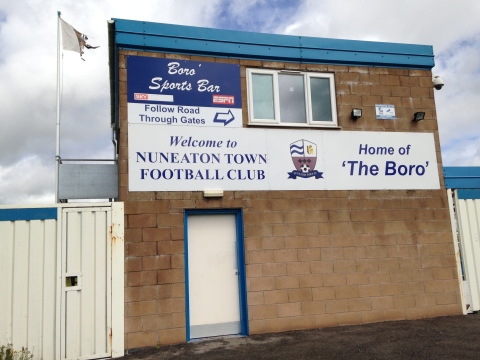
    DB: You joined Nuneaton Town earlier this month. What are your first impressions of the club? And what are your aims and plans for the coming season at Liberty Way?

    KW: It’s a big club. It’s a club that hasn’t had any stability for a while, having four managers in 13 months. A lot of players coming and going. Now it’s the time to get the building blocks in place. We are getting an academy going, an u-21 side and we’re looking to build a big future. That means a lot of work to be done between now and the start of the season, and trying to get as high up the league as we can this year.

    DB: What do you enjoy doing outside of football, and was there ever an occupation you considered aside from being involved with the beautiful game?

    KW: I do enjoy a game of golf. But, with football, you don’t get much time. Spending time with the family, walking the dog, and at this time of year, getting away and having a break and trying to relax.

    DB: So was it always football? Did you always know what you wanted to do as a career?

    KW: I was a good sportsman. I liked cricket as well, and athletics, but football was always the one that I excelled at and worked hard at. I got the rewards by working hard, and I think to any young player, I’d say ‘hard work doesn’t cost anything’. Whatever job you are in, you have to work hard. Certainly for me, it’s – make sure you work hard, and don’t follow the money. The money will come and the rewards will come if you go and put everything into place.

    Follow Dave on Twitter here.
    photo 4

    Posted on June 12, 2015, in UTL Interviews and tagged Featured, Kevin Wilson, Nuneaton Town. Bookmark the permalink. Leave a comment.
  • From Diamonds to Darlo: When the Phoenix Rises Part Two

    From Diamonds to Darlo: When the Phoenix Rises Part Two

    In part two of his look at footballing phoenixes, Dave Burin writes about three more clubs who have had interesting recent histories.

    Scarborough F.C. / Scarborough Town & Scarborough Athletic

    For most football fans, the name Jimmy Glass conjures up one of football’s most wonderfully dramatic moments.Scarborough Athletic  The Carlisle United goalkeeper’s instinctive finish to slot the ball into Plymouth Argyle’s net, in injury time, on the final day of the season, to keep the Cumbrians in the Football League, remains one of English football’s most incredible moments.  But for Scarborough F.C., it was their one-way ticket to the Conference Premier.  The men from the McCain Stadium – known locally by the wonderful moniker of the ‘Theatre of Chips’ were back in non-league football.

    There followed a short period of stability. Russell Slade oversaw an incredible turnaround in 2001-02, to steer a seemingly relegation-bound Scarborough side to a respectable 12th place finish in the Conference Premier. 2003-04 saw the club welcome Chelsea to the seaside in a close-run FA Cup tie, whilst the following campaign saw the improving Seadogs go the whole campaign unbeaten at home.

    Despite previous glories in non-league, including three FA trophy wins in a single decade (1973, ’76 and ’77 respectively), this time Scarborough would not see long-term success. The chips were certainly down when it came to the club’s attempts to move from the McCain Stadium. The club were unable to legally sell the stadium’s land for any non-sporting purpose, and unable to convince the council that a move could clear the club’s debts, the club was dissolved in May 2007, shortly after winning their final ever match, with a 1-0 away victory over fellow Conference North side Hucknall Town. Even without dissolution, a 10-point deduction meant that Scarborough would have suffered a second relegation in successive years.

    A fresh start, or rather two of them, came in the shapes of Scarborough Town and Scarborough Athletic. Town seemed set to be a great success, winning the Wearside League at the first attempt in 2009-10, but as with their predecessors, the Phoenix club were wound up due to issues with their ground. Scarborough Athletic, now established in the Northern Premier’s second tier, are currently based in Bridlington, but looking for a return to Scarborough by 2016. Though they may like to be beside the seaside, the stadium struggles of their comrades mean it’s a decision which Athletic should not take lightly.

    Darlington F.C. / Darlington 1883

    Built as a vanity project by former Darlo chairman George Reynolds, a man so terrifying that I won’t insult him directly, The Darlington Arena remains one of English Football’s most infamous examples of overspending.darlington1883  Holding 25,000, in the club’s relegation season of 2009-10, Darlo averaged a crowd of under 2,000.  Rewinding back to the summer of 1999, whilst Scarborough were dropping out of the Football League, the Quakers were sat comfortably in mid-table of Division Three, when Reynolds, a mega-rich career criminal entrepreneur from Sunderland took control of the club.

    Darlo’s history, for a club of previously modest means, had been a fascinating one. Formed in 1883, the Quakers won the Durham Challenge Cup just two years later. In 1908, they joined the competitive North Eastern League, and a decade after turning professional, accepted an invitation to join the Football League. In 1955, they made history by playing the first floodlit FA Cup game between Football League Clubs, and were again a quirk of FA Cup folklore, when they became the first knocked-out team to reach the next round, the ‘lucky losers’ who took the place of the otherwise engaged Manchester United. The North-East club continued their proud cup history, reaching the FA Cup’s last 16 in 1958, and the Quarter-Finals of the League Cup a decade later.

    Indeed, despite a brief drop to the Conference in 1989, Darlo’s league status was almost tiresomely stable, and manager Brian Little achieved successive promotions to haul them back up to English football’s third tier in 1991. Under Reynolds, though, things soon fell apart. The Darlington Arena, expensive to maintain, and rarely more than 10% full, and failed attempts to secure in big-money buys like Faustino Asprilla and Paul Gascoigne left Darlo in financial dire straits. As early as 2004, the Northern Echo ran a story entitled ‘Turn up or the Quakers will die’. In 2012 they did, though in typical Darlo fashion, they took the cup by storm, lifting the 2011 FA Trophy, before bowing out. But the story doesn’t end there.

    I lived in County Durham for four years, around the time of Darlo’s fall from grace, and in a football mad area, the reformed Darlington 1883 are giving the good people of Darlo something to cheer about. Their current home at Heritage Park, Bishop Auckland is a far cry the Darlington Arena, but that’s absolutely for the best. Darlington are sustainable, majority fan owned and recently thumped Ossett Town 5-0 in the NPL Division One North. The future’s bright, and it’s refreshingly Reynolds-free.

    Manchester United / FC United of Manchester

    As disputed as the validity and necessity of FC United of Manchester’s existence is the question of whether they are indeed a Phoenix Club.FC-United-Logo  Sides like Darlington 1883 and A.F.C. Wimbledon were borne out of a club’s disappearance, or their Pickfords-style removal to a new home many miles away.  F.C. United, meanwhile, were not born from the desire to see 11 lads representing their city, rather more from disillusionment with a Manchester United hierarchy which had detached itself from the club’s matchgoing fans.

    Whilst Phoenix clubs are generally run with the fans’ prioritised – as every club should be, FC United have been key in revolutionising what a football club’s structure can be. In the 2009-10 season, they offered a ‘Pay what you can afford’ Season Ticket policy, an approach also taken by Scarborough Athletic. When Saturday Comes rightly praised FC’s ticket-pricing strategy as an “innovative approach to an often sensitive issue…provided by an elected, and therefore fan representative, board – making the game more accessible to supporters in the process”. But FC’s model goes deeper than that. The club’s manifesto includes clauses such as “the board will be democratically elected by its members” and “the Board will strive wherever possible to avoid outright commercialism”.

    Considering the ethos FC are implementing off the pitch, what they’re doing on it might seem secondary. But having watched the club semi-regularly since their formation in 2005, I can assure you that it’s just as joyous and uplifting. On a 2009 away day at Frickley Athletic, I witnessed F.C. fans held onto the match ball for an impromptu second-half terrace kickabout, go utterly ballistic for a routine away win, and respond to a home fan bizarrely exposing her breasts with some witty, ridiculous impromptu chants. Without our phoenix clubs, many football fans wouldn’t have half the great footballing anecdotes which we do. To those who resurrect a club, I say thank you.

    The phoenix will continue to rise.

    Many thanks to Dave for this two part series.

    Posted on February 23, 2015, in Opinion and tagged Darlington 1883, Darlington FC, FC United Of Manchester, Featured, Scarborough Athletic, Scarborough Town. Bookmark the permalink. Leave a comment.
  • From Diamonds to Darlo: When the Phoenix Rises Part One

    From Diamonds to Darlo: When the Phoenix Rises Part One

    Dave Burin, a northwest non league football fan, writes his first article for Under The League, looking at five clubs who have risen from the ashes. In this first part, Dave looks at two clubs that came about through mergers, and then had to rise from the ashes, with their new iterations coming into being in 2011.

    The phenomenon of the footballing ‘Phoenix Club’ – a club which has dissolved, only to be replaced further down the football pyramid – is still a fairly rare one. In fact, a quick Google search of the term ‘Phoenix Club’ leads me to reviews for an upmarket Basildon eatery, before I come across any reference to AFC Wimbledon or F.C. Halifax Town.

    The image of the rising phoenix is a poignant one – here, it serves as a reminder that every village, town and city will always need a football club, and that financial mismanagement, dwindling crowds or waking up to find your club in Milton Keynes are no barrier to seeing a side take to the field representing your community – even if they have to start in more modest surroundings, and against less illustrious opposition.

    Sometimes, as with the recently departed Hereford United, the original club gradually buckled under the strain of financial pressures. At other times, such as in the case of Darlington F.C., one incident – in this case the construction of the preposterously large and ill-planned Darlington Arena – sent the original club into a spiral. But out of darkness, cometh light…

    The next five football clubs all had proud and unique histories at numerous levels of the game – from Rushden & Diamonds’ meteoric rise through the leagues, to Windsor & Eton F.C.’s royal fanbase. But their collective endings have not led to the disappearance of football for their town, their fans, and sometimes even for their stadium.

    Rushden & Diamonds / AFC Rushden & Diamonds

    1992 is widely regarded as the year English football changed forever.AFC_Rushden_and_Diamonds_logo  And if you lived in the small Northamptonshire town of Irthlingborough, it certainly would be for you.  In April of that year, Dr. Martens owner Max Grigg bought and merged Southern league Rushden Town and Irthlingborough Diamonds, to form Rushden & Diamonds, and within four years, the Diamonds were shining in the GM Vauxhall Conference.  Grigg’s club seemed a shoe-in (sorry!) for promotion to the Football League.

    In 1997, the Diamonds made the step-up to league football, making Irthlingborough – with its population of barely 6,000 inhabitants – the smallest place to have hosted league football; and less populous than the capacity of R&D’s Nene Park stadium! Despite reaching the old Division Two, the heady days were not to last for the Diamonds, and Grigg sold the club for just £1 in 2005, before a slow decline ended in the Conference giving the club the boot in 2011, bringing an end to a club which, in its 19-year existence, saw more drama than many clubs experience in a century.

    The same year, AFC Rushden & Diamonds were created from the ashes of the original club. Though only allowed to enter the Northants Senior Youth League with an u-18 team initially, AFC R&D eventually got their wish of a senior side, and they took to the field for the first time in the 2012-13 season. Currently top of the table in the 2014-15 United Counties Football League – beating off competition from wonderfully named opponents like Thurnby Nirvana and Peterborough North Star – the future is bright for the side now playing at Wellingborough Town’s Dog & Duck Ground. Whilst they may not be as expensive as the R&D of the mid-1990s, the re-emergence of this exciting Northants club proves that Diamonds are indeed forever.

    Windsor & Eton / Windsor F.C.

    Windsor & Eton F.C. may have been kitted out in the red & green of Christmas, but once January 2011 rolled around, they had more concerns than the usual post-festive hangovers to deal with.Windsor FC  ‘The Royalists’ announced they were on the verge of dissolving, and the club suffered its final defeated at the hands of a high court hearing on 2nd February 2011.  But non-league football would continue to be played in this affluent corner of Berkshire, just as it had since for over a century.

    Exactly 100 years before Max Grigg was bringing together two of Northants. proudest non-league sides, the same was going on in Windsor – as Windsor St. Albans merged with Windsor Phoenix. In 1893, the year that the Labour Party had their first meeting, HMS Victoria sank, and Jamie Cureton made his professional debut – Windsor & Eton joined the Southern Alliance in 1893. The Berkshire club faced little-known sides like Hotspur FC – whatever happened to them! – and throughout their early years, were renowned for their royal support, with Prince Christian, George V and George VI all involved as patrons and fans of the club, in its early years.

    Having featured in a huge range of predominantly Greek-named divisions, from the Spartan League to the Athenian League, the Windsor club won the latter division in the early 1980s, leading to the most successful period in their history. Serving up top-quality football under manager Brian Caterer, the Royalists reached the Isthmian Premier, before reaching the FA Cup’s Second Round in 1983-84, bowing out to Harry Redknapp’s Bournemouth.

    Sadly, the club’s fortunes gradually faded, and after financial pressures became too much, Windsor & Eton F.C. were consigned to memory. However, Windsor F.C. were established just a day after the dissolution of their predecessor, and the Phoenix club – still at their traditional home of Stag’s Meadow, Windsor – are currently chasing the summit in the Combined Counties Premier Division. King George V would indeed be proud.

    Coming up in Part Two of this exploration of Phoenix Clubs. An empty arena in County Durham, a failed stadium shift on the North Yorkshire coast, and swapping England’s most successful club for away days in Frickley and Buxton…

    Posted on February 20, 2015, in Opinion and tagged AFC Rushden & Diamonds, Featured, Phoenix Clubs, Windsor & Eton. Bookmark the permalink. Leave a comment.
  • The Strangest Match Ever Played?

    The Strangest Match Ever Played?

    January 27th 1994 saw possibly the most bizarre match ever played. The match in question took place between Barbados and Grenada during qualification for the Carribbean Cup. Barbados went into the match needing to win by at least two goals to top the three team group on goal difference. Any other result would see Grenada progress. In a bizarre tournament rule, group games were not allowed to end in a draw, and would enter a period of golden goal extra time if level after ninety minutes. Oh, and if a golden goal was scored, it would count as two goals!

    And here begins one of those stories that were it in a film, you would dismiss it as implausible in the extreme!

    All was progressing along nicely, and according to plan for Barbados. Going into the latter stages, they had the required 2-0 lead, and were on course to progress. And then, with 83 minutes on the clock, Grenada scored to halve the deficit, and with it put themselves in pole position.

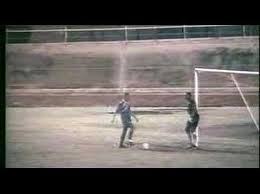
    Barbados – now on the verge of elimination – realised that with the bizarre rule about the golden goal, they would stand a better chance of breaking down the mass defensive ranks in front of them during a thirty minute extra time period rather than the seven minutes that were left. So, after a spell of passing between a defender and his goalkeeper, the defender lashed the ball into the net to level at 2-2.

    A screenshot from the youtube video of the moment that a Barbados defender scores a deliberate own goal

    A screenshot from the youtube video of the moment that a Barbados defender scores a deliberate own goal

    Grenada suddenly realised the situation aswell, and were desperate to avoid extra time. A goal at either end of the pitch in the remaining minutes would see them through! And so, spectators were witness to one of the most incredible spectacles in football history; one team desperately trying to score at both ends, while the other frantically tried to prevent it by defending both goals!

    As it goes, Barbados did manage to keep the score at 2-2, and force the extra time they craved. And it only took them around five minutes to score the decisive golden goal, giving them a 4-2 win, and progression to the final tournament. Quite a match!

    Oh, and in case you were wondering, Barbados finished third in their four team group in the finals, drawing with Guadeloupe and Dominica, but losing to hosts and eventual winners Trinidad & Tobago.

  • My Greatest Barkingside Team

    My Greatest Barkingside Team

    Adam Dennehey has settled in to his new life in Norfolk, and has written a great article for us on his best ever Barkingside XI.

    During the last fortnight or so before my family’s move to Norfolk I began to think about what my greatest Redbridge and Barkingside teams were that I had seen during my involvement with both Oakside clubs since 2006. Both sides have had good and bad times during those years, which I could go into great detail about at another time.

    Before one of my last Barkingside games I gave one of my old football books to their historian and super fan Rob. In the opening couple of pages to the book I jotted down a ‘thank-you’ message to Rob – for being a good mate over my seasons spent at the club – which included what I believed to be my Greatest Barkingside XI.

    After my move to Norfolk, after chatting to two of Barkingside’s current players Mark Steadman and Richard Oxby on Twitter after their weekend win against Barking, I decided to tweet the picture of my team jotted down in the book given to Rob to see what some of Barkingside’s current and ex-players would have to say after mentioning to Steadman that he was in the side.

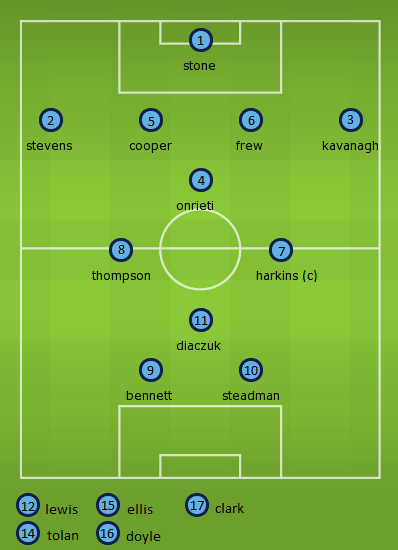
    So below if you haven’t already seen it is my Greatest Barkingside XI, including subs as every great side always has to have options on the bench!

    My goalkeeper had to be Leigham Stone. An immense young keeper who in all honesty is too good for ESL football. Has previously played for Barking. Despite only signing for ‘Side this season, he gets in due to shear consistency. A great shot-stopper and one who can certainly go up the leagues.side_dream_xi

    My full-backs are Harry Stevens and Paul Kavanagh. Stevens came to the fore under Tony Fenn in 2008 and had a great season with the club,. An excellent player going forwards with the ball who wasn’t scared to make a crunching-tackle when needed. Today Harry is at Southminster playing in the Essex Olympian League. Has experience with Burnham and is another one who if given the chance would do well at a higher level.

    The left-back position was an easy one. Kavanagh was immense for ‘Side in 07/08 chipping in with some vital goals including a memorable free-kick against Hanwell Town in the FA Cup. Has a peach of a left-foot and is an excellent crosser of the ball. Very rarely made a bad challenge. Rejoined the club in the summer and has been a key part of manager Matt Frew’s team this season.

    Speaking of Frew aka Burgers/Burgs he’s in at centre-half alongside Dave Cooper. Both players are no-nonsense defenders and will chip in with 4-5 goals throughout the season. Both are brave and not afraid to get hurt and have proven popular with the club’s ‘die-hard’ fans. A great blend of youth and experience.

    In midfield it was a bit more difficult but Greg Thompson and Dominic Harkins had to be picked. Both are ‘Legends’ of the club and formed a great partnership down the years. Harkins is very much like Paul Scholes. A great passer of the ball, not the best tackler. He was always in the team and gave his all. The only thing he lacked was height. He’d be the captain.

    Thompson gets in due to his work-rate and eye for goal. A great box-to-box player and a smashing striker of the ball, it was very uncommon for the midfielder not to have a pop from long-distance. A proven player at ESL level who would get you 7-8 goals a season. His link-up play with Harkins would create plenty of goals.

    Sitting in holding-midfield would be Gabriel Onrieti. Like Stone he only joined ‘Side this season but has arguably for me been their player of the year. He reminds me a lot of Ramires. He’s quick, excellent going forward, a great passer of the ball and a great team-man. Arrives late in the box to score and works his socks off defensively. He never looks tired!

    My attacking-midfielder just behind the strikers would be Leon Diaczuk who was at Manchester United as a youngster. Despite him being a Manchester City fan, it would be hard to leave him out. Another player with a good work-rate, he has a good eye for goal. Not bad on penalties either.

    Up top it would be the aforementioned Steadman and Warren Bennett. Steadman refers to himself as the ESL’s best marksmen and despite only scoring 5 times in 25 apps this season it would be hard to leave him out. He emerged from park-football in 2007 to be the club’s first-choice striker in 2007/08 and has been a fan-favourite in his stints with the club.

    Bennett for a while was my favourite ‘Side player for a couple of years after the tall forward scored a hat-trick against Stansted in an 8-1 victory in my first Barkingside match back in December 2006. On his day he could be unplayable. His last spell with the club came in 2009 when he helped them win silverware in the ESL League Cup.

    On the subs bench I’ve gone for 1 forward, 2 midfielders, 1 defender and a sub-keeper.

    The only pure-forward on the bench would be Chris Lewis who scored a bucket-load of goals for ‘Side in his first season. A likeable lad who would be ideal to come off the bench and grab a late-goal. I don’t think he’d be happy on the bench though!

    The midfielders on the bench would be Jordan Tolan who just missed out in the starting XI behind Thompson. Shares the same qualities in having an eye for goal from long-range. Would get 10-15 goals a season without even breaking sweat. A good penalty taker too.

    Mark Doyle can play anywhere really. Would give cover at the back, on the wing and up front. Doyley scored a memorable hat-trick against Stewart & Lloyds in the FA Cup in 2007/08 where his partnership with Steadman proved too hot for defences to handle. A great option to have on the bench.

    The only pure defender I’ve got is Corey Ellis. A great athlete who works as Teacher. Was immense for the club over 2 spells. A popular lad who often picked up knocks as a result of being too brave for his own good. Had a mean throw-in, not that I’d want my team to just rely on them for goals!

    Chris Clark is the only other keeper that came to mind when thinking about my team. Clark has just so happened to have rejoined the club as back-up to Stone and is still probably as good as he was during the 2007/08 season when he played a huge-role in the club’s success that year.

    It’s great to have you back on the site Adam! Follow Adam on twitter: @ADennehey87

  • The Rise & Rise Of Non-League Football

    The Rise & Rise Of Non-League Football

    Alan Jessup-Peacock gives us the lowdown on why he has fallen in love with non-league football.

    Football as a sport has been around for generations, the majority of fans follow teams in the professional leagues, but the “non-league” set up below has been slowly developing teams & players for all that time.

    For the past 3 years my interest and involvement in non-league has grown immeasurably and with that I’ve been able to see first hand how the sport at this level has grown in popularity across the country. I also appreciate the set-up of non-league, it’s differences to the pro game and the effort, drive & passion that goes into it at this level. When i first saw non-league games as a young child, it was just football, it was all the same to me, but I realise & appreciate that it’s not. That’s no bad thing, don’t get me wrong! But the way I see it in my head is almost as a different sport to the top flights, and i follow Concord Rangers with as much emotion & passion as i do West Ham.

    Basically non-league football is the game in leagues outside the four top divisions in the English game, from the Blue Square Bet Premier, then through various regional divisions 3, 4 or even 5 steps further down. The popularity of these leagues, and the games within them, seems to be increasing quicker by the month, and for me I feel it’s because of a couple of main reasons.

    The first is exposure, quite simply the game at this level is getting so much more coverage in the mainstream media, for example local papers feature large double page spreads to the number of teams in their areas. Social media has also played a part in this, look for 5 minutes on Facebook or Twitter and you’ll find fan pages & accounts dedicated to these clubs, all full of passionate supporters willing to follow their club! Not just social media, but blogs such as this one, and plenty more besides offer thoughts, opinions and coverage of the game. Add to that the ever faithful Non League Paper and you see how the exposure continues to grow.

    The success of non-league teams in national cup competitions also plays a big part in how the game is seen. The FA Cup can offer very small clubs the chance to make it to a big stage, none more recent than Ryman League team Hastings having an away match against Middlesborough in the 3rd round! These smaller clubs are getting better investment, even in this tough climate, as entry prices are lower more fans attend, which boosts the funds at the club & in turn helps them move forward. The playing talent at this level is always improving too, former league players who just missed out can be found across the country plying their trade at this level, competition for places increases because of it.

    Of course, one huge reason why the focus on non league has increased was with the creation of “Non League Day” a few years back. Normally a day during October when the top flight are on an international break, this is a day where the focus is on going to see and cheer on your local non-league team. The day is widely promoted & has grown more and more each year. Obviously there’s massive benefits to seeing these local games, cost is one, atmosphere is another, being able to stand there with a beer right on the sideline is something that can be enjoyed at this level! Add to that the fact that although the players are paid (not much at all) they are there for the love of the game, and it’s there for all to see at every game.

    I am a convert, without doubt, the past 3 years have helped make an unbreakable bond with the sport at this level. It’s something i love being a part of, and with how things are going I know i will not be the only one!

    Many thanks to Alan, who gave us permission to recycle this article, which was originally published on his own excellent blog. You can follow him on twitter: @BullJet

    Posted on December 31, 2012, in UTL Archive and tagged Non League Day, Non-League. Bookmark the permalink. Leave a comment.

  • Book Review: How Steeple Sinderby Wanderers Won The FA Cup

    Guest writer Scott Knowles returns to write for Under The League with a review of Joseph Lloyd Carr’s 1975 novel.

    Joseph Lloyd Carr is deserving of his place amidst the ranks of England’s great cult writers. He wrote one undoubted classic novel in his lifetime and a handful of others than run the gamut from the good to the decidedly average. Unfortunately ‘How Steeple Sinderby Wanderers Won The F.A. Cup isn’t his classic (that would be the slight, wonderful ‘A Month In The Country’ – a book deserving of far more readers than it currently has) but even a middling fictional novel set within the world of football sets it head and shoulders above most of the rest of its peers.

    It’s not a new opinion but the F.A. cup is a competition in danger of becoming something of an irrelevance. The final is still watched by many but presumably more from a sense of obeying tradition than an actual desire to do so. It could be argued that the fiasco surrounding Manchester United’s abandonment of the competition in 2000 (for the benefit of a failed World Cup bid) was the start of the malaise but really the rot set in much earlier than that. The acquisition of football rights by Sky and creation of the Premier League in the early nineties began a culture of football overload that eventually reached a point whereby a player couldn’t kick a ball in anger without it being caught on camera and analysed obsessively by people with access to technology that allowed them to fart about with an on-screen pen.

    Subsequently this led to a sense of football fatigue. The poundingly advertised bright lights of the Champions League and access into the world of previously unrecognised foreign leagues meant that barely a day went by without a live game being shown on some channel or other. Even the summer months weren’t safe what with exclusive access to some friendly ‘Jacobs Crackers’ cup beamed into our rooms usually featuring the likes of Ajax, Everton, and two slightly obscure clubs there to make up the numbers.

    Thus the F.A. cup became just A.N. Other competition – a slightly older, more respectable brother to the League Cup but still easy to ignore amidst the non-stop consumption culture of New Football. Sometime around the mid-noughties T.V. executives boiled the F.A. cup down to that Ronnie Radford goal against Newcastle, the Wimbledon triumph over Liverpool, and a bare chested Ryan Giggs celebrating against Arsenal – and if they repeated the phrase “the magic of” enough times people would maybe believe the competition still mattered.

    ‘How Steeple Sinderby Wanderers Won The F.A. Cup’ was first published in 1975 – at a time when the basis of the story (a non league team, via good luck and hard work, triumphing against the giants of football) was still vaguely within the realms of imagination. The money bandied around the top clubs these days mean only their lack of interest in the competition hands the occasional opportunity to outsiders (Portsmouth, Stoke and Cardiff reaching the final). Before Crawley’s tie with Manchester United in 2011 the last non league side to contest a 5th round F.A. cup game was Kidderminster Harriers eighteen years ago. In seasons past the concluding game of the oldest cup competition in the world was a real event – worthy of debate, excitement, songs released from the finalists. Nowadays the unending coverage seems disproportionate with the actual interest the final generates. Fourth in the league and the holy grail of potentially suckling at the teat of the Champions League is held in higher esteem than a cup that only offers trifling access to the Europa League.

    The book is told from the perspective of Mr. Gidner – the man reluctantly put in charge of writing the Official History of a side who upset all the odds (amongst other things) to become the first non-league side to win the F.A. cup (not a spoiler – it’s clearly there in the title) since Tottenham back in 1901. What follows is an at times humorous, at times moving tale of ordinary people doing extraordinary things and the prizes that self belief and the dogged pursuit of ones dreams can achieve.

    J.L. Carr himself played a season within the non league scene and so the sometimes bleak descriptions (“..grey men who had handed over 20p to cram close to grey men, huddling under a grey sky in a grey landscape on their grey way to the town cemetary.”) read more as affection towards those loyal few that show up regardless of weather or prospects of success than as the insult it first appears. Carr was also smart enough to realise that it’s the characters of the players – both literal and those just involved with the club – that tell the story rather than the action that happens on the pitch (or, “a ball travelling one way or the other” as he puts it at one point) and despite its brief 124 pages you develop a real feeling for these people, despite their flaws or prejudices, and their humble triumph is a genuinely feel-good moment in literature.

    By the end of the novel you are aware that the lesson being taught to us is that the real stories of the F.A. cup are the ones that take place before most people have even realised the competition has started, on slipshod pitches amongst people just like us. That the feeling experienced by an electrician or plumber scoring the goal that puts his team through to the next qualifying round is infinitely more pure and joyous than one millionaire beating another in a final within an over-expensive stadium selling over-expensive food and merchandise whilst maintaining the sham notion of being ‘the sport of the people’.

    The spirit of the F.A. cup lives on – you just have to know when and where to look for it. ‘How Steeple Sinderby Wanderers Won The F.A. Cup’ points the way.

    Many thanks to Scott for this review. Scott can be followed on twitter, @FragileGang

  • England C – An Introduction

    Welcome to a new section on the site, dedicated to the England ‘C’ team. You may or may not be aware of such an entity, but the England C team was formed in 1979, and represents the semi-professional and non-league sections of the game. For players to be eligible, they have to be 23 or under at the start of the season, i.e. if a player turns 24 during the season, he is still eligible as he was 23 at the start of the season.

    They are currently managed by ex-Barnet manager Paul Fairclough, who took over in 2003. As you can imagine, with the restrictions regarding age and the non-league only representation, there is a high turnover of players in the squad, but it can be a springboard for players in their careers, with many going on to enjoy careers in the Football League. Notable former England C internationals include ex-Arsenal legend Alan Smith, Craig Mackail-Smith and Norwich City striker Steve Morison. David Stockdale, the current Fulham goalkeeper, has also worn the semi-pro Three Lions shirt.

    There are not many ‘C’ internationals in a season, with Fairclough only overseeing two matches so far this season. There is one match left in 2011-12, against Russia in Moscow. Fairclough has named his squad, which can be found on the FA website, and has included eight new faces for the trip.

    The team play their matches at various Football League and non-league grounds, so if they do roll up at a ground near you, get down and show your support.

    Posted on May 16, 2012, in UTL Archive and tagged England C, Paul Fairclough. Bookmark the permalink. Leave a comment.