
Interview

  • Under the League Interviews…Carl Piergianni

    Under the League Interviews…Carl Piergianni

    It was no surprise when Carl Piergianni was named Boston United’s Player of the Year at the end of the last campaign, and it was a given that his face yet again adorned the National League North’s ‘Team of the Year’. A tough, talented and combative force at the heart of ‘The Pilgrims’ defence, Piergianni is as articulate, measured and likeable off the pitch as he is solid and skilful on it.

    We discuss everything from Carl’s early memories as a Peterborough United fan, to learning the ropes in the Northern Premier League with Spalding United, a brief appearance for the first-team of his boyhood heroes, the experience of relegation at Corby Town…and much more. With Boston pushing for promotion again this season, there’s no better time to hear from one of the division’s hottest prospects.

    DB: You’re a Peterborough lad, and spent your youth career with the POSH. What are your memories of supporting the POSH growing up, and what do you remember about being a young player at the club?

    CP: I have really good memories of supporting the club as a youngster. One of the first games I remember going to was when Peterborough played Darlington at Wembley in the playoff final [in 2000]. They won 1-0 and Andy Clarke scored the winner and that was one of many great memories of being a Peterborough fan growing up.

    Being a youth team player at Peterborough United was great as well. To be named Captain during that time was a great honour and then to get offered a pro contract – at my hometown club – was fantastic. It was exactly what I’d always dreamt of.
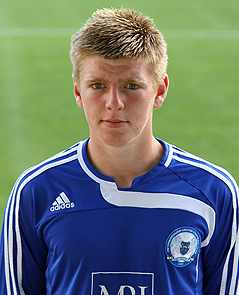
    A youthful Carl during his Peterborough days.

    A youthful Carl during his Peterborough days.

    DB: Despite coming through the ranks at London Road, your first taste of senior football came 20 miles north at Lincolnshire club Spalding United. Were you keen on heading out on loan to play mens football? And was it tough to adapt to the physicality of the Northern Premier League, as a young player?

    CP: I was very keen to go out on loan, personally. The advice I’d give to any young player now is that it’s vital to go out and get experience of playing in mens football, as early as possible.

    Doing so made me the player I am today. I became a lot stronger, a lot more physical – so I definitely recommend going out and playing first-team games, rather than sitting on the bench or player under-21 matches.

    I enjoyed the toughness of the NPL. I’m quite a physical player and don’t mind getting stuck in. It was important to learn how to use my body in those kinds of games, and also to adapt to a game which actually meant something.

    When you play in reserve games, obviously you want to win, but it doesn’t really mean anything. However, when you go into a club like Spalding and it’s a proper first-team game, the 3 points are vital and the team were trying to survive relegation [from the NPL Division One South]. You quickly learnt that both performances and results really meant something.

    DB: In 2010 you had your first taste of the Football League back at Peterborough, but it was just a single game. What are your memories of that sub appearance against Rochdale? And do you feel you deserved more first-team opportunities at London Road?

    CP: At the time, I don’t think I was ready to be starting games for Peterborough. I wasn’t quite good enough at the time, and I was only a young lad – so I don’t hold a grudge against anybody at the club. There were much better players there than I was at that point. Peterborough were challenging to try and get up into the Championship, so it was difficult for me to get a game.

    With a debut, people always say ‘it’ll happen when you least expect it’. And I remember just being sat on the bench, and [then manager] Gary Johnson suddenly just told me I was going on. So I was suddenly just standing on the sideline, my knees shaking, and just waiting to go on!

    DB: You joined Altrincham on loan later that season, in early 2011. The club’s awful start to that season meant they ended up relegated from the Conference Premier, but you were a regular fixture in the side, as results improved. So was Alty an experience you enjoyed or not?

    CP: Very much so. Altrincham’s a great club. As you said, they had such a bad start to the year that it was hard for them to claw their way back up the table. There was a big gap of points between them and safety at one point, but during the time I was there Alty won a fair percentage of the games we were involved in, so it was actually a period I really enjoyed.

    Credit to Altrincham, they’re back in the National League now and as with Spalding, I felt it was a club which did a lot to help develop my career. The players there were a very close, tight-knit group. Robbie Williams at the back, Sean Densmore (who’s now Alty captain) at full-back, and Damien Reeves – they were really good players, and everyone there ensured I loved my time at Altrincham. There were no cliques in the changing room, which was great – everyone at the club just got along really well.

    DB: Aged 19, you moved to my local club – Stockport County! You played in almost every game that season, as the club stabilized themselves in the Conference Premier. But you had three different gaffers in that one season – Dietmar Hamann, Willie McStay and Jim Gannon. How did they all compare?

    CP: That was an interesting experience. Dietmar Hamann and Jim Gannon were polar opposites. Willie was the assistant under Didi Hamann, so he was familiar to us already, and his management style was similar to Didi’s.

    Didi had a more relaxed approach than Jim Gannon did. He’d change the team a lot, go with different tactical approaches and was very keen on rotating the squad. He was a lot more laid-back in training and gave the players free-reign to play as they wanted to. Jim was at the opposite end of the spectrum. He knew exactly what tactics he wanted to employ in every part of the game, and stuck to a certain way of playing. So, two deeply contrasting managers!
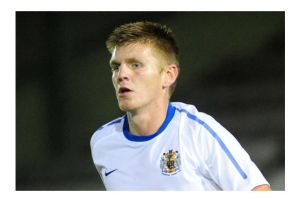
    Carl in action during his season at Edgeley Park.

    Carl in action during his season at Edgeley Park.

    DB: At County, you scored your first league goals in senior football, getting four in total. What do you remember about your first two, both scored in an exciting 3-3 home draw against Hayes and Yeading United.

    CP: I just had a bit of luck and managed to score two! (*Laughs*). The first one just came to my feet and I slotted it in. As for the second, I just remember being completely surprised after scoring again! Sadly I didn’t have a celebration planned, I think I just raised a finger into the air and ran off.

    DB: You moved to Corby Town in October 2012 after just over 12 months at Stockport. You helped the side to some excellent results in that early period, and scored 4 goals in your first 5 games! Why do you think you fit into that side so well? And what caused your sudden goal rush?

    CP: I always thought I was a threat from set-pieces, and having moved down a league, where the defensive marking wasn’t always as good, I found it a bit easier to get goals than I did in the Conference Prem.

    I also had the benefit of a giant centre-half next to me in Paul Malone, so their biggest player would always be marking him and it’d give me a chance to go up against someone a bit smaller! I managed to get on the end of balls quite a lot, and luckily a few of them went in.

    DB: Corby were extremely unlucky to be relegated that season, going down on Goal Difference – and just by a solitary goal – below Histon. As a player, how do you cope with that kind of a setback? And did the club’s drop to the Southern Premier League influence your decision to leave?

    CP: That was a really tough time for me personally, and for everyone at Corby Town. I’d really enjoyed being at Stockport, and I was sad to have to leave the club. I chose Corby because I’d moved back home and wanted a local club, to try and steady myself again.

    That season, I thought all along that Corby would comfortably avoid the drop. We had an okay squad, and I certainly thought we were good enough to compete in the division. We played some good football at times and looked like we were going to avoid the drop, but unluckily went down by such fine margins. All we needed was a point in any of the games that we lost, which was tough to take.

    Once the club went down, I made the decision that I wanted to play in the Conference North (or higher) in the following season. As soon as I spoke to the people at Boston United, I knew that joining them was the right move for my career.

    DB: In May 2013, you headed to York Street, home of your current club, Boston United. In that first season, the club finished 6th in the Conference North, and you were part of a formidable defensive unit, alongside the likes of Scott Garner, Conor Marshall and Netan Sansara. What were those guys like to play alongside?

    CP: It was interesting, because when I signed for Boston I was the only centre-half at the time, and then the gaffer told me he was bringing in Scott, who’d been captain at Cambridge United the year before. Playing alongside Garns* [*Scott Garner] was great, and he’s challenged me and brought my game on a hell of a lot. I’ve really enjoyed playing alongside him, and the other lads you’ve mentioned.

    DB: Going back to the beginning of that season, your competitive debut for The Pilgrims was in a 4-1 win away at Edgeley Park, home of your former employers Stockport County. Is it extra sweet to beat one of your old clubs, or is it no different to any other 3 points?

    CP: There’s always something extra there when you play an old club. You want to try and show that club what they’re missing! The main thing is always getting the win, but personally it was really special to do that at Edgeley Park.

    DB: Last season Boston improved on that 6th placed finish, ending the season in 3rd place – before the narrowest of play-off losses to Chorley. The Pilgrims have been a little inconsistent so far this season, but do you feel this squad has the quality for another play-off finish…or maybe more?

    CP: Definitely. I think we’ll achieve at least a play-off spot this year. We’ve been a bit hit and miss at times, but the quality across this group of players is good enough to be up there. It’s about getting a sustained run of form. We’d gone five games unbeaten – with four wins in there – before the North Ferriby game [a 4-3 loss on 7th November]. But when you have those frustrating results, you need to bounce back. That’s absolutely vital if we want to finish in the play-offs.
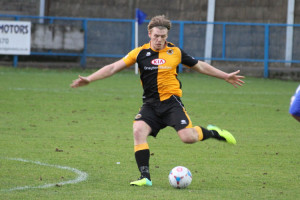
    scelt7

    Boston’s defensive dynamo in action against Stalybridge Celtic.

    DB: Absolutely. And alongside yourself, who would you say are the main danger men for Boston. Who should we all be watching out for?

    CP: In terms of goals, you can’t look past Dayle Southwell. He’s already on 12 for the season. But he’s only one of the really good strikers here. Mark Jones is so hardworking up top, and he’s something of an unsung hero for us. We’re certainly not short of options in attack.

    From set-pieces, me and Scott Garner chip in with quite a few goals, so I think as a side, we always pose a threat – whoever we’re up against!

    DB: You’ve made it into the Conference North/National League North ‘Team of the Year’ two years running, and at 23, you still have a long career ahead of you. Are you looking to stay with Boston in the long-term, or is the aim to keep performing well and hopefully interest a Football League side.

    CP: I always hope that one day a Football League side will be interested in me. But Boston have treated me so well, and I’ve always had good dealings with everyone at the club. I couldn’t ever envisage leaving for another club at this level. For me to even consider moving, the interest would have to be from a club at the top end of the National League [Premier], at the very least.

    Living here is important for me, as well. I’m close to home, I have work outside of the game and there’s football at a club I really enjoy being a part of. When it comes to Football League interest, though, I don’t think anyone [at this level] would be able to turn it down.

    DB: We’ve talked about the National League North. It’s a division with some lovely old grounds and some pretty impressive new stadiums. Is there an away trip you especially enjoy – either for the results you get there, the location or what kind of away support the Pilgrims fans bring?

    CP: Stockport’s probably the best away ground I’ve played at. When we played at Edgeley Park on the opening day of this season [a 2-1 defeat for Boston] the atmosphere was electric, and as a player, it’s great to be involved on the field when the ground is like that.

    Tamworth is another trip I always enjoy. We always get an excellent away following there, and [The Lamb Ground] is a really tight ground, the fans are right alongside the pitch, and it’s a fixture where that traveling support always makes a lot of noise!

    DB: I know from Twitter that you like a bit of Ibiza. So what else do you enjoy away from football, aside from soaking up the sun? And what job you do outside of playing the beautiful game?

    CP: I like to travel. And not just to Ibiza! I’ve been around Asia and traveling is always something I’m looking to do come the end of the season. I try and save my money so I can see as much of the world as possible. I always like pre-season but we stay here, which isn’t quite as exotic!

    Outside of football, I work for Molson-Coors, the Brewery, as a sales rep. I go into convenience stores and Co-Ops as an account manager for them. And it keeps the money in that I need, as someone playing football part time.

    Aside from all that, I like the gym – though that’s also a necessity when you’re playing football – and like everyone, I enjoy a bit of golf in the summer!

    Thanks to Carl, and best of luck to him and everyone at Boston United for the rest of the season. You can find the Pilgrims defensive rock on Twitter @CarlPidge.

    Posted on November 17, 2015, in Dave Burin Interviews, UTL Archive, Vanarama NL North and tagged Altrincham, Boston United, Carl Piergianni, Featured, Interview, National League North, Spalding United, Stockport County. Bookmark the permalink. Leave a comment.
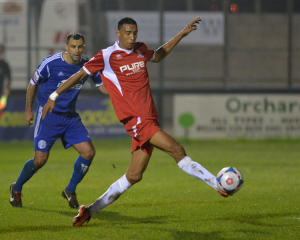
  • Under the League Interviews…Kurtis Guthrie

    Under the League Interviews…Kurtis Guthrie

    Right now, Kurtis Guthrie is the toast of The New Lawn. With five goals already this campaign, the Jersey-born forward is skilful, powerful and regularly contributing vital goals for the current leaders of the National League. Having begun his career at Jersey club St. Clement, 22-year-old Guthrie has experienced time in the Football League with Accrington Stanley, promotion from the Conference South with Welling United, and last season helped Forest Green Rovers to the highest finish in their 126 year existence. And this time, they’re aiming to go even further…

    Friendly, candid and measured, Guthrie talks me through an action-packed career which belies his young years. From his first ever goal for Southport, (“a deflection”) to lifting a championship with Welling United (“the best group of lads”), his shameful treatment by Bath City, and much more…this is the FGR star’s story, in his own words.

    DB: Growing up in Jersey, were there many footballing opportunities for youngsters on the island? And who did you support, either locally or further afield?

    KG: There weren’t really many opportunities, no. At ages 14 and under, there are a few tournaments, but no real opportunities to push on from there. I would love there to be more for the kids. In Jersey, I think there are a lot of technically sound, very good young players – but it’s hard to get used to the physicality you can get in football. We weren’t getting to play against boys from the mainland.

    I didn’t really support a team. In Jersey, it’s all local clubs. My favourite club in Jersey is St. Clement. I played for them when I was younger, and then when I started in mens football. Over [in England], I’ve just always enjoyed watching good football – whoever the teams are.

    DB: In 2009, you broke into the first-team for St. Clement, who are in the Jersey Premiership. You scored almost a goal a game for the club, which is an amazing ratio. How did you manage to adapt so quickly to physical senior football, at just 16?

    KG: I always enjoyed playing football above my age group. I started playing u-12s when I was about 8 years old, and a couple of years later, for the u-14s. When I reached 16, I didn’t really enjoy playing with people of my own age – I was excited by the challenge [of mens football]. I was always quite tall as well, so I could handle the physical side of the game.

    I found the transition easy, really. I didn’t find mens football too difficult, and I preferred it to playing with people my age. And the better the players around you are, the better you play too. As a young player, I think the quicker you can start playing senior football at any level, the better stead it will stand you in. Playing in the park with my friends had become a bit too easy!

    Anyway, I spoke to my Dad about ‘playing up’ for the mens team, and he encouraged me to. I’d been at the club for a while, so everyone at the club knew me and what I was capable of, and they were happy to throw me in.

    DB: In 2011, you joined League Two side Accrington Stanley. How did the move come about? And what were John Coleman and Paul Cook like to play for – each were in charge for part of your year at the club?

    KG: When I was 17, I moved to Trinity – another club on the island [of Jersey]. Whilst I was there, there was a bloke called Eamonn Elliott, who had played under John Coleman some years back. He told me ‘you deserve a chance in England’. I’d had that said to me before, so I didn’t really take note of it at first. By then I was working – doing my apprenticeship as an electrician – and I’d almost given up the hope of breaking into professional football. As that season ended, I got a phonecall from Stanley, saying they wanted me to come over and I went over there. After about 10 days there, the club offered me a deal, and I took it!

    It’s hard to judge those managers, because I feel that I was stitched up a bit by the club. I was told that Stanley were bringing in another striker, for me to learn from, and I signed under that pretense. That never happened, and I played up front on my own throughout.

    John Coleman did try and help me to adapt, but when Paul Cook came in, we just didn’t get on. I’m not sure why, but I do think we’re completely different people. About four months before the season ended, Stanley told me I was going to be getting a new contract at the end of the season, and then a week before it ended, Paul [Cook] pulled me into his office and just told me ‘I don’t want to give you anything’. For me, it turned out to be a blessing in disguise. I didn’t feel I was improving at Stanley, because I didn’t have the support system I needed.

    C_71_article_1442263_image_list_image_list_item_0_image

    Kurtis in action during his season with Accrington Stanley.

    DB: You’ve almost answered my next question, but I’ll ask it anyway!

    Stanley sent you on loan to Southport for part of that season, and didn’t renew your contract at the end of the campaign. Do you feel that you were given a fair chance to prove yourself at Accrington – or not?

    KG: I do think a lot of the reason that period didn’t work out was down to myself, as well. I didn’t have that guidance, and had I known what I know now, I would have looked to go on loan somewhere else – preferably for 6 months. At Southport, I only started 3 games and came on as a sub twice. I was only there for a month, so I should have gone out on loan again, or even extended my time at Southport.

    I take responsibility off my own bat, but for financial reasons, a club like Stanley – at that time – couldn’t give me the support you need in the situation I was in.

    DB: Whilst at Southport, you got your first goal in the English game – a vital equaliser in a 2-1 win over Alfreton at Haig Avenue. What are your memories of that crucial strike?

    KG: I remember the ball coming over, I took it down and came inside, and then shot towards goal with purpose. It took a deflection, but it went in!

    It was obviously a nice feeling, but I think at that time, I only appreciated the experience for a moment. It was the same when I made my [Accrington] debut away at Northampton. I don’t think I realized the magnitude of those moments. I was just a lad who’d come over from Jersey, wide-eyed, just wanting to play football. It’s a shame, because I look back now on some of those early moments and how much they should have meant, and I think I took them all for granted – because I didn’t know any better.

    DB: Talking of goals, you scored a hat-trick on your debut for Bath City in 2012, against Maidenhead United. You had a very successful few months with the club. Did you enjoy your time at Twerton Park – and did you consider staying with the club long term, before the Welling move came about?

    KG: Obviously the hat-trick was a nice moment for me, and I was fortunate to have my sister – who was living in Bath at the time – there watching. For quite a while I was very happy at Bath. I was enjoying my football and the club was a good step for me rebuilding my game, and trying to find out what sort of player I was hoping to become.

    I wanted to stay at Bath, but because I was young, the club felt that they could string me along. I was on a monthly contract at the time, which was fine for a while because I was just happy to be playing games. Then, about a month after, I said to them that I was looking to commit to the club long term, and they said they’d give me one more month-to-month contract, and then sort out the longer-term. I said ‘OK’ to that.

    Then, after they were knocked out of the FA Cup, the Chairwoman at the time [Manda Rigby] stopped talking to me, the coaches were avoiding me. I went in to see the Chairwoman the night before one training session, and said ‘if this doesn’t get sorted by the weekend, I’ll walk away, because this is my last game [on month-to-month] anyway’.

    They promised to have a meeting with me after the training session, but as soon as the session ended, everybody left the training ground. People at the club weren’t answering my phone calls, and I just went on Twitter and said that it had been a pleasure, and I wished Bath City all the best, but that my time there was over. As soon as I’d tweeted that, I had phonecalls from the Chairwoman saying ‘We would have sorted something out, but there’s no going back now’. I explained that I’d given them ample opportunity to do that, and then I went back to Jersey, to collect my thoughts.

    That’s when [then Welling United manager] Jamie Day got in touch. He’d expressed interest in me before, and we got on well. After those two weeks, I flew back over to the mainland, and signed for Welling for the rest of that season. That’s probably the best decision I’ve made in my career, and without a shadow of a doubt, Jamie has done the most for me of anyone in football. Now he’s up at Forest Green [as Assistant Manager], I’m just over the moon that I get to work with him again!

    DB: You were instrumental in Welling’s promotion that season – the club won all of your first 11 games in the side. Why do you think you fit so well into that Welling team? And what are your memories of the day you clinched promotion to the Conference Premier?

    KG: I’d played briefly for Welling in pre-season, before going to Bath – and so I’d already met quite a few of the players. I was also living in Peterborough, when I signed properly for Welling, and ended up carpooling with the captain, Lee Clarke, so I was instantly made to feel welcome.

    The Welling boys were the best group of lads I’ve ever had the pleasure to work with. That team spirit was something I’d never experienced before. Obviously Welling isn’t a club with lots of money, so Jamie had brought together lots of players who loved playing football and wanted to work hard for each other. Jamie knew that money wasn’t what motivated us – the guys in the squad were motivated by one another. It was just like playing with 18 of your mates!

    I think that spirit is what won us promotion. In terms of individual players, we probably didn’t have the best team in the division, but we had the best collective team unit. We knew one another’s strengths and weaknesses, and how best to work together.

    We won the title away at Boreham Wood, in the penultimate game of the season. We went there needing a point, and every one of us in that changing room beforehand just knew that this was the day Welling would be promoted. We drew 1-1 and did it!

    Our last game of the season was at home. Knowing we’d already won the league, and playing in front of our own fans was a great experience. Welling may not have loads of fans, but they’re loyal supporters who sing their hearts out. They’re fans that any player would be happy to play in front of.

    DB: At Welling you picked up a fair few yellow cards, but you’ve still never been sent off in your career – as a player, do you have a strategy for being able to be quite a tough, imposing player and taking the odd foul for the team, without stepping over that line and getting sent off?

    KG: It’s difficult. I feel that I get punished a bit on the pitch by opponents. I always seem to end up in the wars, so I make sure I give out my fair share as well! That means sometimes getting booked, of course.

    I’m on four yellow cards so far this season – so just one away from a ban. However, if you’re a player who puts yourself in where it hurts, sometimes the decisions are going to go against you.

    It’s a physical game at this level, and everyone knows that in the National League, you have to do the ugly side of the game sometimes – and with that comes a few bookings or even sendings off.

    Skrill Premier

    A familiar sight: Kurtis in on goal for Welling United.

    DB: The Wings finished 16th in the club’s first season in Non-League’s top tier. One of your teammates in that side was Loui Fazakerley, who’s now manager of the club. Did he strike you as someone who was destined to end up in the dugout, or were you surprised?

    KG: That season was a funny one. Up until Christmas, we were in the top ten, and then we picked up a few injuries, whilst a few boys got moves to other clubs.

    DB: Did you have quite a small squad?

    KG: Yeah. Financially, we couldn’t hold onto those players. If the club had some more financial backing, and could have brought in a few more players to fill the void when we had exits or injuries, it would have been a completely different season.

    And ‘Faz’? First and foremost, he’s a great bloke. He’s also very into his fitness, and has always been a model pro. Within the younger players, there would always be someone that he would look to and try and help them along. He doesn’t demand respect – he just gets it.

    I wasn’t at all surprised to see Loui step into the manager’s job at Welling. It’s a great opportunity for him, and a great fit for the club as he knows the place very well, and has been at Welling for years.

    DB: You joined Forest Green Rovers last summer. How did you find the transition from part-time to full-time football, and more importantly, how did you cope with the fact there’s only vegetarian food on offer at the ground?

    KG: [*Laughs*] The transition from part-time to full-time football felt strange, but I’d already done it once – when I joined Stanley. At Welling, we trained three mornings a week, in my second year. So it was only adding an extra day. The tougher thing was trying to up my intensity levels.

    I think some players make out that the transition [between part-time and full-time training] is a bigger deal than it is. It’s been nice to be in full-time again. As soon as I joined Forest Green, I vowed that I wouldn’t take it for granted, and I don’t feel that I have.

    The veggie food there isn’t really for me. I just make sure I eat big before I go to training!

    DB: You had an excellent first season with the club, finishing with your best total yet – 8 goals – as well as more than a few assists. In which ways do you think your game has developed with FGR? And are there areas you still need to improve in?

    KG: The team did admirably last season, and we achieved Forest Green’s highest ever finish [5th place in the Conference Premier]. As for myself, I didn’t really play much in the first half of the season – it was more of a bit-part role. But once I got my foot in the door, I didn’t look back and have just kept pushing on.

    I think the training here has helped my all-round game. [FGR Manager] Aidy Pennant has been good with me, and I’ve also been patient because I’ve had to wait my time to prove what I could do for the club. I feel like when I joined, people were saying ‘who’s this? He’s just another young lad’, but I think if you asked the fans now, they’d say I’m an important part of the team.

    I feel I’ve deserved credit for keep working hard, but the coaching staff have been brilliant. Aidy, and now Jamie Day [who joined in May 2015] have helped me to continue improving this year.

    DB: Forest Green are currently top of the National League, though results have been patchy since that incredible start to the season. How confident are you of winning automatic promotion? And do you think the team can learn from some of the recent draws and losses?

    KG: I’ve always said that clubs are at this level for a reason – and that reason is inconsistency. When you step up to the Football League, I think the clubs there are a bit more consistent.

    I feel this is the weakest the Conference has been for a while. We won nine games on the bounce, but I don’t think we even played our best football in those early games. And then we got just one point from the next four games, and yet stayed top of the table.

    At the moment, we’re going through an unfortunate patch, but the performances and results will definitely pick back up again. So I think ‘why can’t it be Forest Green this season?’.

    B74A1937.jpg-pwrt3

    Celebration: Kurtis and Lee Hughes (left) celebrating a crucial goal for Forest Green.

    DB: Along with yourself, who would you say are the main threats in the team? Obviously you have the likes of Jon Parkin…

    KG: Keanu Marsh-Brown is another, since he’s come in. Keanu has so much flair and he can open up defences. Aaron O’Connor also has that deft finish, and a lot of experience. They’ve both been great additions to the squad.

    Then Darren Carter coming has given us that old head in midfield, and an ability to control games – alongside Rob Sinclair, who’s technically brilliant. So I think we’ve got a good chance [of automatic promotion].

    DB: In terms of the atmosphere, the ground and even the numbers of fans Forest Green take – where is your favourite away trip in the league? Is there an away day you always look forward to?

    KG: It’s a tough one that! [*Pauses*] I like going back to Welling. I have good memories of being at the club, and even though last year I only played a couple of minutes there, I enjoyed it. This year I’m looking forward to going back. It’s a Tuesday night game [10th November]. I always liked midweek games at the PVR* [*Park View Road].

    Tranmere should be a good one this season, too. I’m also looking forward to going to Halifax because last year it got a bit heated, so I’m hoping to go back this season and get revenge!

    DB: Though you’ve already had a lot of experience in the game, you’re still only 22 and have a long career ahead of you. Do you see yourself with Forest Green in the long-term, or is the endgame to join a big Football League club?

    KG: That’s difficult, because I feel Forest Green is the best club to be at, at this level. The club offers everything you need, and the facilities are excellent – absolutely second to none.

    Still, I’ve always dreamt of being able to play in front of big crowds, every single week – and I feel that big crowds actually bring out my best performances. It’s just unfortunate for Forest Green, that the location [Nailsworth: population 5,794] means they can’t generate those big crowds.

    I don’t think there’s any other way in which the club needs to progress, other than getting bigger crowds. There’s talk of moving to a new stadium, and maybe that could be the turning point on that front.

    DB: Finally, what do you enjoy doing outside of football? I know you have a sporty family – with your sister playing for the England netball team. And is there a career you ever considered aside from playing the beautiful game?

    KG: I’m a bit of a couch potato to be honest, mate! I like watching films and just relaxing, really. I do play a bit of golf in the summer. I’m a seasonal golfer, I don’t really fancy it in the winter!

    Because of the work I did before I played football for a living, if anything was ever to go wrong, I think I’d turn to painting and decorating because it’s just something I know. I think I’d like to work for myself – not taking orders from people. I’m quite an independent guy.

    I’d only stay in football if there were the opportunity to do youth coaching, like u-14s. When I go back to Jersey, I like watching local football, because there’s always that one player who’s better than everyone else. You can always spot them, and I’d like to help kids in Jersey get over to football clubs in England more, and expand the market of players in Jersey.

    Guernsey are doing their own thing in the league, but the standard of players in Jersey is far better. If there was the opportunity, that’s something I’d like to look at doing once I finish playing.

    *Thank you to Kurtis for this great interview. Best of luck to him and everyone at Forest Green this season. If you want to hear more from Kurtis, follow him on Twitter @kurtisguthrie11*

    Posted on October 22, 2015, in Dave Burin Interviews, Forest Green Rovers and tagged Accrington Stanley, Featured, FGR, Forest Green Rovers, Interview, Kurtis Guthrie, St. Clement F.C., Welling United. Bookmark the permalink. Leave a comment.